




| Review Article | ||
Open Vet. J.. 2026; 16(8): 5040-5062
Open Veterinary Journal, (2026), Vol. 16(8): 5040–5062 Review Article Effects of egg handling, storage, and incubation management on hatchability, embryo development, and chick quality in broiler chickens: A narrative reviewTemosho R. Mabotha, Peter A. Idowu, Khathutshelo A. Nephawe and Takalani J. Mpofu*Department of Animal Sciences, Tshwane University of Technology, Pretoria, South Africa *Corresponding Author: Takalani J. Mpofu. Department of Animal Sciences, Tshwane University of Technology, Pretoria, South Africa. Email: MpofuTJ [at] tut.ac.za Submitted: 18/11/2025 Revised: 26/06/2026 Accepted: 09/07/2026 Published: 08/08/2026 © 2025 Open Veterinary Journal
AbstractChicken production continues to evolve and grow globally, and the consumption of chicken products is surpassing that of other animal products. Embryo mortality, poor hatchability, and poor chick quality remain the biggest challenges in both natural and artificial incubation. This study adopted the narrative review approach to investigate the multifaceted effects of egg handling and incubation management on hatchability, embryonic development, and chick quality in broiler chickens. The review found that different incubators are designed, and a single-stage incubator is more efficient than a multi-stage incubator in terms of hygiene, hatchability, and chick quality. Egg size, flock size, and storage age should be considered to meet the hatchability expected. The position of the egg is critical during egg storage and incubation, and the eggs should be placed with the blunt side up and the sharp end down. Ventilation, temperature, humidity, and turning have a significant effect during the incubation process and should be monitored correctly. Aging flocks and extended egg storage duration negatively impact reproductive performance and subsequent chick quality. Proper management and optimization of storage parameters can mitigate these effects. Effective egg incubation necessitates knowledge of incubator characteristics and operational principles. Egg quality and incubation parameters are critical determinants of chick hatchability and profitability. Effective management of breeder flocks and hatchery practices ensures the successful completion of the incubation process and enhances the production of high-quality day-old chicks. Keywords: Chick vigor, Embryo mortality, Egg size, Egg turning, Setter and hatcher management. IntroductionEfficient hatchery management is fundamental to poultry production, as hatchability and chick quality directly influence farm productivity and profitability (Mwesigwa et al., 2015; Mpofu et al., 2025). Artificial incubation has replaced natural brooding in modern broiler operations, allowing large-scale synchronized hatching and a steady chick supply (Nasri et al., 2020a; Osanyinpeju et al., 2023). However, the success of artificial incubation depends on a complex interaction between egg handling, pre-incubation storage, and incubation management practices, all of which determine embryonic development and chick quality at hatch (Tona et al., 2022). Egg storage before incubation is a common and necessary practice in commercial hatcheries to synchronize chick production and meet fluctuating market demands. However, numerous studies have demonstrated that storage duration, temperature, humidity, and egg-turning frequency significantly influence hatchability and post-hatch performance (Ayeni et al., 2020; Tainika et al., 2024). For instance, short-term storage (3–5 days) generally maintains high hatchability, whereas prolonged storage beyond 7 days increases embryonic malformations, mortality, and hatching delay (Tona et al., 2022). Such deterioration is primarily attributed to biochemical and structural changes in the blastoderm and albumen viscosity, which impair early embryogenesis (Reijrink et al., 2009). A recent study by Tainika et al. (2024) also emphasized that the orientation of eggs during storage influences hatchability outcomes. Storing eggs with the air cell positioned downward enhances gas exchange, embryonic development, and chick weight compared with the conventional upright position (Ayeni et al., 2020). Similarly, manipulative techniques such as periodic egg turning, pre-warming, and short thermal stimulation have shown promise in restoring metabolic activity and improving hatchability after extended storage (Özlü et al., 2021; Pokhrel et al., 2021). Nonetheless, the optimal combinations of these handling interventions for different storage durations and breeder flock ages remain poorly standardized across hatchery systems. Incubation conditions, such as temperature, relative humidity, ventilation, and gas composition, play decisive roles in embryonic physiology and post-hatch growth. Variations in oxygen (O2) and carbon dioxide (CO2) concentrations, photo stimulation, and in ovo feeding modulate embryonic metabolism and endocrine responses, influencing chick viability and adaptability to post-hatch stress (Tona et al., 2022). However, the dynamic interactions among these incubation parameters, particularly their timing and intensity, are still poorly understood. A better understanding of how deviations from optimal incubation conditions affect embryonic trajectory, organ development, and metabolic imprinting is essential for improving hatchery efficiency and chick uniformity. Breeder age, which interacts with storage duration to determine egg quality, embryonic mortality, and chick viability, is another critical pre-incubation factor. (Nasri et al., 2020b) demonstrated that eggs from older breeders are more vulnerable to quality deterioration and reduced hatchability with prolonged storage than those from younger flocks. Moreover, hatching quality metrics, such as yolk-free body mass and organ development, decline more in eggs from young breeders under extended storage (Nasri et al., 2020a; Agbehadzi et al., 2024). These findings validate the need for age-specific egg handling and storage protocols to optimize hatchability and chick physiological quality. Despite substantial progress in understanding isolated factors affecting hatching success, a major gap persists in integrating the physiological, environmental, and management dimensions of egg handling and incubation into a unified framework. Existing studies often examine single variables under controlled conditions, whereas commercial hatcheries operate in dynamic, multifactorial environments. In addition, inconsistent assessment methods for chick quality and embryo viability complicate cross-study comparisons and the translation of experimental findings into practice. This narrative review paper remains critically important because of its focus on the fundamental biological and management principles governing broiler chicken production. Therefore, this review synthesizes the current knowledge on the effects of egg handling and incubation management on hatchability, embryo development, and chick quality in broiler chickens. This study aims to (i) elucidate the biological mechanisms linking pre-incubation handling and incubation parameters to embryonic and post-hatch outcomes, (ii) identify critical management gaps affecting hatchery efficiency, and (iii) propose research directions and best-practice recommendations for optimizing incubation strategies in commercial broiler production by analyzing evidence from recent studies. This directly contributes to several Sustainable Development Goals. In particular, it supports SDG 2: Zero Hunger by enhancing the efficiency and sustainability of poultry production, a vital protein source for global food security. Furthermore, it aligns with SDG 12: Responsible Consumption and Production by advocating for optimized resource utilization, minimizing waste, and promoting sustainable practices throughout the broiler chicken value chain, thereby fostering a more resilient and environmentally sound food system. Materials and MethodsThis study adopted a narrative review approach to synthesize and critically interpret the current literature on how egg handling and incubation management influence hatchability, embryonic development, and chick quality in broiler chickens. The narrative design was chosen for its flexibility in integrating diverse empirical and theoretical studies, enabling the identification of broad patterns and underlying biological mechanisms across varied production systems. A targeted literature search was performed between September and November 2025 using Web of Science, Scopus, and Google Scholar. We retrieved relevant peer-reviewed journal articles using Boolean search terms combining keywords such as hatchability, embryo development, chick quality, egg storage, and incubation management. To ensure comprehensive coverage, additional sources were identified through citation tracking and manual screening of reference lists from key publications. Only English-language studies that presented empirical or theoretical insights into the selected factors affecting hatchability and chick quality were included. We excluded editorials, commentaries, conference abstracts, non-peer-reviewed materials, and studies without direct relevance to the target variables. A thematic synthesis was then employed to organize the evidence into two focal domains: (1) egg handling and (2) incubation management. Egg handlingThe egg handling process encompasses all stages an egg undergoes from the moment it is laid until it is incubated, including collection, cleaning, sorting, grading, and storage. Therefore, this review focuses on egg collection, storage, and egg grading, specifically egg size. Effect of egg collection on egg fertility, hatchability, and chick qualityThe hygiene of collection surfaces and equipment also substantially influences hatchability outcomes. Microbial contamination acquired during or shortly after laying can persist through incubation, colonizing the eggshell surface, and increasing post-hatch infection risks (De Reu et al., 2006; Liu et al., 2021). Regular disinfection of trays and nest boxes, combined with maintaining dry litter and minimizing contact time with soiled bedding, reduces pathogen load and preserves eggshell cuticle integrity (Tainika, 2022a,b). Furthermore, the interaction between breeder age and collection rate should be considered. Nasri et al., (2020b) demonstrated that older flocks (≥50 weeks) produce eggs that lose quality more rapidly during post-lay storage compared to younger flocks. This further emphasizes the need for frequent collection and immediate cooling in such cases. On the contrary, eggs from younger breeders possess a more robust albumen and a thicker shell, providing temporary resistance to environmental stress. However, proper collection is still required to avoid contamination. Altogether, these studies indicate that frequent, hygienic, and gentle egg collection, coupled with rapid transfer to controlled storage environments, preserves internal egg quality and blastodermal viability. These practices directly enhance fertility and hatchability and ensure vigorous, uniform chick production. However, a notable gap in the quantification of optimal collection intervals across varying climatic conditions and breeder ages remains. Future studies employing controlled environmental monitoring and microbial profiling could elucidate threshold collection times and integrate these findings into precision hatchery management systems. Egg storageEffect of egg storage on embryo mortality and hatchabilityEgg storage is an integral aspect of hatchery operations as it enables the synchronization of incubation cycles and the alignment of chick supply with market demand. However, inappropriate storage conditions compromise the egg’s physiological integrity, reducing hatchability and increasing embryonic mortality. Multiple interacting factors, such as storage duration, temperature, humidity, and egg orientation, influence the magnitude of these effects (Ayeni et al., 2020; Nasri et al., 2020a; Abioja et al., 2021). Storage time and embryonic viabilityThe duration of egg storage remains the most critical determinant of hatchability decline. Short-term storage (≤7 days) typically preserves internal quality and embryonic retention, whereas prolonged storage (>7 days) reduces hatchability and chick quality (Ayeni et al., 2020; Nasri et al., 2020b; Abioja et al., 2021; Nowaczewski et al., 2022; Okasha et al., 2023; Tainika et al., 2024; Biesek et al., 2024). Extended storage induces a cascade of physicochemical and cellular changes within the egg, including CO2 loss, albumen alkalinization, and yolk membrane weakening (Adriaensen et al., 2022; Ikusika et al., 2025). These modifications disturb osmotic balance, elevate albumen pH (up to 9.7), and deform the blastodermic disc, thereby predisposing embryos to early developmental arrest or malformation (Akter et al., 2014). Abioja et al. (2021) demonstrated that hatchability declined linearly from 87.5% to 65.2% as storage was extended from 3 to 14 days, with corresponding increases in early and mid-term embryonic mortality. Similarly, Nasri et al. (2020b) observed that eggs from older breeders (>50 weeks) exhibited sharper declines in hatchability with storage beyond 7 days compared with those from younger flocks. This confirms that breeder age interacts with storage duration to determine embryo resilience. These findings explain that eggs stored beyond physiological limits experience irreversible loss of viability due to cumulative metabolic and structural deterioration. The temperature–humidity matrix during storage determines the extent to which embryonic metabolism remains suppressed without inducing physiological injury. Storage below 10°C may cause cellular chilling damage, while temperatures exceeding 22°C risk premature embryonic development and subsequent mortality (Archer and Cartwright, 2018; Abioja et al., 2021). Optimal storage temperatures generally range between 12°C and 18°C, depending on the intended storage duration. Nasri et al. (2020a) reported that holding eggs at 15°C maintained blastoderm integrity and albumen viscosity for up to 10 days, whereas storage at 22°C accelerated dehydration and pH increase. In addition, relative humidity should be maintained between 70% and 80% to prevent excessive moisture loss that leads to albumen liquefaction and yolk adhesion (Van Der Pol et al., 2013; Archer and Cartwright, 2018). Insufficient humidity (<65%) promotes desiccation and thick albumen thinning, whereas excessive humidity (>85%) fosters condensation on eggshells, which enhances microbial penetration and reduces hatchability (Orłowski and Hałupka, 2015; Archer and Cartwright, 2018; Veldsman et al., 2020). Egg orientation and frequency of turningThe physical positioning of eggs during storage influences gas exchange and blastoderm mechanical stability. Storage with the blunt end upward preserves the superior position of the air cell (Archer and Cartwright, 2018; Adame and Ameha, 2023). This allows better gas exchange and minimizes embryo malposition. On the contrary, sharp end-up storage impairs air cell function, delays embryonic respiration, and increases late-stage mortality. Turning eggs at least once daily during storage, especially beyond 7 days, mitigates the adhesion of the yolk to the shell membranes and maintains uniform blastodermal cell distribution (Grochowska et al., 2019). Physiological responses to storage are cumulative rather than additive. As observed by Okasha et al. (2023) eggs stored for 15 days exhibited significantly higher mid- and late-term mortality than those stored for 5 or 10 days, even under controlled temperature (18°C) and humidity (75%) conditions. Preincubation warming, such as short periods of incubation during egg storage (SPIDES) treatment, partially restored hatchability by reinitiating arrested cell metabolism. This finding reinforces that short, controlled thermal manipulation can mitigate some of the negative effects of prolonged storage, a strategy that warrants further optimization. Prolonged storage beyond 7–10 days under suboptimal temperature or humidity conditions leads to a sharp increase in embryo mortality and hatch failure. This outcome is attributed to the combined effects of biochemical degradation, water loss, microbial invasion, and embryonic metabolic arrest. However, notable research gaps remain. Current data are largely derived from controlled experimental settings; field-based quantification of environmental fluctuations, microbial dynamics, and genotype-specific tolerance thresholds remains limited. Integrating real-time monitoring technologies, such as data loggers and predictive models, may enhance future understanding of egg storage physiology and hatchery efficiency implications. Effect of egg storage on chick qualityThere is a consensus among researchers that egg storage age (Mitrovic et al., 2017; Ayeni et al., 2020; Nasri et al., 2020b; Sharif et al., 2021; Biesek et al., 2024; Masia et al., 2025) and egg management during storage (Mitrovic et al., 2017; Ayeni et al., 2020; Nasri et al., 2020a,b; Abioja et al., 2021; Biesek et al., 2024; Tainika et al., 2024) affect chick quality. Chick quality is significantly affected by the management of the length of egg storage (Mitrovic et al., 2017; Ayeni et al., 2020; Nasri et al., 2020a,b; Abioja et al., 2021; Biesek et al., 2024; Tainika et al., 2024). Egg position during storage (Ayeni et al., 2020), humidity and temperature management (Tona et al., 2022; Adame and Ameha, 2023; Masia et al., 2025), egg coating with different oils (Nongtaodum et al., 2013), glycerin (Drabik et al., 2018), chitosan (Varol Avcılar et al., 2021), honey (Dorosti et al., 2019), and propolis (Dorosti et al., 2019) have been reported to affect egg quality and consequently affect chick quality. To prevent the development of microorganisms, it is important to maintain the freshness of the stored eggs (Melo et al., 2019; Saleh et al., 2020; Oliveira et al., 2022; Adame and Ameha, 2023; Gniewosz et al., 2023). Eggs affected by microorganisms will consequently affect the quality of chicks at hatching. Chicks with green or dark skin can be produced by growing or developing with microorganisms. Storage at a cold temperature prevents the growth of microorganisms and reduces the CO2 loss on the eggs (Rocha et al., 2013). This can be achieved by coating eggs with different oils (Nongtaodum et al., 2013; Dorosti et al., 2019), glycerin (Drabik et al., 2018), and propolis (Dorosti et al., 2019). Prolonged egg storage is associated with a decrease in chick quality (Ayeni et al., 2020; Sharif et al., 2021; Biesek et al., 2024), which delays embryo development (Reijrink et al., 2009; Nasri et al., 2020a,b; Özlü et al., 2021; Tona et al., 2022). This could be attributed to the slow absorption of the yolk sac by the chick (Nowaczewski et al., 2022), which might cause the chick to not absorb the whole yolk sac. Chicks that cannot absorb the whole yolk sac can have a lower internal organ weight due to the remaining unabsorbed yolk sac (van der Wagt et al., 2020; Kuzmina, 2023; Han et al., 2025). The remaining unabsorbed yolk sac carries some of the maternal antibodies that were supposed to be transferred to the blood serum of the chick (Nowaczewski et al., 2022). Higher egg storage age produces chicks with a weaker metabolic rate (Nasri et al., 2020a,b; Okasha et al., 2023; Alo et al., 2024). Longer egg storage increases the synchronization of chicks’ hatching period (Reijrink et al., 2009; Özlü, 2021; Oke et al., 2024; Zhang et al., 2025). A longer hatching period that exceeds 36 hours produces poor chick quality. Chicks that hatched at first will become dehydrated, and chicks that hatched after a long time will have an unhealed umbilical cord (Nowaczewski et al., 2022). Eggs stored for 7 days after being laid have higher chick-hatch weight in three different parent flock ages (25, 41, and 58 weeks of age) compared to eggs that were stored for >7 days (8–14 days) (Mitrovic et al., 2017). Poor chick quality or health caused by prolonged storage can be due to the exhalation of CO2 through the egg pores, which causes the alkalinity of the albumin to increase quickly (Okasha et al., 2023) and leads to the loss of some germinal disc cells that might be connected to growth factors (Okasha et al., 2023). Implementing good strategies for storing eggs for a longer period without drastically affecting chick quality is necessary (Okasha et al., 2023). SPIDES can be used to enhance the quality of chicks from eggs that were stored for longer (Özlü et al., 2021; Sharif et al., 2021; Okasha et al., 2023; Zhang et al., 2025), especially for more than 12 days. Eggs stored for 7 days yield chicks of great quality (Nowaczewski et al., 2022), and longer periods reduce chick quality at hatch (Reijrink et al., 2009; Ayeni et al., 2020; Nasri et al., 2020a; Özlü et al., 2021; Tona et al., 2022; Biesek et al., 2024). For example, eggs stored for shorter days (<7 days) hatched chicks with higher weight compared to those stored for longer periods (>12 days) in different broiler breeds (Reijrink et al., 2009; Ayeni et al., 2020; Nasri et al., 2020a; Nowaczewski et al., 2022; Okasha et al., 2023; Biesek et al., 2024). In terms of morphometric parameters, there is a consensus among researchers that eggs stored for a short period result in chicks of higher metrics compared with those from eggs stored for a longer period (Reijrink et al., 2009; Nasri et al., 2020a; Nowaczewski et al., 2022; Okasha et al., 2023; Biesek et al., 2024). This could be attributed to the loss of CO2 and weight in the egg, as well as a decrease in albumen height and pH that occur shortly after eggs are laid (Rho and Cho, 2024). Although the 7-day storage period is a useful benchmark, it is not an absolute determinant of chick quality. The interplay between the age of the laying hens, meticulously controlled storage conditions (temperature, humidity, turning, and pre-incubation warming), and the genetic background of the birds collectively exerts a more dominant influence on the hatched chicks’ ultimate quality. Therefore, optimizing these other factors can significantly extend the viable storage period beyond 7 days without compromising chick quality. Shorter egg storage resulted in higher malformation of chicks than eggs stored for an extended period (Melo et al., 2021; Abioja et al., 2022). On the contrary, hybrid Ross 308 eggs stored for longer periods (>21 days) had higher numbers of crippled chicks (10.77%) with lower quality (3.44 pts) than eggs stored for a shorter period (3 days) (1.96% and 4.60 pts) (Nowaczewski et al., 2022). Eggs stored for 5 days performed very well, with higher activity (92.25%), higher chick quality (96.05%), and lower unhealed navel (4.62%) and dirty feathers (1.73%) than eggs stored for 10 and 15 days, with higher activity (90.35%), higher chick quality (88.16%), and lower unhealed navel (6.40%) and dirty feathers (2.94%). These findings indicate that chick quality declines with longer egg storage. Chick development speed differs between eggs stored for longer (>14 days) and short days (<4 days) (Özlü, 2021; Zhang et al., 2025). Longer storage leads to longer chick development speed and poor chick quality, and eggs stored for 7 days have normal chick development speed and chicks with good quality. During storage, hatching eggs lose moisture through evaporation (Sokołowicz et al., 2016; Nasri et al., 2020b; Adriaensen et al., 2022; Biesek et al., 2024), which affects chick quality in terms of chick-hatch weight. Moisture loss during storage is affected by various factors, such as temperature, relative humidity, and eggshell pores in the storeroom (Sokołowicz et al., 2016; Rachtanapun et al., 2022). On day 15 of incubation in the Ross 308 breed, eggs that were stored for 7 days lose more moisture (9.74%) than those that were stored for 4 days (9.44%) (Nasri et al., 2020a; Adriaensen et al., 2022; Rachtanapun et al., 2022; Biesek et al., 2024). The cumulative evidence indicates that egg storage beyond 7–10 days markedly decreases chick quality through multiple converging mechanisms: metabolic slowdown, disrupted embryonic synchrony, and impaired yolk use. Optimal storage conditions (12°C–15°C, 70%–80% relative humidity, blunt-end-up orientation, and limited duration) mitigate these effects, while SPIDES may restore embryonic vitality in long-stored eggs. Nonetheless, gaps remain regarding the integration of chick quality’s physiological and molecular indicators. Most studies rely on physical scoring systems rather than biochemical or transcriptomic profiling. Future research should employ integrative omics and metabolic assessments to characterize the molecular basis of chick robustness, bridging the gap between storage-induced physiological stress and post-hatch performance. Figure 1 presents a schematic flow of the progressive deterioration of egg quality and its subsequent impact on chick quality as egg storage duration increases. From the moment an egg is laid, its biological integrity is shaped by a sequence of interconnected processes, including collection frequency, sanitation, storage duration, and incubation environment, all of which influence hatch outcomes and post-hatch performance. Freshly laid eggs, representing the optimal starting point, are subjected to varying storage durations. Short storage periods generally have minimal negative impact and can even be beneficial, leading to optimal chick quality (Masia et al., 2025). Key internal changes begin as storage extends to intermediate durations, such as albumen thinning, vitelline membrane weakening, and loss of moisture and CO2 (Nasri et al., 2020a). These changes lead to reduced nutrient availability and metabolic stress in the developing embryo, resulting in suboptimal embryonic development, reduced hatchability, and a moderate decline in chick quality. Prolonged storage intensifies these issues, resulting in significant albumen and yolk degradation, increased microbial risk due to cuticle degradation, and a substantial rise in embryonic mortality. This ultimately leads to significantly reduced hatchability and poor chick quality, characterized by lower chick weight, poor navel quality, compromised immune function, increased early mortality, and reduced growth performance. The flow also highlights various mitigation strategies that can be employed to counteract the negative effects of storage, aiming to preserve egg and, consequently, chick quality.
Fig. 1. Schematic flow: mechanistic pathway linking egg storage duration to chick quality. Egg storage room: management and environmental conditionsManagement of the egg storage room plays a decisive role in maintaining egg quality and ensuring uniform embryonic development. Proper biosecurity control, temperature, humidity, and ventilation within the storage environment can minimize metabolic activity, microbial contamination, and structural degradation before incubation (Abioja et al., 2021; Biesek et al., 2024). Because eggs are biologically active, deviations in these parameters can trigger premature embryonic development or chilling injuries, resulting in reduced hatchability and chick quality (Adame et al., 2023; Adame and Ameha, 2023). Good management of parameters in the storeroom promotes good hatchability (Oliveira et al., 2022; Tainika, 2022a,b; Tainika and Bayraktar, 2022; Tona et al., 2022; Adame and Ameha, 2023; Biesek et al., 2024; Masia et al., 2025). Fumigation in the storeroom kills pathogens. Fumigation with formaldehyde is commonly used in hatcheries (Motola et al., 2023; Selby et al., 2023; Santos et al., 2025) and poultry houses (Avila et al., 2023; Pees et al., 2023) to prevent contamination on the surface of fertile eggs and improve hatchability (Melo et al., 2019; Tainika, 2022a,b; Motola et al., 2023; Pees et al., 2023; Adame and Ameha, 2023; Selby et al., 2023; Santos et al., 2025). Only quality oval-shaped eggs (blunt side and sharp end) should be stored in the incubation room (Baylan et al., 2017; Adriaensen et al., 2022; Adame and Ameha, 2023). Such eggs have increased hatchability (Baylan et al., 2017; Adame and Ameha, 2023) and keep the air sac open for gaseous exchange on the developing embryo. Eggs should be graded according to size to obtain uniform chicks at hatch (Adame and Ameha, 2023). Poor handling and higher or lower temperature in the egg storeroom decreases the hatchability of chicks (Fasenko, 2007b; Ayeni et al., 2020; Abioja et al., 2021; Abioja et al., 2022; Adriaensen et al., 2022; Biesek et al., 2024). The egg storage temperature is always set considering the age of the eggs (Table 1). Storing eggs at a temperature of 21°C limits embryo development in the storage room before incubation and protects eggs from bacterial growth (Fasenko, 2007a; Pokhrel et al., 2021). Eggs stored under cold temperatures have minimal/or no contamination, and this maintains the albumen quality (Akter et al., 2014; Archer and Cartwright, 2018; Guinebretière et al., 2022). Relative humidity in the storeroom should be 70%–80%, and eggs should be free from water (Archer and Cartwright, 2018; Adriaensen et al., 2022; Adame and Ameha, 2023), including the water caused by the humidifiers. Wet surfaces and water on the eggs attract the bacteria that can spread, remove the protective layer on the eggs, and allow the pathogens to penetrate the eggshell (Gole et al., 2014; Archer and Cartwright, 2018; Adame and Ameha, 2023). High humidity can lead to condensation on the egg, clogging the pores and causing the embryo to die. Condensation can also cause egg contamination during storage (Gradl et al., 2016; Archer and Cartwright, 2018). Low humidity leads to high moisture loss in the eggs, which can kill the embryo (Archer and Cartwright, 2018) at the early stage of incubation (Van Der Pol et al., 2013; Archer and Cartwright, 2018). The egg storeroom should be dry and cool to prevent the growth of bacteria and moisture loss (da Oliveira et al., 2020; Tona et al., 2022; Adame and Ameha, 2023; Masia et al., 2025). Table 1. Ultimate temperature and relative humidity for storing age-matched eggs in the egg storeroom.
Ceiling fans should be provided for gentle fresh air movement (ventilation) in the storeroom, especially around the eggs. These fans circulate cold air that will prevent embryo development in the storage room before incubation (Adame and Ameha, 2023). Poor ventilation in the egg storeroom affects the blastoderm and consequently terminates fertility and impairs embryo development and hatchability. The cornerstones of storage room performance are temperature and humidity management. Egg age, intended storage duration, and breeder flock characteristics determine optimal conditions (Biesek et al., 2024; Masia et al., 2025). Storage below 10°C risks cellular chilling and blastodermal damage, whereas temperatures above 21°C may initiate unregulated embryonic metabolism (Nasri et al., 2020a; Abioja et al., 2021). Proper humidity regulation is equally critical. Low relative humidity accelerates evaporative moisture loss, causing dehydration and air cell enlargement, whereas excessive humidity promotes condensation on eggshells (Van Der Pol et al., 2013, 2014; Noiva et al., 2014). Condensation compromises shell porosity, obstructs gas exchange, and fosters bacterial penetration through the cuticle (De Reu et al., 2006; Archer and Cartwright, 2018). Thus, maintaining a dry, cool, and well-ventilated storeroom environment ensures albumen quality retention and protects the developing embryo. Adequate air circulation within the storage room ensures uniform temperature and humidity distribution while preventing the accumulation of CO2 and volatile compounds that may alter egg chemistry (Adriaensen et al., 2022). Ceiling or oscillating fans provide gentle airflow that stabilizes the microclimate without creating drafts that could desiccate eggs (Adame and Ameha, 2023). The exchange of fresh air also prevents the buildup of microbial aerosols, which could contaminate the eggshell surface. On the contrary, improper ventilation leads to local temperature variations that cause condensation, microbial proliferation, and blastodermal injury (Pokhrel et al., 2021). Microbial control within the egg storage room is a key determinant of hatchery success. To prevent the spread of bacterial and fungal contaminants, fumigation and sanitation procedures are routinely implemented. Formaldehyde fumigation remains one of the most effective disinfection methods for hatching eggs, eliminating surface pathogens without damaging the cuticle when applied at regulated concentrations (Melo et al., 2019; Oliveira et al., 2022; Pees et al., 2023; Motola et al., 2023; Selby et al., 2023; Santos et al., 2025). However, excessive exposure to formaldehyde can lead to embryotoxic effects and health hazards for workers, prompting research into safer alternatives such as ozone treatment, UV irradiation, and natural antimicrobial coatings (Hwang et al., 2015; Reingruber and Pontel, 2018; Barrese et al., 2024). Maintaining a dry floor, clean trays, and sanitized air ducts reduces the microbial load and prevents pathogen migration across egg batches. Eggs contaminated before incubation may harbor bacteria such as Pseudomonas spp. or Enterobacter spp., which can penetrate shell pores during condensation events, leading to embryonic mortality and poor chick quality (De Reu et al., 2006; Liu et al., 2021). Egg quality, size, and shape at placement influence the storage outcomes. Only eggs with a uniform oval shape, intact shells, and no visible defects should be admitted to the storeroom. Uniform egg characteristics ensure synchronized embryonic metabolism during incubation, leading to consistent hatch times and chick sizes (Wolanski et al., 2007; Tribudi et al., 2023). Sorting and grading by size before storage improves air circulation and stacking stability while excluding irregularly shaped eggs, which minimizes breakage and microbial contamination during handling. The integration of environmental monitoring technologies has improved hatchery management precision. To maintain stable microclimates and record real-time deviations, modern storage facilities employ digital data loggers and automated controllers. When combined with predictive models based on breeder age and egg quality, these systems allow dynamic adjustment of environmental parameters to optimize embryo survival (Adriaensen et al., 2022). Despite technological advances, gaps remain in understanding the interactive effects of microclimatic fluctuations, microbial dynamics, and egg biochemistry. Future research should emphasize predictive environmental modeling and sensor-based feedback systems that correlate real-time conditions with embryonic physiological responses. This will enhance decision-making in hatchery operations and support precision incubation strategies that maximize chick quality and hatchery profitability. Egg gradingEgg grading is the process of classifying eggs based on various physical characteristics, including size, shell quality, and internal quality. Eggs are typically classified as small (<44 g), medium (45–54 g), and large (>54 g) based on size/weight (Molapo and Motselesi, 2020). These classifications can vary slightly depending on local standards and the breeder flock’s age. Because egg size is directly related to the amount of nutrients available to the developing embryo, egg grading is substantiated (Iqbal et al., 2016), which will consequently influence the hatched chick’s size and vigor. In most of the studies, egg weight and size are used interchangeably and are considered one trait, and egg size is used in this study. Egg size is a multifactorial trait influenced by hen age, nutrition, genetic strain, physiological condition, and egg storage (Koppenol et al., 2015; Molapo and Motselesi, 2020; Bilalissi et al., 2022; Fathi et al., 2022; Alo et al., 2024). Egg weight generally increases as hens age, transitioning from small to medium and large categories (Molapo and Motselesi, 2020). Although heavier eggs are typically associated with larger chicks, this relationship is not strictly linear; extreme deviations from optimal egg size can reduce hatchability and chick viability (Bassareh and Rezaeipour, 2021; Kumar et al., 2024). Therefore, in this review, the effect of egg grading on hatchability and chick quality is evaluated using the egg size. Effect of egg size on egg fertilityFertility, defined as the proportion of fertilized eggs among those set for incubation, is a pivotal indicator of hatchery efficiency (Masia et al., 2025). The egg surface area-to-volume ratio influences the relationship between egg size and fertility, which affects sperm penetration, shell porosity, and nutrient allocation to the developing zygote (Nasri et al., 2020a). Several studies have reported that medium-sized eggs yield higher fertility than small or large eggs (Bassareh and Rezaeipour, 2021; Kruenti et al., 2022; Kumar et al., 2024; Rajesh et al., 2025). This pattern is attributed to balanced shell thickness and adequate yolk nutrient availability, which together create an optimal microenvironment for fertilization and early embryogenesis (Iqbal et al., 2016; Molapo and Motselesi, 2020). Conversely, small eggs may have insufficient yolk reserves, whereas large eggs tend to have thinner shells that compromise gas regulation and mechanical protection (Bassareh and Rezaeipour, 2021). Interestingly, strain-dependent differences were observed. (Iqbal et al., 2016) found higher fertility in small eggs (96.7%) than in medium (93.3%) and large eggs (90.3%) in the Hubbard Classic strain, suggesting that genetic background and sperm–egg interaction dynamics modulate this relationship. The inconsistency across studies underscores the need for controlled comparative trials incorporating genetic lineage, sperm viability, and microstructural shell analysis to elucidate mechanistic pathways underpinning size-related fertility variation. Effect of egg size on the mortality and hatchability of embryosEgg size influences embryo viability and hatching success by altering internal gas exchange, heat transfer, and moisture loss rates during incubation (Molapo and Motselesi, 2020; Kruenti et al., 2022; Masia et al., 2025). Medium-sized eggs consistently demonstrate lower embryonic mortality and higher hatchability than small and large eggs (Iqbal et al., 2016; Molapo and Motselesi, 2020; Bassareh and Rezaeipour, 2021; Kruenti et al., 2022). For instance, Molapo and Motselesi (2020) reported embryo mortality of 6.7% and hatchability of 75.7% in medium eggs, compared with 10.0% and 71.0% in small eggs, and 13.3% and 72.2% in large eggs, respectively. Variations in eggshell thickness and pore density, which control gaseous exchange and water loss, are the primary mechanisms underlying these outcomes. Large eggs possess thinner shells with more pores, which accelerates dehydration and increases embryonic susceptibility to hypoxia and thermal stress (Bassareh and Rezaeipour, 2021; Kruenti et al., 2022). Conversely, small eggs, although structurally stronger, restrict O2 diffusion due to reduced pore area, resulting in slower embryonic metabolism and delayed hatching. Medium eggs provide an optimal balance between gas exchange and water retention, thereby supporting uniform embryonic growth (Nasri et al., 2020b). Hatchability is also correlated with egg component ratios, particularly yolk and albumen. Large eggs often exhibit disproportionate yolk volume relative to albumen (Nangsuay et al., 2021), resulting in suboptimal osmotic conditions and inconsistent embryonic nutrient use. Moreover, large eggs lose a higher proportion of moisture during incubation, reported up to 13% in some broiler lines, leading to reduced hatch success (Bassareh and Rezaeipour, 2021). There is a consensus among researchers that medium-sized eggs have lower embryo mortality and higher hatchability than small and large-sized eggs (Iqbal et al., 2016; Molapo and Motselesi, 2020; Bassareh and Rezaeipour, 2021; Kruenti et al., 2022). For instance, Molapo and Motselesi (2020) observed that medium-sized eggs have lower embryo mortality (6.66%) and higher hatchability (75.67%) than small-sized (embryo mortality: 10%, hatchability: 71.0%) and large-sized (embryo mortality: 13. 33%, hatchability: 72.23%). Large eggs lose high moisture during incubation (Bassareh and Rezaeipour, 2021; Kruenti et al., 2022), which consequently affects embryo mortality and hatchability. Eggs evaporate through their pores (Xuan et al., 2023), determined by egg size; the fewer the egg pores, the less water the egg loses, and vice versa. Medium-sized eggs lose optimum water, which increases hatchability with lower mortality. Small-sized eggs lose a small amount of water due to their thick shell, whereas large-sized eggs lose a large amount of water due to their thin shell. Both conditions cause mortality and decrease the hatchability of fertile eggs. Components of nutrition in different egg sizes, such as the yolk, can affect embryo development (Bassareh and Rezaeipour, 2021). Small eggs have higher hatchability (91.19%) than large eggs (87.55%) (Kumar et al., 2024). Effect of egg size on the chick qualityChick quality varies significantly with egg size, as egg physical characteristics directly influence embryonic nutrition, metabolic rate, and post-hatch performance (Iqbal et al., 2016; Ayeni et al., 2018, 2020; Molapo and Motselesi, 2020). Uniform flocks producing eggs of similar size tend to yield chicks with consistent body weight and vitality, a feature that enhances brooding management efficiency. The relationship between egg size and chick quality is closely associated with breeder age. Egg weight and yolk volume increase as hens mature, typically resulting in heavier day-old chicks (Iqbal et al., 2016; Ayeni et al., 2018; Molapo and Motselesi, 2020; Moreno et al., 2024). Ipek and Sozcu (2015) demonstrated that eggs weighing 58.7 g from a 33-week-old breeder flock produced chicks with an average weight of 39.5 g, whereas eggs from 62-week-old hens weighing 63.5 g produced chicks averaging 41.4 g. This proportional relationship indicates that larger eggs provide greater reserves of nutrients for embryonic growth. However, this advantage is not absolute; larger eggs often have thinner shells, increasing water loss and the likelihood of dehydration during incubation (Bassareh and Rezaeipour, 2021; Kruenti et al., 2022). Consequently, chicks hatched from oversized eggs may exhibit reduced structural quality, unhealed navels, or poor feather condition due to imbalances in water and gas exchange. On the contrary, although structurally robust, small eggs contain limited yolk reserves and produce lighter chicks with lower initial vigor (Molapo and Motselesi, 2020). Medium-sized eggs that combine adequate yolk nutrient content with proper shell resistance and permeability consistently yield chicks of optimal quality (Kumar et al., 2024; Rajesh et al., 2025). These chicks generally display greater uniformity, better feather development, and higher survival rates during the early growth phases. Humidity management during incubation further moderates the effect of egg size on chick quality. Bassareh and Rezaeipour (2021) emphasized that maintaining appropriate relative humidity prevents excessive dehydration in large eggs and supports proper yolk use in medium eggs, ultimately improving chick weight and hatch uniformity. Therefore, hatcheries must consider egg size distribution during selection for incubation, prioritizing medium eggs when targeting consistent chick weights and optimal hatchery performance (Kruenti et al., 2022). Overall, although egg size is positively correlated with chick-hatch weight, excessive size variation introduces quality disparities. The evidence converges on the conclusion that medium-sized eggs provide the best balance between nutrient availability, shell quality, and embryonic development, producing robust, uniform chicks with high commercial value. Future studies integrating microstructural shell analysis and embryo metabolic profiling are warranted to define the physiological thresholds of optimal egg size under varying environmental and genetic contexts. Incubation managementIncubator typeIt is important to know how to manage incubators for a successful incubation process. Several types or brands of incubators are available, depending on how they operate, whether they are single-stage or multi-stage (Araújo et al., 2016; Mesquita et al., 2021; Yousaf et al., 2021; Kalaba et al., 2023), still-air or forced-air incubators (Adame and Ameha, 2023), and advanced/smart incubators (Exadaktylos et al., 2011; Hou et al., 2023; Celebioglu and Topalli, 2024; Ariffin et al., 2025). Single-stage and multistage incubators are designed differently, with different capacities and equipment to incubate and hatch chicks (Araújo et al., 2016; Mesquita et al., 2021; Yousaf et al., 2021). Some incubators are automatic, and some are manually operated. In a single-stage incubator, eggs can be incubated together at the same stage of embryo development. These incubators are easy to control by performing a proper cleaning after every incubation cycle (Mesquita et al., 2021; Yousaf et al., 2021; Kalaba et al., 2023). If the incubator is partially incubated in some single-stage incubators, empty trollies should be used to balance trollies with eggs for optimum turning. For successful hatchability, single-stage incubators should be full when incubating eggs rather than incubating half or less of the incubator, since the ventilation will be affected and the incubator will be cooler than recommended, which could be caused by the empty spaces. A multistage incubator incubates eggs with embryos of different development stages (Kalaba et al., 2023), and all the eggs in the incubator are set under average conditions. In single-stage incubators, the eggs are pre-heated in the same setter where they will be incubated. In a multistage incubator, younger embryos receive heat transferred by older embryos during the incubation process, but this may excessively increase the incubator temperature and result in embryo mortality (Araújo et al., 2016). Still-air incubators operate without a fan, and this design results in a temperature gradient where heat rises, making the top of the incubator hotter and the bottom, where the eggs are typically placed, cooler (Adame and Ameha, 2023). Forced-air incubators incorporate a fan to circulate air throughout the unit (Adame and Ameha, 2023). This continuous air movement eliminates temperature and humidity gradients, thereby creating a uniform environment. With the development of new technologies, advanced/smart incubators that leverage the Internet of Things (IoT) and artificial intelligence (AI) have also been developed (Exadaktylos et al., 2011; Hou et al., 2023; Celebioglu and Topalli, 2024; Ariffin et al., 2025). These advanced incubators integrate various technologies to monitor and control incubator environmental factors (temperature, humidity, ventilation, light, and egg turning), which are crucial for embryo development. These incubators are an essential part of business and are labeled as innovative equipment to support businesses to be successful (Boleli et al., 2016; Mohlalisi et al., 2024) and contribute to the development of the nation’s economy and job creation. They make it easy for companies to operate. The incubator type impacts hatchability, embryo development, and chick quality (Table 2), all of which also vary with the chicken breed. Table 2 suggests that differences in environmental control, egg handling, experimental design, and the precise parameters examined are frequently the cause of the dissimilar hatchability and chick quality results between single-stage and multi-stage incubators. The best option, however, is contingent on a few variables, such as the requirements of the poultry enterprise, the type of birds, and financial concerns. Table 2. Effect of incubator type on hatchability, embryo development, and chick quality.
The incubation environment of the eggsThe incubation environment influences embryo mortality at the early developmental stage (Aviagen, 2012). Eggs should be gently transferred within 20 minutes from the setter to the hatcher manually or automatically using a transfer machine. To prevent cross-contamination, young flocks should be transferred before old flocks because they are more susceptible to diseases than old flocks. Early immunity can be provided to the embryo on transfer day using in-ovo vaccinations (Fernandes et al., 2016; Abd El-Ghany, 2025). Keeping chicks in the hatcher without feed and water for a long time will cause them to be dehydrated and lose body weight at hatch (Deines et al., 2021; Özlü et al., 2022). For successful hatching, the incubation process should be monitored with accurate incubation parameters. Inappropriate changes to the incubation process will affect other parameters and cause them to be adjusted (Masia et al., 2025). Failure to do so will lower the hatchability and quality of chicks and sometimes affect the whole hatch. Most commercial hatcheries incubate fertile eggs for 508–518 hours before chicks hatch (Masia et al., 2024). Most incubators are automatic, and their capacity varies with the different adapters for eggs from different breeds (Araújo et al., 2016; Boleli et al., 2016; Mesquita et al., 2021; Yousaf et al., 2021; Mohlalisi et al., 2024). Separate incubators and hatchers to avoid mixing the old and young flock for cross-contamination. Disinfection of the incubators before setting eggs is important to prevent the development of organisms that may cause diseases, which can be detrimental to the developing embryo in the egg (Melo et al., 2019; Oliveira et al., 2022; Motola et al., 2023; Adame and Ameha, 2023; Selby et al., 2023). Biosecurity should be followed for a good incubation environment with good hygiene; incubators and hatchers should be cleaned and disinfected after every batch (transfer and/or hatch) because microbes can significantly decrease hatchability (Melo et al., 2019; Oliveira et al., 2022; Selby et al., 2023; Santos et al., 2025). It is important to service and run the incubators a few days before use to ensure that the incubation room temperature and humidity are correct. Preheating the eggs before incubation prevents condensation (Reijrink et al., 2010; Erensoy et al., 2024), which is caused by moving the eggs from a cold room to an incubator with a high temperature. Incubation environmental parameters must be checked/recorded daily because a suitable monitored incubation process leads to the successful hatchability of fertile eggs (Ogbu and Oguike, 2019; Tona et al., 2022; Adame and Ameha, 2023; Masia et al., 2025). During the mid to late stage of incubation, most of the embryos will die if the temperature, ventilation, and humidity are not maintained correctly (Noiva et al., 2014; Yalcin et al., 2022). In the late stage of embryo development, the chick should be in the correct hatching position and near the blunt end of the egg to ensure a successful incubation process and optimal parameters (van de Ven et al., 2011). The chick’s right hatching position is when the beak is under the right wing. Table 3 summarizes the effects of various environmental factors affecting incubation on hatchability, embryo development, and chick quality in chickens. Table 3. Effect of incubation environmental conditions on hatchability, embryo development, and chick quality.
Ventilation during egg incubationVentilation is the most critical parameter that allows the circulation of air in and out of the incubator for gaseous exchange in the developing embryo (Adriaensen et al., 2022; Tona et al., 2022; Adame and Ameha, 2023; Masia et al., 2025). Ventilation in the developing embryo occurs through the egg pores (Boleli et al., 2016; Arzate-Vázquez et al., 2019; Benavides-Reyes et al., 2021). The embryonic respiratory system starts between days 3 and 4 of development through the egg pores and albumen to the yolk and gaseous exchange on the developing embryo through the vitelline blood circulation plexus on the yolk. The hatchery ventilation system should use fresh air from clean areas to dirty areas in the same direction (Taylor et al., 2018; Adriaensen et al., 2022). A small amount of O2 is needed during the first few days of embryo development, compared with the latter stage (Nangsuay et al., 2021). Hatchery rooms or bays should be well sealed, airtight, and fresh air should be delivered through the holes in the room ceiling for ventilation. The incubator ventilation needs to be uniform for the synchronization of embryo development and chick hatch. Poor ventilation in the incubator results in an increased concentration of CO2 and decreased O2 (Eratalar, 2021; Bilalissi et al., 2022; Okur and Tona et al., 2022; Adame and Ameha, 2023) and can consequently lead to embryo mortality in the egg and reduced hatchability. Good ventilation will lead to day-old chicks of good quality that meet the good quality assessment. Chicks with good quality characteristics are those with a straight beak, a completely healed navel, two bright eyes, an active chick, shining legs, no defects, a shining nose (Hafeez et al., 2024), and hydrated and dry feathers. Young embryos are unable to tolerate higher CO2 concentrations compared to older embryos (El-Hanoun et al., 2019; Adriaensen et al., 2022). Therefore, to produce good-quality chicks, ventilation should be maintained based on the development stage of the embryo (El-Hanoun et al., 2019; Adriaensen et al., 2022; Tona et al., 2022). The allantois becomes a respiratory organ and starts to function from 3 to 4 days before the chick starts pipping until it finishes pipping (Chiba et al., 2002). On the last day of incubation, chicks in the egg need more ventilation, and ventilation should be increased in the hatcher by opening the air holes/vents wider to prevent heat on the chicks even after hatching. Improper ventilation leads to mortality because it causes stress or suffocates the chicks. Poor ventilation at the final stage of incubation (from day 19) will result in dead in-shell embryos that are hydrated with good hatching position and healthy unabsorbed yolk sac (Kalita et al., 2013; Nangsuay et al., 2021). Temperature during egg incubationPoultry species are sensitive to the thermal environment, especially heat stress (Saeed et al., 2019; Dhaliwal and Dhillon, 2019; Abdel-Moneim et al., 2021; Kim et al., 2024; Mangan and Siwek, 2024). Temperature determines the embryo development rate until hatching (Boleli et al., 2016; Tona et al., 2022; Yalcin et al., 2022; Adame and Ameha, 2023; Masia et al., 2025). Embryos need controlled heat at the beginning of incubation and produce more heat as they grow (Noiva et al., 2014; Yalcin et al., 2022), which means that the temperature should slowly decrease in the setter at the late stage of embryo development. Heat is a serious challenge to the poultry industry (Dhaliwal and Dhillon, 2019; Saeed et al., 2019; Mangan and Siwek, 2024; Kim et al., 2024; Prates, 2025). The health of an animal is compromised when there is continuous heat, resulting in increased mortality (Saeed et al., 2019; Abdel-Moneim et al., 2021; Mangan and Siwek, 2024). It increases embryo mortality (Masia et al., 2024, 2025) and could be due to immune response inhibition in the animal body (Dhaliwal and Dhillon, 2019). High heat in the incubator can cause the embryo to decline the nutrients from the yolk through the membranes and lead to death due to starvation. The incubator temperature should be between 37.2°C and 37.7°C (Boleli et al., 2016; Tainika, 2022a,b; Adame and Ameha, 2023; Masia et al., 2024, 2025). Accurate temperature is essential because it affects the moisture loss of the egg through the eggshell pores, which may affect embryo survival (Tainika, 2022a,b; Adame and Ameha, 2023; Masia et al., 2024, 2025). The developing embryo is more sensitive and can easily be affected by inappropriate temperature during the first days (1–7 days) of the incubation period (Yalcin et al., 2022; Masia et al., 2024, 2025). Heat is initiated when there is no balance between an animal’s surrounding environment and the amount of heat produced by its body, and this causes heat stress (Dhaliwal and Dhillon, 2019). In a single-stage incubator, high temperature should be provided at the early stage of embryo development and gradually reduced as the embryo grows (Araújo et al., 2016; Boleli et al., 2016). Incubators should not be stored in a dry place and should be exposed to sunlight (Archer and Cartwright, 2018) to prevent overheating. Furthermore, higher temperatures could influence the incubation duration process, as studied by Boz (2019) who found that eggs located closer to the fan hatched earlier than those located closer to the door. Fluctuating temperature from the recommended temperature can lower hatchability, lead to poor chick quality, and increase embryo death (Tona et al., 2022; Wijnen et al., 2022; Adame and Ameha, 2023; Masia et al., 2024, 2025). Chicks that hatch early and remain in the hatcher for a long time may be dehydrated (Casteel et al., 1994), resulting in poor performance of the chick at the rearing farm after placement. Excessive low or high incubator temperature leads to embryo mortality at any developmental stage (Ogbu and Oguike, 2019; Wijnen et al., 2020). Excessive low temperature causes the chicks to suffocate due to high moisture, causing the chick to make too much movement, resulting in late hatching and many mispositioned chicks from unhatched eggs. Eggs incubated at a lower temperature produce chicks with a high body weight during growth at rearing compared to chicks hatched from increased temperature (Wijnen et al., 2020; Yalcin et al., 2022; Masia et al., 2024). Underheating is better than overheating (Masia et al., 2025), and mortality will be detected when the temperature is below 35.5°C and above 39.4°C (Yalcin et al., 2022; Masia et al., 2025). Excessively high temperatures influence embryo growth and development (Noiva et al., 2014; Yalcin et al., 2022; Masia et al., 2024, 2025), leading to chick dehydration at hatch. Chicks hatched from high temperatures during egg incubation in the setters had higher cloaca temperatures at rearing (Morita et al., 2016), and this will probably affect a chick’s health. Cloacal temperature is measured to monitor the body temperature of a day-old chick and determine its health. A chick with a lower or higher cloaca temperature is considered a poor-quality chick and should be counted as a cull and not dispatched to the farms. Maintaining the temperature of the incubator, with clean and properly functioning incubator components, is crucial for optimal hatchability (Masia et al., 2025). It is important to prevent heat or cold stress to hatching eggs from farms to hatchery, including during the entire incubation process, since they can affect embryo development or growth (Fasenko, 2007b; Pokhrel et al., 2018; Guinebretière et al., 2022; Iraqi et al., 2024). Different temperatures needed for different flock ages and egg sizes (including eggshell thickness) should be investigated in future studies to incubate eggs under the same categories by adjusting the appropriate incubation temperature. Relative humidity during egg incubationRelative humidity is the amount of air moisture in relation to temperature. Relative humidity affects hatchability and should be between 55% and 70% in the incubator (Archer and Cartwright, 2018; Adame and Ameha, 2023). Relative humidity controls moisture loss during incubation, and proper adjustment helps to achieve predictable or correct moisture loss on the egg (Van Der Pol et al., 2013; Archer and Cartwright, 2018; Masia et al., 2024). The acceptable moisture loss ranges from 9% to 14% (Masia et al., 2024; Messiah et al., 2025). High humidity leads to small air cells on the eggs, causing the chick to drown or swell (Archer and Cartwright, 2018). Suboptimal incubation humidity, characterized by a relative humidity below the recommended range, leads to increased moisture loss from the egg, resulting in an enlarged air cell and desiccation of the eggshell and its contents (Grashorn et al., 2016). This accelerated moisture loss can also cause an open navel on the hatching chick. Moisture or water loss is one of the factors that influences the weight of day-old chicks (Fathi et al., 2022; Nowaczewski et al., 2022; Masia et al., 2024, 2025). It is beneficial for eggs to lose water/moisture during incubation for a good chick yield and chick-hatch weight. Eggs lose water through their membranes and pores (Okasha et al., 2023); the drier the environment, the more water they lose. During embryonic development, when the egg loses moisture, the size of the air sac increases to enhance the lung respiration of the embryo (Starck, 2021; Messiah et al., 2025). The purpose of the air sac is gaseous exchange. Moisture loss must be managed during incubation to prevent chick dehydration at hatch (Masia et al., 2024), and dehydration has an impact on chick-hatch weight. Moisture loss can be managed by monitoring and adjusting incubation parameters, such as temperature and humidity (Boleli et al., 2016; Adame and Ameha, 2023; Masia et al., 2025; Molenaar et al., 2010). Consequently, these effects may contribute to reduced hatchability and the production of dehydrated, smaller chicks at hatch, compromising chick quality and potentially increasing mortality (Mohlalisi et al., 2024; van der Pol et al., 2013; Noiva et al., 2014; Tona et al., 2022; Biesek et al., 2024; Mohlalisi et al., 2024). Eggs incubated at low humidity may need about 3 extra hours of incubation, whereas eggs incubated at high humidity may need about 3 hours of reduced incubation time. However, these changes do not appear to have a major effect on the incubation results or hatchability. Furthermore, the above results disagree with those reported by van der Van Der Pol et al. (2013) in terms of moisture loss on day 18 of incubation. They found higher moisture loss (12.7%) in eggs incubated at low relative humidity (30%–35%) and lower moisture loss (9.7%) in eggs incubated at high relative humidity (55%–60%). However, good navel quality was found in eggs incubated at a lower relative humidity than in those incubated at high relative humidity, and chick length had no significant influence on either low or high relative humidity. There is a gap where the amount of moisture loss is not considered to predict the period from the first to the last chick to hatch. Investigating how moisture loss affects the hatch window and predicting when to remove chicks from the hatchers for chick take-off are recommended. Egg turning during incubationEgg turning determines hatchability (Taylor et al., 2018; da Oliveira et al., 2020; Melo et al., 2021; Özlü et al., 2021). Egg turning in the incubator mimics that of a broody hen to facilitate uniform embryo development. Turning is important and necessary to produce quality chicks (Damaziak et al., 2018; Taylor et al., 2018; Melo et al., 2021; Özlü et al., 2021). From day 1 to 18 of incubation, the angle between 39° and 45° at a frequency of 1–3 hours and turning smoothness are also important (Elibol and Brake, 2006; da Oliveira et al., 2020). This is supported by the study of Jabba (2023) who reported that hatchability was not influenced by turning eggs at a 45° angle every hour (60 minutes). This is in line with the findings of Kamanlı et al. (2022) who observed higher hatchability (74.58%) and chick quality (9.78%) in eggs that were turned every hour (60 minutes) compared with eggs that were turned every 30 minutes (hatchability: 70.17%, chick quality: 9.77%) and 120 minutes (hatchability: 71.57%, chick quality: 9.74%). It is hypothesized that turning eggs more often is better than turning them after a long period for better hatchability traits, and turning eggs every hour at a 45° angle is best. However, fertility was found to be higher in eggs turned after 120 minutes (87.81%), followed by eggs turned after every 30 minutes (86.17%) and finally by those turned at every 30 minutes (82.09%). The malposition rate was higher in eggs turned at 120 minutes (5.11%), lower in 30 minutes (3.03%), and average in 60 minutes (3.83%), but the rate of culls/discarded chicks had no significant influence on all 3 turning minutes (Kamanlı et al. 2022). Turning should be gentle and quick; eggs must remain stationary until the next turning (da Oliveira et al., 2020). Turning is very important in the first week of egg incubation to prevent the chorion from sticking to the membranes on the eggshell. Eggs that are turned in the second week of incubation will hatch the same as those that were not turned in the first week (King’ori, 2011). The developing embryo is always on top of the yolk inside the egg. This may damage or kill the embryo. Rough turning causes the eggs to crack and allow air penetration, which leads to the dehydration of the developing embryo. Dehydration will cause the embryo to stick to the shell and have less strength to pip at the end of incubation. Eggs should be turned every hour during incubation to avoid embryo mortality (Elibol and Brake, 2006; King’ori, 2011; Kamanlı et al. 2022). Turning should be checked every hour, and all the trollies should be checked to determine if they have turned. Turning eggs more often can lead to death or deformation of the developing embryo (Elibol and Brake, 2006; King’ori, 2011; Kamanlı et al. 2022), due to embryo shock or trauma. Turning the incubated eggs helps to transfer nutrients from the yolk of the egg to the developing embryo through the subembryonic fluid (van der Wagt et al., 2020). Changing the turning angle (Yalcin et al., 2022) and frequency will cause embryo mortality (Elibol and Brake, 2006; King’ori, 2011; Kamanlı et al. 2022; Yalcin et al., 2022). Eggs should not be turned after 18 days of incubation to allow them to rest before pipping and hatching. Earlier cessation of turning eggs at 15 days of incubation is also recommended (da Oliveira et al., 2020). Turning promotes the diffusion of gases between the inside of an egg and the incubation environment (Elibol and Brake, 2006; King’ori, 2011; Kamanlı et al. 2022). Figure 2 illustrates the influence of temperature, humidity, and ventilation on embryonic development, hatchability, and chick quality. Although each factor is important individually, their synergistic effects influence the health and viability of chicks that have been newly hatched. Optimal control of these environmental parameters is essential for producing high-quality chicks with good weight, proper navel closure, and adequate hydration.
Fig. 2. Interaction between temperature, humidity, and hatching outcomes. LimitationsDespite its comprehensive scope, this review has limitations inherent to its narrative design. It does not follow a fully systematic search strategy with predefined inclusion/exclusion criteria or formal quality assessment and, therefore, does not provide a quantitative synthesis of effects. Conclusions should be interpreted as descriptive rather than statistically definitive, especially regarding the specific impacts of egg handling, storage, and incubation practices on hatchability, embryo development, and chick quality. In addition, substantial heterogeneity among studies, including differences in experimental design, breeder age, genetic background, incubation systems, and assessment methods, limits direct cross-study comparisons. Economic evaluations and molecular-level indicators of chick quality have been inconsistently reported and cannot be comprehensively assessed. These limitations underscore the need for standardized, integrative, and field-validated research to strengthen hatchery management. Future directionsThe poultry industry’s prospects hinge on the fusion of technological precision and biological insight. Priority areas for research include enhanced incubation control, such as refining temperature and humidity management via smart and AI-driven incubators to achieve dynamic, real-time embryo growth environment optimization. In addition, size-specific incubation protocols and environmental settings were calibrated according to egg size, breeder age, and eggshell characteristics to improve hatchability and post-hatch performance. Comparative incubation systems, evaluating the long-term effects of still-air, forced-air, and IoT-based incubators on chick physiology and post-hatch productivity. Integrative flock management, linking incubation outcomes with maternal nutrition, health, and behavior to reduce stressors during reproduction. The convergence of biological understanding and digital innovation marks the next frontier in hatchery science. By combining meticulous egg handling, controlled storage, and intelligent incubation systems, hatcheries can achieve superior hatchability, enhance chick quality, and support sustainable poultry production. Continuous innovation guided by empirical evidence will not only improve efficiency but also contribute to resilient food systems and economic development, particularly in regions where poultry remains central to nutritional security and livelihoods. ConclusionThe efficiency of poultry hatchery systems fundamentally depends on the integration of precise egg handling, storage, and incubation management practices that safeguard embryonic viability and optimize chick quality. From the moment an egg is laid, its biological integrity is shaped by a sequence of interconnected processes—collection frequency, sanitation, storage duration, and incubation environment—all of which influence hatch outcomes and post-hatch performance. Evidence from numerous studies converges on the principle that embryonic success is a cumulative reflection of environmental precision and biological adaptation. As a biological determinant, egg size further mediates embryonic nutrient availability, gas exchange, and hatch uniformity. Medium-sized eggs generally confer the best hatch performance, although optimizing incubation profiles for different egg size categories remains a promising area of refinement. Temperature, humidity, ventilation, and egg turning synergistically regulate metabolic rate, water loss, and gas exchange. Deviations from the optimal incubation temperature (37.2°C–37.8°C) and relative humidity (55%–70%) are consistently associated with abnormal embryonic development, reduced hatchability, and poor chick vitality. Uniform air circulation and adequate oxygenation are crucial for preventing hypoxia and ensuring synchronized hatching, whereas regular turning facilitates nutrient diffusion and prevents embryonic adhesion to the shell membranes. Technological innovation has expanded the scope of management of incubation. Single-stage and forced-air incubators, characterized by precise environmental control, outperform traditional multistage and still-air systems in hatchability, embryo uniformity, and chick quality. Emerging smart incubators—integrating the IoT, AI, and automated environmental sensors—represent a paradigm shift in hatchery management. AcknowledgmentsNone. Conflicts of interestThe authors have no conflicts of interest to declare. FundingThe APC was funded by the Tshwane University of Technology. Authors’ contributionsTemosho R. Mabotha: Conceptualization; Methodology; Validation; Resources; Writing—original draft preparation. Peter A. Idowu: Methodology; Validation; Resources; Writing—review and editing. Khathutshelo A. Nephawe: Writing—review and editing; Supervision. Takalani J. Mpofu: Conceptualization; Methodology; Validation; Resources; Writing—review and editing; Supervision. Data availabilityNo new data were created or analyzed in this study. ReferencesAbd El-Ghany, W.A. 2025. In Ovo vaccination technology: an alternative approach to post-hatch vaccination in modern poultry operations. Microbiol. Res. 16(1), 7. Available via https://www.mdpi.com/2036-7481/16/1/7 Abdel-Moneim, A.M.E., Shehata, A.M., Khidr, R.E., Paswan, V.K., Ibrahim, N.S., El-Ghoul, A.A., Aldhumri, S.A., Gabr, S.A., Mesalam, N.M., Elbaz, A.M., Elsayed, M.A., Wakwak, M.M. and Ebeid, T.A. 2021. Nutritional manipulation to combat heat stress in poultry - a comprehensive review. J. Therm. Biol. 98, 102915; doi:10.1016/j.jtherbio.2021.102915 Abdulateef, S.M., Al-Bayar, M.A., Majid, A.A., Shawkat, S.S., Tatar, A. and Al-Ani, M.Q. 2021. Effect of exposure to different light colors on embryonic development and neurophysiological traits in the chick embryo. Vet. World. 14(5), 1284–1289; doi:10.14202/vetworld.2021.1284-1289 Abioja, M.O., Abiona, J.A., Akinjute, O.F. and Ojoawo, H.T. 2021. Effect of storage duration on egg quality, embryo mortality and hatchability in FUNAAB-ɑ chickens. J. Anim. Physiol. Anim. Nutr. (Berl). 105(4), 715–724; doi:10.1111/jpn.13480 Abioja, M.O., Abiona, J.A., Akinjute, O.F., Ojoawo, H.T., Adebowale, V.A., Oni, B. and Omotara, P.O. 2022. Research note: effect of egg storage length on spread of hatch window, chick quality, and organ development in Transylvanian naked neck chickens. Poult. Sci. 101(6), 101834; doi:10.1016/j.psj.2022.101834 Adame, M.M., Yusuf, Y. and Tilahun, N. 2023. Influence of types of incubators on hatchability of eggs. Adv. Appl. Sci. 8(3), 80–85. Adriaensen, H., Parasote, V., Castilla, I., Bernardet, N., Halgrain, M., Lecompte, F. and Réhault-Godbert, S. 2022. How egg storage duration prior to incubation impairs egg quality and chicken embryonic development: contribution of imaging technologies. Front. Physiol. 13, 902154; doi:10.3389/fphys.2022.902154 Agbehadzi, R.K., Meteyake, H.T., Adjei-Mensah, B., Sasu, P., Koranteng, A.A.A., Dassidi, N., Hamidu, J.A. and Tona, K. 2024. Effects of layer breeder age and reduced incubator oxygen concentrations on embryo development, hatching events, chick quality, embryonic mortality and hatchability of fertile eggs. Heliyon 10(22), e40468; doi:10.1016/j.heliyon.2024.e40468 Ahmed, M., Biswas, A., Roy, B.G. and Srivastava, R.B. 2013. Frequently encountered problems during hatching in cold arid high altitude regions such as Ladakh in India: causes and remedies. World’s Poultry Sci. J. 69(4), 897–902; doi:10.1017/S0043933913000895 Akter, Y., Kasim, A., Omar, H. and Sazili, A.Q. 2014. Effect of storage time and temperature on the quality characteristics of chicken eggs. J. Food Agric. Environ. 12(3-4), 87–92. Alo, E.T., Daramola, J.O., Wheto, M. and Oke, O.E. 2024. Impact of broiler breeder hens’ age and egg storage on egg quality, embryonic development, and hatching traits of FUNAAB-alpha chickens. Poult. Sci. 103(2), 103313; doi:10.1016/j.psj.2023.103313 Araújo, I.C.S., Leandro, N.S.M., Mesquita, M.A., Café, M.B., Mello, H.H.C. and Gonzales, E. 2016. Effect of incubator type and broiler breeder age on hatchability and chick quality. Braz. J. Poultry Sci. 18(2), 17–26; doi:10.1590/1806-9061-2015-0146 Archer, G.S. and Cartwright, A.L. 2018. Incubating and hatching eggs (Vol. EPS-001 7/13). Texas A&M AgriLife Extension Service, AgriLifeBookstore.org. Available via https://wayne.osu.edu/sites/wayne/files/imce/Incubating_Eggs.pdf Archer, G.S. and Mench, J.A. 2013. The effects of light stimulation during incubation on indicators of stress susceptibility in broilers. Poult. Sci. 92(12), 3103–3108; doi:10.3382/ps.2013-03434 Ariffin, M.I.S.T., Amin, N.I.A.N., Abas, M.A.H.A., Jamil, R.L. and Yusof, S.Z. 2025. Designing a chicken egg incubator with IoT-based control. Asian. J. Vocational. Educ. Human. 6(1), 28–33; doi:10.53797/ajvah.v6i1.4.2025 Arzate-Vázquez, I., Méndez-Méndez, J.V., Flores-Johnson, E.A., Nicolás-Bermúdez, J., Chanona-Pérez, J.J. and Santiago-Cortés, E. 2019. Study of the porosity of calcified chicken eggshell using atomic force microscopy and image processing. Micron 118, 50–57; doi:10.1016/j.micron.2018.12.008 Avcılar, V., Onbaşılar, E.E. and Kocakaya, A. 2021. Effects of coated hatching eggs obtained from old broiler breeders with chitosan on embryonic growth, hatching results and chick quality. J. Anim. Physiol. Anim. Nutr. (Berl). 105(5), 946–951; doi:10.1111/jpn.13506 Aviagen. 2012. How to IHP. Hatchery 9–16. Avila, L.P., Sweeney, K.M., Schaeffer, C., Holcombe, N., Selby, C., Montiel, E. and Wilson, J.L. 2023. Broiler breeder feed treatment with a formaldehyde-based sanitizer and its consequences on reproduction, feed and egg contamination, and offspring livability. J. Appl. Poultry Res. 32(2), 100330; doi:10.1016/j.japr.2023.100330 Ayeni A.O., Agbede J.O., Igbasan F.A., Onibi G.E. and Adegbenro, M. 2018. Effect of egg sizes on egg qualities, hatchability and initial weight of the hatched-chicks. Int. J. Environ. Agric. Biotechnol. 3(3), 987–993; doi:10.22161/ijeab/3.3.35 Ayeni, A.O., Agbede, J.O., Igbasan, F.A., Onibi, G.E. and Adegbenro, M. 2020. Effects of storage periods and positioning during storage on hatchability and weight of the hatched chicks from different egg sizes. Bull. Nat. Res. Centre. 44(1), 101; doi:10.1186/s42269-020-00362-4 Barrese, E., Valentini, M., Scarpelli, M., Samele, P., Malacaria, L., D’Amico, F. and Lo Feudo, T. 2024. Assessment of Formaldehyde’s impact on indoor environments and human health via the integration of satellite tropospheric total columns and outdoor ground sensors. Sustainability 16(22), 9669. Available via https://www.mdpi.com/2071-1050/16/22/9669 Bassareh, M. and Rezaeipour, V. 2021. Effects of egg size and different levels of humidity during incubation period on the embryonic development, hatching percentage and chicks yield of broiler breeder. Austin J. Vet. Sci. Anim. Husbandry 8(1), 1074. Baylan, M., Celik, L.B., Akpinar, G.C., Kucukgul, A., Alasahan, S. and Dogan, S.C. 2017. Influence of eggshell colour on egg yolk antibody level, incubation results, and growth in broiler breeders. Braz. J. Anim. Sci. 46(2), 105–112; doi:10.1590/S1806-92902017000200004 Benavides-Reyes, C., Folegatti, E., Dominguez-Gasca, N., Litta, G., Sanchez-Rodriguez, E., Rodriguez-Navarro, A.B. and Umar Faruk, M. 2021. Research note: changes in eggshell quality and microstructure related to hen age during a production cycle. Poult. Sci. 100(9), 101287; doi:10.1016/j.psj.2021.101287 Biesek, J., Wlaźlak, S., Brzycka, Z., Ragus, W. and Adamski, M. 2024. Impact of storage period on hatching egg quality, extra-embryonic structures, embryo morphometry, hatchability, and Rosa 1 chick quality. Animal 18(12), 101366; doi:10.1016/j.animal.2024.101366 Bilalissi, A., Meteyake, H.T., Kouame, Y.A.E., Oke, O.E., Lin, H., Onagbesan, O., Decuypere, E. and Tona, K. 2022. Effects of pre-incubation storage duration and nonventilation incubation procedure on embryonic physiology and post-hatch chick performance. Poult. Sci. 101(5), 101810; doi:10.1016/j.psj.2022.101810 Boleli, I.C., Morita, V.S., Matos Jr, J.B., Thimotheo, M.I. and Almeida, V.R. 2016. Poultry egg incubation: integrating and optimizing production efficiency. Braz. J. Poultry Sci. 18(2), 1–16; doi:10.1590/1806-9061-2016-0292 Boz, M.A. 2019. Effect of classified rearing according to live weight on growth, carcass and some meat quality characteristics in Geese. Turkish J. Agric. Food Sci. Technol. 7(9), 1429–1434; doi: 10.24925/turjaf.v7i9.1429-1434.2733 Casteel, E.T., Wilson, J.L., Buhr, R.J. and Sander, J.E. 1994. The influence of extended posthatch holding time and placement density on broiler performance. Poult. Sci. 73(11), 1679–1684; doi:10.3382/ps.0731679 Celebioglu, C. and Topalli, A.K. 2024. IoT-based incubator monitoring and machine learning powered alarm predictions. Technol. Health. Care. 32(4), 2837–2846; doi:10.3233/thc-240167 Chiba, Y., Khandoker, A.H., Nobuta, M., Moriya, K., Akiyama, R. and Tazawa, H. 2002. Development of respiratory rhythms in perinatal chick embryos. Comp. Biochem. Physiol. A. Mol. Integr. Physiol. 131(4), 817–824; doi:10.1016/s1095-6433(02)00019-3 da Oliveira, S.G., Dos Santos, V.M., Rodrigues, J.C. and Nascimento, S.T. 2020. Effects of different egg turning frequencies on incubation efficiency parameters. Poult. Sci. 99(9), 4417–4420; doi:10.1016/j.psj.2020.05.045 Damaziak, K., Pawęska, M., Gozdowski, D. and Niemiec, J. 2018. Short periods of incubation, egg turning during storage and broiler breeder hens age for early development of embryos, hatching results, chicks quality and juvenile growth. Poultry. Sci. 97(9), 3264–3276; doi:10.3382/ps/pey163 De Reu, K., Grijspeerdt, K., Heyndrickx, M., Messens, W., Uyttendaele, M., Debevere, J. and Herman, L. 2006b. Influence of eggshell condensation on eggshell penetration and whole egg contamination with Salmonella enterica serovar enteritidis. J. Food Prot. 69(7), 1539–1545; doi:10.4315/0362-028x-69.7.1539 De Reu, K., Grijspeerdt, K., Messens, W., Heyndrickx, M., Uyttendaele, M., Debevere, J. and Herman, L. 2006a. Eggshell factors influencing eggshell penetration and whole egg contamination by different bacteria, including Salmonella enteritidis. Int. J. Food Microbiol. 112(3), 253–260; doi:10.1016/j.ijfoodmicro.2006.04.011 Deines, J.R., Clark, F.D., Yoho, D.E., Bramwell, R.K. and Rochell, S.J. 2021. Effects of hatch window and nutrient access in the hatcher on performance and processing yield of broiler chicks reared according to time of hatch. Poult. Sci. 100(9), 101295; doi:10.1016/j.psj.2021.101295 Dhaliwal, A.P.S. and Dhillon, B.S. 2019. Impact of heat stress on growth and egg quality of poultry birds. Int. J. Chem. Stud. 7(1), 2342–2345. Dorosti, M.A., Teli, A.S. and Salmanzadeh, M. 2019. Effects of coating breeding eggs with different materials on quality of stored eggs and hatching results. J. Livestock. Sci. 10, 1–5; doi:10.33259/JLivestSci.2019.1-5 Drabik, K., Chabroszewska, P., Vasiukov, K., Adamczuk, A. and Batkowska, J. 2018. Glycerin as a factor for moderating quality changes in table eggs during storage. Arch. Anim. Breed. 61(3), 285–292; doi:10.5194/aab-61-285-2018 El-Hanoun, A., El-Sabrout, K., Abdella, M. and Eid, M. 2019. Effect of carbon dioxide during the early stage of duck egg incubation on hatching characteristics and duckling performance. Physiol. Behav. 208, 112582; doi:10.1016/j.physbeh.2019.112582 Elibol, O. and Brake, J. 2006. Effect of egg turning angle and frequency during incubation on hatchability and incidence of unhatched broiler embryos with head in the small end of the egg. Poult. Sci. 85(8), 1433–1437; doi:10.1093/ps/85.8.1433 Erensoy, K., Sarıca, M., Noubandiguim, M. and Karaçay, N. 2024. Effects of pre-heating of broiler breeder’s eggs on hatchability, chick quality, overall performance, and welfare traits in broilers. Anim. Sci. J. 95(1), e13987; doi:10.1111/asj.13987 Exadaktylos, V., Silva, M. and Berckmans, D. 2011. Real-time analysis of chicken embryo sounds to monitor different incubation stages. Comput. Electron. Agric. 75(2), 321–326; doi:10.1016/j.compag.2010.12.008 Fasenko, G.M. 2007a. Egg storage and the embryo. Poult. Sci. 86(5), 1020–1024; doi:10.1093/ps/86.5.1020 Fasenko, G.M. 2007b. Egg storage and the embryo1. Poultry. Sci. 86(5), 1020–1024; doi:10.1093/ps/86.5.1020 Fathi, M., Abou-Emera, O., Al-Homidan, I., Galal, A. and Rayan, G. 2022. Effect of genotype and egg weight on hatchability properties and embryonic mortality pattern of native chicken populations. Poult. Sci. 101(11), 102129; doi:10.1016/j.psj.2022.102129 Fernandes, J., Prokoski, K., Oliveira, B., Oro, C., Oro, P. and Fernandes, N. 2016. Evaluation of incubation yield, vaccine response, and performance of broilers submitted to in-ovo vaccination at different embryonic ages. Rev. Bras. Ciência. Avícola. 18(spe 2), 55–63. Gniewosz, M., Pobiega, K., Olbryś, N., Kraśniewska, K. and Synowiec, A. 2023. The effect of ethanol propolis extracts on inhibition of growth of Fusarium solani on hen eggs. Appl. Sci. 13(1), 315. Available via https://www.mdpi.com/2076-3417/13/1/315 Gole, V.C., Chousalkar, K.K., Roberts, J.R., Sexton, M., May, D., Tan, J. and Kiermeier, A. 2014. Effect of egg washing and correlation between eggshell characteristics and egg penetration by various Salmonella typhimurium Strains. PLoS One 9(3), e90987; doi:10.1371/journal.pone.0090987 Gradl, J.A., Curtis, P.A., Keener, K.M., Macklin, K.S. and Norton, R.A. 2016. Moisture content and moisture quantity of sweated chicken eggs in 2 storage environments. J. Appl. Poultry. Res. 25(3), 414–421; doi:10.3382/japr/pfw027 Grashorn, M., Juergens, A. and Bessei, W. 2016. Effects of storage conditions on egg quality. Lohmann. Inf. 50(1), 26–27. Grochowska, E., Kinal, A., Sobek, Z., Siatkowski, I. and Bednarczyk, M. 2019. Field study on the factors affecting egg weight loss, early embryonic mortality, hatchability, and chick mortality with the use of classification tree technique. Poultry Sci. 98(9), 3626–3636; doi:10.3382/ps/pez180 Guinebretière, M., Puterflam, J., Keïta, A., Réhault-Godbert, S., Thomas, R., Chartrin, P., Cailleau-Audouin, E., Coudert, E. and Collin, A. 2022. Storage temperature or thermal treatments during long egg storage duration influences hatching performance and chick quality. Front. Physiol. 13, 852733; doi:10.3389/fphys.2022.852733 Hafeez, A., Shahid Ali, S., Akhtar, J., Naz, S., Alrefaei, A.F., Albeshr, M.F., Israr, M. and Ullah Khan, R. 2024. Impact of coriander (Coriandrum sativum), garlic (Allium sativum), fenugreek (Trigonella foenum-graecum) on zootechnical performance, carcass quality, blood metabolites and nutrient digestibility in broilers chickens. Vet. Q. 44(1), 1–7; doi:10.1080/01652176.2023.2300948 Han, Q., Zhang, Y., Chen, Y., Wang, Z., Chen, S., Li, D., Li, W., Liu, A., Guo, Y. and Lv, Z. 2025. Serum lipidomics analysis reveals yolk sac absorption differences in newly hatched chicks. Poultry. Sci. 104(11), 105614; doi:10.1016/j.psj.2025.105614 Hou, Z., Cai, K., Xiao, G., Fang, Q., Feng, Y., Chen, H., Yue, H., Wang, Z. and Lin, Q. 2023. Early-stage fertilization detection in pigeon eggs during incubation using improved lightweight model. Comput. Electron. Agric. 215, 108422; doi:10.1016/j.compag.2023.108422 Hwang, J.G., Kim, I.S. and Lee, E.Y. 2015. The relationship between formaldehyde exposure levels and environmental diseases within residential environments. Toxicol. Environ. Health Sci. 7(2), 124–128; doi:10.1007/s13530-015-0230-4 Ikusika, O.O., Dwakasa, H., Luphuzi, S., Akinmoladun, O.F. and Mpendulo, C.T. 2025. Assessment of egg quality across seasons, storage durations, and temperatures in commercial laying hens. Appl. Sci. 15(19), 10344. Available via https://www.mdpi.com/2076-3417/15/19/10344 Ipek, A. and Sozcu, A. 2015. The effects of broiler breeder age on intestinal development during hatch window, chick quality and first week broiler performance. J. Appl. Anim. Res. 43(4), 402–408; doi:10.1080/09712119.2014.978783 Iqbal, J., Khan, S.H., Mukhtar, N., Ahmed, T. and Pasha, R.A. 2016. Effects of egg size (weight) and age on hatching performance and chick quality of broiler breeder. J. Appl. Anim. Res. 44(1), 54–64; doi:10.1080/09712119.2014.987294 Iraqi, E., Hady, A.A., Elsayed, N., Khalil, H., El-Saadany, A. and El-Sabrout, K. 2024. Effect of thermal manipulation on embryonic development, hatching process, and chick quality under heat-stress conditions. Poultry. Sci. 103(1), 103257; doi:10.1016/j.psj.2023.103257 Iwuchukwu, G.A., Şen, U., Önder, H., Cilavdaroğlu, E. and Yamak, U.S. 2025. Light color influences incubation characteristics, postnatal growth, and stress physiology with a lack of expression changes of Myf5 and Myf6 genes in Gerze native chicken. Animals 15(16), 2347. Available via https://www.mdpi.com/2076-2615/15/16/2347 Jabbar, A. 2023. The eggs turning frequencies and turning angle during incubation. Int. J. Anim. Sci. Technol. 7(2), 31–34; doi: 10.11648/j.ijast.20230702.14 Kalaba, Z., Ismail, F. and Kassem, M. 2023. Physiological differences, physical characteristics, and some plasma parameters on chicks hatched from multi stage incubator system versus single stage incubator system. J. Anim. Poultry Prod. 14(10), 119–124. Kalita, N., Pathak, N., Ahmed, M. and Saikia, G.K. 2013. Various causes related to dead-in-shell embryos of crossbred (PB-2 x Indigenous) chicken egg. Vet. World 6(10), 774–777. Kamanlı, S., Aygören, H. and Türker, I. 2022. Determination of proper turning frequency to increase for hatching results in hatching eggs with abnormal shape index. J. Agricu. Sci. 28(2), 200–205; doi:10.15832/ankutbd.876598 Kim, H.R., Ryu, C., Lee, S.D., Cho, J.H. and Kang, H. 2024. Effects of heat stress on the laying performance, egg quality, and physiological response of laying hens. Animals (Basel) 14(7), 14; doi:10.3390/ani14071076 King’ori, A.M. 2011. Review of the factors that influence egg fertility and hatchability in poultry. Int. J. Poultry Sci. 10, 483–492; doi:10.3923/ijps.2011.483.492 Koppenol, A., Delezie, E., Wang, Y., Franssens, L., Willems, E., Ampe, B., Buyse, J. and Everaert, N. 2015. Effects of maternal dietary EPA and DHA supplementation and breeder age on embryonic and post-hatch performance of broiler offspring: age and n-3 pufa affect embryonic and post-hatch performance. J. Anim. Physiol. Anim. Nutr. (Berl). 99, 36–47; doi:10.1111/jpn.12308 Kruenti, F., Lamptey, V.K., Okai, M.A., Adu-Aboagye, G., Oduro-Owuso, A.D., Bebanaayele, F. and Suurbessig, B. 2022. The influence of flock age and egg size on egg shape index, hatchability and growth of Japanese quail chicks. J. Innov. Agric. 9(1), 8–16; doi:10.37446/jinagri/rsa/9.1.2022.8-16 Kumar, R., Jamwal, K., Bhardwaj, N., Sankhyan, V., Dinesh, K. and Katoch, S. 2024. Effects of egg size on hatchability parameters and chick quality in native chicken. Indian. J. Poultry. Sci. (2024). 59(2), 193–198. Kuzmina, I.V. 2023. The yolk sac as the main organ in the early stages of animal embryonic development. Front. Physiol. 14, 1185286; doi:10.3389/fphys.2023.1185286 Liu, W., Zhang, J., Guo, A., Chen, Q., Gu, L., Ruan, Y. and Zhang, X. 2021. The specific biological characteristics of spoilage microorganisms in eggs. LWT. Food. Sci. Technol. 135, 110069; doi:10.1016/j.lwt.2020.110069 Mangan, M. and Siwek, M. 2024. Strategies to combat heat stress in poultry production-a review. J. Anim. Physiol. Anim. Nutr. (Berl). 108(3), 576–595; doi:10.1111/jpn.13916 Masia, K.S., Idowu, P.A., Nephawe, K.A., Mtileni, B., Ngcobo, J.N., Modiba, M.C. and Mpofu, T.J. 2025. Effect of incubation temperature on hatchability, chick quality and post-hatch performance – review. Anim. Sci. Genet. 21(3), 59–87; doi:10.5604/01.3001.0055.2705 Masia, K.S., Nephawe, K.A., Mtileni, B., Modiba, M.C., Ncube, K.T., Ngcobo, J.N., Rensburg WJ. and Mpofu, T.J. 2024. Effect of high incubation temperature on embryo livability, mortality, hatchability, and chick quality in commercial layers. Am. J. Anim. Vet. Sci. 19(4); doi:10.3844/ajavsp.2024.393.403 Melo, E.F., Araújo, I.C.S., Triginelli, M.V., Castro, F.L.S., Baião, N.C. and Lara, L.J.C. 2021. Effect of egg storage duration and egg turning during storage on egg quality and hatching of broiler hatching eggs. Animal 15(2), 100111; doi:10.1016/j.animal.2020.100111 Melo, E.F., Clímaco, W.L.S., Triginelli, M.V., Vaz, D.P., De Souza, M.R., Baião, N.C., Pompeu, M.A. and Lara, L.J.C. 2019. An evaluation of alternative methods for sanitizing hatching eggs. Poultry Sci. 98(6), 2466–2473; doi:10.3382/ps/pez022 Mesquita, M.A., Araújo, I.C.S., Café, M.B., Arnhold, E., Mascarenhas, A.G., Carvalho, F.B., Stringhini, J.H., Leandro, N.S.M. and Gonzales, E. 2021. Results of hatching and rearing broiler chickens in different incubation systems. Poult. Sci. 100(1), 94–102; doi:10.1016/j.psj.2020.09.028 Mitrovic, S., Dimitrijevic, R., Peric, L., Stanišić, G. and Krajisnik, T. 2017. Influence of the Cobb 500 hybrid parent age and egg storage period on incubation parameters. Biotechnol. Anim. Husbandry 33(4), 409–423; doi:10.2298/BAH1704409M Mohlalisi, S., Koetje, T. and Thamae, T. 2024. Design and development of an artificial incubator. Smart Agric. Technol. 7, 100387; doi:10.1016/j.atech.2023.100387 Molapo, S. and Motselesi, M. 2020. The effect of egg size (weight) on the egg shell thickness, egg yolk and hatchability in Koekoek chickens. Online J. Anim. Feed Res. 10(6), 278–281; doi:10.51227/ojafr.2020.37 Molenaar, R.I., Reijrink, I.A.M., Meijerhof, R. and Van den Brand, H. 2010. Meeting embryonic requirements of broilers throughout incubation: a review. Braz. J .Poultry Sci. 12, 137–148; doi:10.1590/S1516-635X2010000300001 Moreno, F.A., Dahlke, F., Kuritza, L.N., Alvarez, M.V.N., Dias, I.D.C. and Maiorka, A. 2024. Effect of egg weight and maternal flock age on egg characteristics, incubation traits, and offspring performance. Anim. Prod. Sci. 64(12), 64; doi:10.1071/an24148 Morita, V.S., Almeida, V.R., Matos Junior, J.B., Vicentini, T.I., Van Den Brand, H. and Boleli, I.C. 2016. Incubation temperature alters thermal preference and response to heat stress of broiler chickens along the rearing phase. Poult. Sci. 95(8), 1795–1804; doi:10.3382/ps/pew071 Motola, G., Hafez, H.M. and Brüggemann-Schwarze, S. 2023. Assessment of three alternative methods for bacterial disinfection of hatching eggs in comparison with conventional approach in commercial broiler hatcheries. PLoS One 18(3), 283699; doi:10.1371/journal.pone.0283699 Mpofu, T.J., Masia, K.S. and Idowu, A.P. 2025. Correlation between hatchability traits, moisture loss, and embryonic mortality in commercial Lohmann Brown Lite breeder birds in South Africa. Jurnal Sain. Peternakan Indonesia 20(3), 143–150; doi:10.31186/jspi.id.20.3.142-150 Mwesigwa, M., Semakula, J., Lusembo, P., Ssenyonjo, J., Isabirye, R., Lumu, R. and Namirimu, T. 2015. Effect of pre-incubation and incubation conditions on hatchability and chick quality of Kuroiler chickens. Uganda. J. Agric. Sci. 16(1), 115–127; doi:10.4314/ujas.v16i1.10 Nangsuay, A., Molenaar, R., Meijerhof, R., Van Den Anker, I., Heetkamp, M.J.W., Kemp, B. and Van Den Brand, H. 2021. Effects of oxygen concentration during incubation and broiler breeder age on embryonic heat production, chicken development, and 7-day performance. Animal 15(9), 100323; doi:10.1016/j.animal.2021.100323 Nasri, H., Van Den Brand, H., Najar, T. and Bouzouaia, M. 2020a. Interactions between egg storage duration and breeder age on selected egg quality, hatching results, and chicken quality. Animals 10(10), 1719. Available via https://www.mdpi.com/2076-2615/10/10/1719 Nasri, H., Van Den Brand, H., Najjar, T. and Bouzouaia, M. 2020b. Egg storage and breeder age impact on egg quality and embryo development. J. Anim. Physiol. Anim. Nutr. (Berl). 104(1), 257–268; doi:10.1111/jpn.13240 Noiva, R.M., Menezes, A.C. and Peleteiro, M.C. 2014. Influence of temperature and humidity manipulation on chicken embryonic development. BMC. Vet. Res. 10(1), 234; doi:10.1186/s12917-014-0234-3 Nongtaodum, S., Jangchud, A., Jangchud, K., Dhamvithee, P., No, H.K. and Prinyawiwatkul, W. 2013. Oil coating affects internal quality and sensory acceptance of selected attributes of raw eggs during storage. J. Food. Sci. 78(2), S329–S335; doi:10.1111/1750-3841.12035 Nowaczewski, S., Babuszkiewicz, M., Szablewski, T., Stuper-Szablewska, K., Cegielska-Radziejewska, R., Tomczyk, Ł., Kaczmarek, S., Sechman, A., Lis, M.W., Kwaśniewska, M., Racewicz, P., Jarosz, Ł., Ciszewski, A., Nowak, T. and Hejdysz, M. 2022. Effect of weight and storage time of broiler breeders’ eggs on morphology and biochemical features of eggs, embryogenesis, hatchability, and chick quality. Animal 16(7), 100564; doi:10.1016/j.animal.2022.100564 Ogbu, O.C. and Oguike, M.A. 2019. Hatchability of fertile eggs in poultry industry. J. Agric. Sustainability 12, 107–123. Okasha, H.M., El-Gendi, G.M. and Eid, K.M. 2023. The effect of storage periods and SPIDES on embryonic mortality, hatching characteristics, and quality of newly hatched chicks in broiler eggs. Trop. Anim. Health. Prod. 55(2), 133; doi:10.1007/s11250-023-03547-x Oke, O.E., Alo, E.T., Oni, A.I., Nwosu, E.U., Wheto, M., Akinjute, O.F., Imran-Oloko, G.O. and Osisanwo, A. 2024. Breeder age and hatching egg storage duration: effects on post-hatch performance of FUNAAB- α broiler chickens. Translational Anim. Sci. 8; doi:10.1093/tas/txae070 Okur, N. and Eratalar, S.A. 2021. Effects of ventilation programme and eggshell thickness on hatchability rate and hatching time of broiler eggs. South Afr. J. Anim. Sci. 51(2), 205–211; doi:10.4314/sajas.v51i2.8 Oliveira, G.D.S., McManus, C., Salgado, C.B. and Dos Santos, V.M. 2022. Effects of sanitizers on microbiological control of hatching eggshells and poultry health during embryogenesis and early stages after hatching in the last decade. Animals (Basel) 12(20), 12; doi:10.3390/ani12202826 Onbaşılar, E.E., Çapar Akyüz, H., Gündoğar, U.C., Yalçın, S., Sel, T., Nemutlu, E., Reçber, T., Yüceer Özkul, B., Ünal, N. and Özbeyaz, C. 2025. The effects of lighted incubation on traits and composition of broiler breast meat. Vet. Med. Sci. 11(5), e70569; doi:10.1002/vms3.70569 Orłowski, G. and Hałupka, L. 2015. Embryonic eggshell thickness erosion: a literature survey re-assessing embryo-induced eggshell thinning in birds. Environ. Pollut. 205, 218–224; doi:10.1016/j.envpol.2015.06.001 Osanyinpeju, K.L., Aderinlewo, A.A., Adetunji, O.R. and Ajisegiri, E.S.A. 2023. Performance evaluation of a solar powered poultry egg incubator. Int. Res. J. Adv. Eng. Sci. 3(2), 255–264. Özlü, S. 2021. Research note: storage period and prewarming temperature effects on synchronous egg hatching from broiler breeder flocks during the early laying period. Poultry Sci. 100(3), 100918; doi:10.1016/j.psj.2020.12.016 Özlü, S., Erkuş, T., Kamanlı, S., Nicholson, A.D. and Elibol, O. 2022. Influence of the preplacement holding time and feeding hydration supplementation before placement on yolk sac utilization, the crop filling rate, feeding behavior and first-week broiler performance. Poult. Sci. 101(10), 102056; doi:10.1016/j.psj.2022.102056 Özlü, S., Uçar, A., Erkuş, T., Nicholson, A.D. and Elibol, O. 2021. Research note: effects of turning and short period of incubation during long-term egg storage on embryonic development and hatchability of eggs from young and old broiler grandparent flocks. Poult. Sci. 100(4), 101026; doi:10.1016/j.psj.2021.101026 Pees, M., Motola, G., Brüggemann-Schwarze, S., Bachmeier, J., Hafez, H.M. and Tebrün, W. 2023. Impact on hatchability and broiler performance after use of hydrogen peroxide nebulization versus formaldehyde fumigation as pre-incubation hatching egg disinfectants in field trial. Poultry 2(1), 1–11. Available via https://www.mdpi.com/2674-1164/2/1/1 Pokhrel, N., Cohen, E.B.T., Genin, O., Ruzal, M., Sela-Donenfeld, D. and Cinnamon, Y. 2018. Effects of storage conditions on hatchability, embryonic survival and cytoarchitectural properties in broiler from young and old flocks. Poult. Sci. 97(4), 1429–1440; doi:10.3382/ps/pex393 Pokhrel, N., Sela-Donenfeld, D. and Cinnamon, Y. 2021. The chick blastoderm during diapause, a landmark for optimization of preincubation storage conditions. Poult. Sci. 100(8), 101227; doi:10.1016/j.psj.2021.101227 Prates, J.A.M. 2025. Heat stress effects on animal health and performance in monogastric livestock: physiological responses, molecular mechanisms, and management interventions. Vet. Sci. 12(5), 429. Available via https://www.mdpi.com/2306-7381/12/5/429 Rachtanapun, P., Homsaard, N., Kodsangma, A., Phongthai, S., Leksawasdi, N., Phimolsiripol, Y., Seesuriyachan, P., Chaiyaso, T., Chotinan, S., Jantrawut, P., Ruksiriwanich, W., Wangtueai, S., Sommano, S.R., Tongdeesoontorn, W., Sringarm, K. and Jantanasakulwong, K. 2022. Effects of storage temperature on the quality of eggs coated by cassava starch blended with carboxymethyl cellulose and paraffin wax. Poult. Sci. 101(1), 101509; doi:10.1016/j.psj.2021.101509 Rajesh, K., Kirti, J., Nitin, B., Varun, S., Krishanender, D. and Shivani, K. 2025. Effects of egg size on hatchability parameters and chick quality in native chicken: egg size on hatchability. Indian J. Poultry Sci. 59(2), 193–198; doi:10.56093/ijps.v59i2.165173 Reijrink, I.A.M., Berghmans, D., Meijerhof, R., Kemp, B. and Van Den Brand, H. 2010. Influence of egg storage time and preincubation warming profile on embryonic development, hatchability, and chick quality. Poult. Sci. 89(6), 1225–1238; doi:10.3382/ps.2009-00182 Reijrink, I.A.M., Meijerhof, R., Kemp, B., Graat, E.A.M. and Van Den Brand, H. 2009. Influence of prestorage incubation on embryonic development, hatchability, and chick quality. Poult. Sci. 88(12), 2649–2660; doi:10.3382/ps.2008-00523 Reingruber, H. and Pontel, L.B. 2018. Formaldehyde metabolism and its impact on human health. Curr. Opinion Toxicol. 9, 28–34; doi:10.1016/j.cotox.2018.07.001 Rho, T.G. and Cho, B.K. 2024. Non-destructive evaluation of physicochemical properties for egg freshness: a review. Agriculture 14(11), 2049. Available via https://www.mdpi.com/2077-0472/14/11/2049 Rocha, J.S.R., Baião, N.C., Barbosa, V.M., Pompeu, M.A., Fernandes, M.N.S., Lara, L.J.C., Matias, C.F.Q. and Batista, J.V.M.S.P. 2013. Negative effects of fertile egg storage on the egg and the embryo and suggested hatchery management to minimise such problems. World’s. Poultry. Sci. J. 69(1), 35–44; doi:10.1017/S0043933913000044 Saeed, M., Abbas, G., Alagawany, M., Kamboh, A.A., Abd El-hack, M.E., Khafaga, A.F. and Chao, S. 2019. Heat stress management in poultry farms: a comprehensive overview. J. Therm. Biol. 84, 414–425; doi:10.1016/j.jtherbio.2019.07.025 Saleh, G., El Darra, N., Kharroubi, S. and Farran, M.T. 2020. Influence of storage conditions on quality and safety of eggs collected from Lebanese farms. Food Control 111, 107058; doi:10.1016/j.foodcont.2019.107058 Santos, P., Oliveira, G., Cerqueira, L., Jivago, J., Paixão, S., De Castro, M., Mcmanus, C. and Santos, V. 2025. Formaldehyde fumigation: antibacterial profile and toxic effects on hatching eggs. Toxics 13(10), 851. Available via https://www.mdpi.com/2305-6304/13/10/851 Selby, C.M., Beer, L.C., Forga, A.J., Coles, M.E., Graham, L.E., Teague, K.D., Tellez-Isaias, G., Hargis, B.M., Vuong, C.N. and Graham, B.D. 2023. Evaluation of the impact of formaldehyde fumigation during the hatching phase on contamination in the hatch cabinet and early performance in broiler chickens. Poultry. Sci. 102(5), 102584; doi:10.1016/j.psj.2023.102584 Sharif, M., Rahman, M.A.U., Ahmed, B., Abbas, R.Z. and Hassan, F.U. 2021. Copper nanoparticles as growth promoter, antioxidant and anti-bacterial agents in poultry nutrition: prospects and future implications. Biol. Trace. Element. Res. 199(10), 3825–3836; doi:10.1007/s12011-020-02485-1 Sokołowicz, Z., Krawczyk, J. and Dykiel, M. 2016. Effect of storage time on quality and functional properties of eggs from hens included in conservation programme in Poland. Zywnosc. Nauka. Technologia. Jakosc/Food. Sci. Technol. Qual. 2(105), 49–57; doi:10.15193/zntj/2016/105/114 Sözcü, A., Ipek, A. and Van Den Brand, H. 2022. Eggshell temperature during early and late incubation affects embryo and hatchling development in broiler chicks. Poult. Sci. 101(10), 102054; doi:10.1016/j.psj.2022.102054 Starck, J.M. 2021. Morphology of the avian yolk sac. J. Morphol. 282(7), 959–972; doi:10.1002/jmor.21262 Tainika, B. 2022. Thermal manipulation: embryonic development, hatchability, and hatching quality of broiler chicks. In Broiler industry. Eds., Latorre, T-I.J.D. and Martínez-Aguilar, Y. IntechOpen; doi:10.5772/intechopen.101894 Tainika, B. and Bayraktar, O.H. 2022. Lighted incubation: embryonic development, hatchability and hatching quality of broiler chicks. World’s. Poultry. Sci. J. 78(1), 161–178; doi:10.1080/00439339.2022.1988806 Tainika, B., Abdallah, N., Damaziak, K., Waithaka Ng’ang’a, Z., Shah, T. and Wójcik, W. 2024. Egg storage conditions and manipulations during storage: effect on egg quality traits, embryonic development, hatchability and chick quality of broiler hatching eggs. World’s. Poultry. Sci. J. 80(1), 75–107; doi:10.1080/00439339.2023.2252785 Taylor, G.T., Ackerman, J.T. and Shaffer, S.A. 2018. Egg turning behavior and incubation temperature in Forster’s terns in relation to mercury contamination. PLoS One 13(2), e0191390; doi:10.1371/journal.pone.0191390 Tona, K., Voemesse, K., N’Nanlé, O., Oke, O.E., Kouame, Y.A.E., Bilalissi, A., Meteyake, H. and Oso, O.M. 2022. Chicken incubation conditions: role in embryo development, physiology and adaptation to the post-hatch environment. Front. Physiol. 13, 895854; doi:10.3389/fphys.2022.895854 Tribudi, Y.A., Ulfah, M., Gusmalawati, D., Sari, A.P.Z.N.L., Hariyono, D.N.H., Ibrahim, A. and Nurgiartiningsih, V.M.A. 2023. Revealing the correlation between hatching weight and egg characteristics in Tukong chickens. In BIO Web of Conferences, vol. 81, p 6; doi:10.1051/bioconf/20238100006 Van De Ven, L.J.F., Baller, L., Van Wagenberg, A.V., Kemp, B. and Van Den Brand, H. 2011. Effects of egg position during late incubation on hatching parameters and chick quality. Poult. Sci. 90(10), 2342–2347; doi:10.3382/ps.2011-01467 Van Der Pol, C.W., Van Roovert-reijrink, I.A.M., Maatjens, C.M., Van Den Brand, H. and Molenaar, R. 2013. Effect of relative humidity during incubation at a set eggshell temperature and brooding temperature posthatch on embryonic mortality and chick quality. Poult. Sci. 92(8), 2145–2155; doi:10.3382/ps.2013-03006 Van Der Wagt, I., De Jong, I.C., Mitchell, M.A., Molenaar, R. and Van Den Brand, H. 2020. A review on yolk sac utilization in poultry. Poult. Sci. 99(4), 2162–2175; doi:10.1016/j.psj.2019.11.041 Veldsman, L.M., Kylin, H., Bronkhorst, P., Engelbrecht, I. and Bouwman, H. 2020. A method to determine the combined effects of climate change (temperature and humidity) and eggshell thickness on water loss from bird eggs. Environ. Geochem. Health 42(3), 781–793; doi:10.1007/s10653-019-00274-x Wijnen, H.J., Molenaar, R., Van Roovert-reijrink, I.A.M., Van Der Pol, C.W., Kemp, B. and Van Den Brand, H. 2020. Effects of incubation temperature pattern on broiler performance. Poultry. Sci. 99(8), 3897–3907; doi:10.1016/j.psj.2020.05.010 Wijnen, H.J., Van Der Pol, C.W., Papanikolaou, A., Lammers, A., Kemp, B., Van Den Brand, H., Perricone, V., Matthijs, M.G.R. and Molenaar, R. 2022. Broiler resilience to colibacillosis is affected by incubation temperature and post-hatch feeding strategy. Poultry. Sci. 101(10), 102092; doi:10.1016/j.psj.2022.102092 Wolanski, N.J., Renema, R.A., Robinson, F.E., Carney, V.L. and Fancher, B.I. 2007. Relationships among egg characteristics, chick measurements, and early growth traits in ten broiler breeder strains. Poultry. Sci. 86(8), 1784–1792; doi:10.1093/ps/86.8.1784 Xuan, L., Shi, X., Xu, G. and Zheng, J. 2023. Research Note: three-dimensional microstructural basis for chicken eggshell translucency. Poult. Sci. 102(12), 103149; doi:10.1016/j.psj.2023.103149 Yalcin, S., Özkan, S. and Shah, T. 2022. Incubation temperature and lighting: effect on embryonic development, post-hatch growth, and adaptive response. Front. Physiol. 13, 899977; doi:10.3389/fphys.2022.899977 Yousaf, A., Rajput, N., Memon, A., Naz Jagirani, G., Shahnawaz, R., Rajpar, S., Sarwar, M. and Habib, F. 2019. Effect of hatch window upon intestinal development, chick quality, post hatch performance according to Ross-308 broiler breeder age. Online J. Anim. Feed Res. 9(1), 26–32. Yousaf, A., Shahnawaz, R., Khan, S., Khan, M.R., Said, A., Rahman, M., Hassan, J., Ishaq, I., Said, M.F. and Subhani, A. 2021. Comparative evaluation of single stage VS multistage incubation systems on the performance of hatching eggs from ROSS-308 broiler breeders and post hatched performance. Int. J. Biotechnol. Bioeng. 7(9), 190–119. Yu, Y., Li, Z., Zhong, Z., Jin, S., Pan, J., Rao, X. and Yu, Y. 2018. Effect of monochromatic green LED light stimuli during incubation on embryo growth, hatching performance, and hormone levels. Trans. ASABE. 61(2), 661–669. Zhang, Z., Ge, C., Ni, A., Yang, H., Du, H., Guo, J., Li, Y., Han, X., Yuan, J., Chen, J. and Sun, Y. 2025. Research note: the influence of storage duration and short periods of incubation during egg storage on hatching performance of indigenous chickens. Poultry. Sci. 104(12), 105950; doi:10.1016/j.psj.2025.105950 | ||
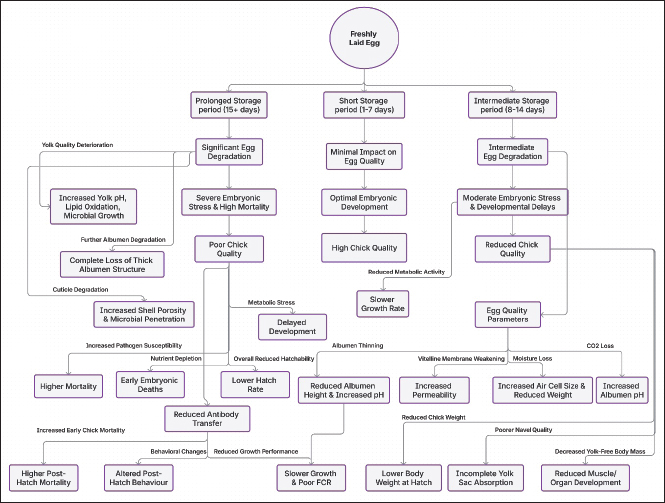
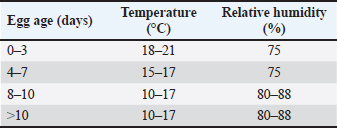
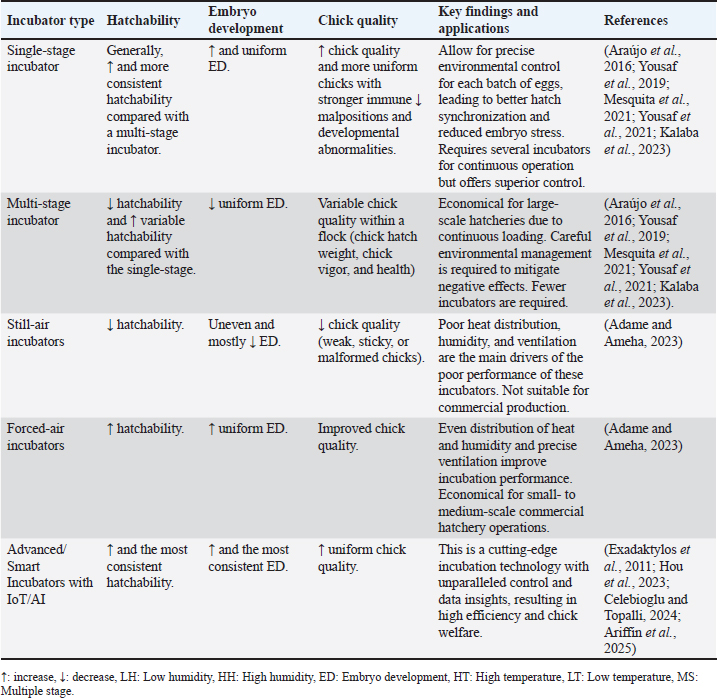
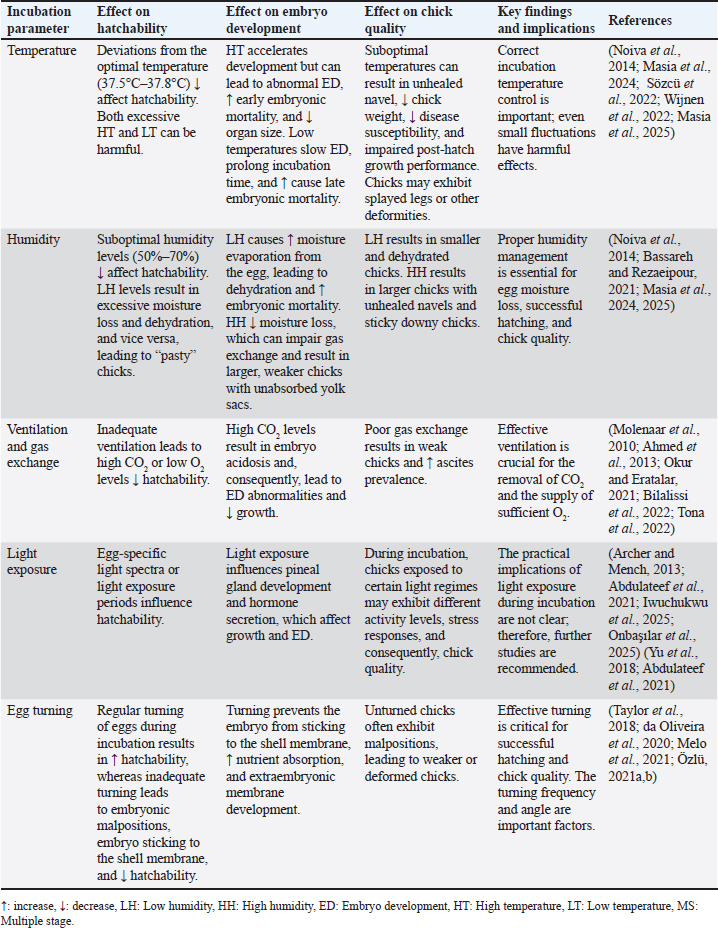
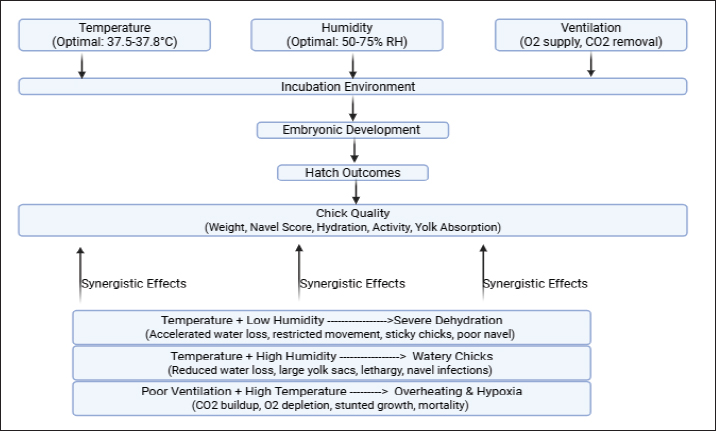
| How to Cite this Article |
| Pubmed Style Mabotha TR, Idowu PA, Nephawe KA, Mpofu TJ. Effects of egg handling, storage, and incubation management on hatchability, embryo development, and chick quality in broiler chickens: A narrative review. Open Vet. J.. 2026; 16(8): 5040-5062. doi:10.5455/OVJ.2026.v16.i8.3 Web Style Mabotha TR, Idowu PA, Nephawe KA, Mpofu TJ. Effects of egg handling, storage, and incubation management on hatchability, embryo development, and chick quality in broiler chickens: A narrative review. https://www.openveterinaryjournal.com/?mno=297414 [Access: August 08, 2026]. doi:10.5455/OVJ.2026.v16.i8.3 AMA (American Medical Association) Style Mabotha TR, Idowu PA, Nephawe KA, Mpofu TJ. Effects of egg handling, storage, and incubation management on hatchability, embryo development, and chick quality in broiler chickens: A narrative review. Open Vet. J.. 2026; 16(8): 5040-5062. doi:10.5455/OVJ.2026.v16.i8.3 Vancouver/ICMJE Style Mabotha TR, Idowu PA, Nephawe KA, Mpofu TJ. Effects of egg handling, storage, and incubation management on hatchability, embryo development, and chick quality in broiler chickens: A narrative review. Open Vet. J.. (2026), [cited August 08, 2026]; 16(8): 5040-5062. doi:10.5455/OVJ.2026.v16.i8.3 Harvard Style Mabotha, T. R., Idowu, . P. A., Nephawe, . K. A. & Mpofu, . T. J. (2026) Effects of egg handling, storage, and incubation management on hatchability, embryo development, and chick quality in broiler chickens: A narrative review. Open Vet. J., 16 (8), 5040-5062. doi:10.5455/OVJ.2026.v16.i8.3 Turabian Style Mabotha, Temosho R., Peter A. Idowu, Khathutshelo A. Nephawe, and Takalani J. Mpofu. 2026. Effects of egg handling, storage, and incubation management on hatchability, embryo development, and chick quality in broiler chickens: A narrative review. Open Veterinary Journal, 16 (8), 5040-5062. doi:10.5455/OVJ.2026.v16.i8.3 Chicago Style Mabotha, Temosho R., Peter A. Idowu, Khathutshelo A. Nephawe, and Takalani J. Mpofu. "Effects of egg handling, storage, and incubation management on hatchability, embryo development, and chick quality in broiler chickens: A narrative review." Open Veterinary Journal 16 (2026), 5040-5062. doi:10.5455/OVJ.2026.v16.i8.3 MLA (The Modern Language Association) Style Mabotha, Temosho R., Peter A. Idowu, Khathutshelo A. Nephawe, and Takalani J. Mpofu. "Effects of egg handling, storage, and incubation management on hatchability, embryo development, and chick quality in broiler chickens: A narrative review." Open Veterinary Journal 16.8 (2026), 5040-5062. Print. doi:10.5455/OVJ.2026.v16.i8.3 APA (American Psychological Association) Style Mabotha, T. R., Idowu, . P. A., Nephawe, . K. A. & Mpofu, . T. J. (2026) Effects of egg handling, storage, and incubation management on hatchability, embryo development, and chick quality in broiler chickens: A narrative review. Open Veterinary Journal, 16 (8), 5040-5062. doi:10.5455/OVJ.2026.v16.i8.3 |


