




| Research Article | ||
Open Vet. J.. 2026; 16(8): 5412-5421 !
Open Veterinary Journal, (2026), Vol. 16(8): 5412–5421 Research Article Effects of dietary rosella and anise supplementation on growth performance, carcass traits, meat quality, and immune response of Japanese quailSiham M. Othman*, Khaled M. Ben-Naser, Suliman M. Omar and Bashir M. SherifDepartment of Animal Production, Faculty of Agriculture, University of Tripoli, Tripoli, Libya *Corresponding Author: Siham M. Othman. Department of Animal Production, Faculty of Agriculture, University of Tripoli, Tripoli, Libya. Email: s.otman [at] uot.edu.ly Submitted: 12/11/2025 Revised: 22/06/2026 Accepted: 06/07/2026 Published: 08/08/2026 © 2025 Open Veterinary Journal
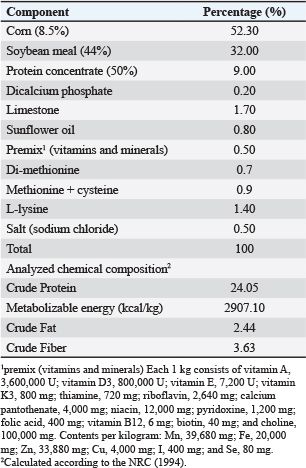
AbstractBackground: Medicinal herbs and other unconventional feed additives are increasingly being incorporated into poultry nutrition strategies. Although originally investigated as alternatives to antibiotics, their application has expanded in response to heightened consumer awareness, rising demand for healthy and organic animal products, and sustainability concerns within animal production systems. Aim: This study aimed to evaluate the effects of rosella and anise powder supplementation on growth performance, carcass traits, meat quality, and immune response in Japanese quails during the growing period. Methods: A total of 210 unsexed Japanese quail chicks were randomly assigned to seven experimental treatments: a control group fed the basal diet; 0.5% rosella supplementation (R05); 1% rosella supplementation (R1); 0.5% anise supplementation (A05); 1% anise supplementation (A1); 0.5% rosella + 0.5% anise supplementation (R05A05); and 1% rosella + 1% anise supplementation (R1A1). Each treatment consisted of three replicates, with 10 chicks per replicate. Feed and water were provided ad libitum throughout the experimental period, which spanned from days 14 to 42 of age. Results: Quails fed diets supplemented with 0.5% or 1% rosella or 1% anise exhibited significantly higher final body weight and body weight gain than the control group. In contrast, feed intake and feed conversion ratio were not affected by the treatments. Similarly, the relative weights of carcasses and internal organs, as well as meat quality traits, were not affected by the addition of rosella or anise to the diet. The immune response, including the blood protein profile, humoral immunity, and cellular immunity, was significantly enhanced in quails that received supplemented experimental treatments. Conclusion: Adding rosella and anise to Japanese quail diets may improve overall productivity and strengthen the immune response. Keywords: Anise and rosella, Carcass quality, Feed additives, Immunity, Poultry nutrition. IntroductionMedicinal and aromatic plants have been recognized for their therapeutic properties for approximately 5,000 years and have long been used in traditional medicine (Inoue et al., 2019). These plants synthesize a diverse array of chemical compounds, known as phytochemicals, whose biological effects, including antioxidant, antibacterial, antifungal, anticancer, and growth-promoting effects, as well as their potential applications in disease treatment, have been extensively investigated (Nwozo et al., 2023). Recently, considerable research has focused on the use of these plants as animal feed additives, serving as alternatives to antibiotics, which were banned in the European Union in 2006 (Castanon, 2007). The mechanisms of action of their chemical compounds remain largely unclear; however, several hypotheses have provided insights into certain aspects of these mechanisms (Zhang et al., 2019). The antioxidant activity of these herbs is attributed to their phenolic compounds, which can neutralize free radicals and protect cells and DNA from oxidative damage (Yashin et al., 2017). Furthermore, their growth-promoting role is attributed to their ability to enhance feed palatability, thereby stimulating increased feed intake (Windisch et al., 2008). In addition, medicinal herbs may enhance nutrient digestion rates by boosting the beneficial intestinal microflora population (Peterson et al., 2018). Beneficial bacteria indirectly support immune system development by removing harmful bacteria from the gut or by modifying the intestinal pH to create unfavorable conditions for harmful bacterial growth (Shinde and Deokar, 2024). Rosella (Hibiscus sabdariffa) is a tropical shrub cultivated worldwide and has been successfully used as both a food and medicinal resource for both humans and animals (Kokare et al., 2025). Rosella is characterized by its high vitamin content, especially ascorbic acid, and flavonoid abundance, both of which function as powerful antioxidants (Wong et al., 2002). Similarly, anise (Pimpinella anisum) contains a range of bioactive compounds, such as anethole, estragole, and essential oils, which exhibit beneficial antioxidant (Gulcin et al., 2003), antibacterial (Cabuk et al., 2006), and digestion-stimulation properties (Al-Kassie, 2008). Raw rosella seeds. Roselle (Hibiscus sabdariffa) is a globally cultivated tropical plant valued for its high carbohydrate content, dietary fiber, minerals, vitamins, and diverse bioactive compounds (Kokare et al., 2025). This study aimed to assess the effects of dietary supplementation with rosella and anise seed powders on the growth performance, carcass traits, meat quality, and immune response of Japanese quail. Material and MethodsBird species and experimental treatmentsThis study was conducted in the poultry laboratory of the Small Animal Facility during the summer, in September 2018. A total of 210 unsexed Japanese quail chicks (14 days of age, 44.82 ± 1.38 g initial body weight (BW) were allocated to seven experimental treatments. Each treatment included three replicates of 10 chicks per replicate (100 × 60 × 25 cm). The birds were housed in cages, each measuring 80 × 30 × 25 cm. The chicks were randomly assigned to the replicates according to a completely randomized design. Roselle and anise were obtained from local retail markets, dried, and ground into powder, and gradually incorporated during feed preparation for each group. These powders were then added to the basal diet according to the following experimental treatments: a control basal diet without supplements (CON); a basal diet + 0.5% rosella powder (R05); a basal diet + 1% rosella powder (R1); a: basal diet + 0.5% anise powder (A05); a basal diet + 1% anise powder (A1); a basal diet + 0.5% rosella powder + 0.5% anise powder (R05A05); and a basal diet + 1% rosella powder + 1% anise powder (R1A1). The basal diet was mixed and formulated according to the recommendations of the National Research Council (NRC, 1994) to meet the nutritional requirements of Japanese quail during the growth period. Table 1 presents the components and chemical composition of the basal diet. Feed and water were provided ad libitum throughout the 6-week experimental period. Birds were reared under a lighting program of 23 hours of light and 1 hour of darkness. The ambient temperature was maintained at 27°C until the third week and then reduced to 24°C from the fourth week onward. Measured traitsPerformanceBody weight gain (BWG) and feed intake were recorded weekly to measure productive performance. The feed conversion ratio was calculated weekly as the ratio of feed intake to BWG. The final BW was noted at the end of the sixth week. Carcass traitsAt week 6, the birds were fasted for 12 hours, after which five birds from each group were randomly selected to measure carcass characteristics (carcass weight [%], heart weight [%], liver weight [%], and gizzard weight [%]). Birds were weighed before slaughter, and the relative weights of the hot carcass, heart, liver, and gizzard were recorded. Following the protocol of Doty and Pierce (1961), 10 g of minced meat (a blend of breast and thigh muscles) was placed in a small cup containing 20 ml of distilled water. The mixture was stirred thoroughly and left to sit for approximately 15 minutes. The meat’s pH was then measured using a glass electrode pH meter. Meat tenderness and water-holding capacity (WHC) were measured according to Grau and Hamm (1954) and Bertoloni et al. (2006) and modified according to Volovinskaia and Merkolova (1958) and Ahaotu et al. (2013). A 0.3-g sample of minced meat was placed on Whatman No. 41 ashless filter paper and pressed for 10 minutes using a weight of 1 kg. Two distinct zones were formed on the filter paper: the first zone, resulting from the applied pressure, was used to assess meat tenderness by measuring its area (cm2) using a manual planimeter; the second zone, formed due to water absorption by the filter paper, was measured to evaluate the WHC (cm2). Meat color was determined using a spectrophotometer (Shimadzu UV160A, manufactured in Japan) based on the intensity of the fresh meat extract (Yamazake and T, 1981; and Kirrella et al., 2023). Table 1. Ingredients and chemical composition of the experimental basal diet.
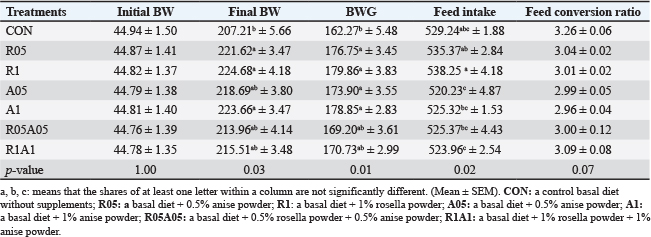
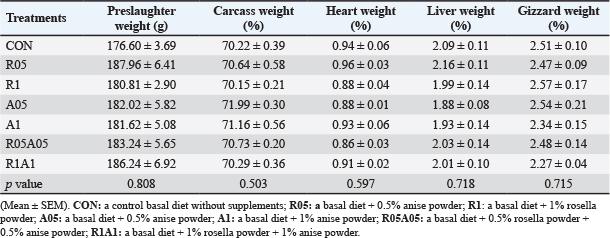
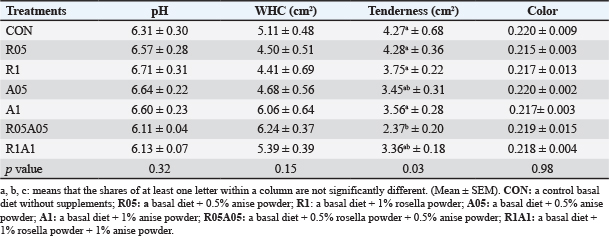
Immune responseIndividual blood samples were collected from five birds in each treatment group at 6 weeks of age via the jugular vein at the end of the experiment. Serum samples were prepared for 15 minutes to analyze total protein. Colorimetric concentration test (Henry, 1964; Ahmed and Shaarawy, 2019); albumin (color intensity with bromocresol green dye; Doumas et al., 1971; and Venkatesh and Ramana, 2025); globulin (subtracting the albumin ratio from the total serum protein; Coles and East, 1974); humoral immune response (according to Micini et al., 1965), and cell-mediated immune response (foot web index (FWI) according to Cheng and Lamont, 1988; Smits et al., 1999). Statistical analysisThis study was conducted using a completely randomized design. Samples were collected in accordance with Cohen’s (1988) methodology. Data were statistically analyzed by one-way analysis of variance, and significant differences among means were determined using Duncan’s Multiple Range Test at a significance level of p ≤ 0.05. All statistical analyses were performed using the Statistical Package for the Social Sciences software (version 16; Chicago, IL). The results are presented as mean ± standard error. Ethical approvalThe Graduate School of the University of Tripoli, Faculty of Agriculture, Department of Animal Production, approved this study. All animal welfare protocols were followed. ResultsPerformanceTable 2 displays the mean values of production performance parameters during the growth period, from 2 to 6 weeks of age. No statistically significant differences were observed in the initial BW among treatments, indicating the appropriateness of the random distribution of birds across the treatments. Significant differences (p < 0.05) were observed in the final BW for treatments R05, R1, and A1 compared with the control, with increases of 6.9%, 8.4%, and 7.9%, respectively. In contrast, despite a numerical increase, birds in treatments A05, R05A05, and R1A1 did not exhibit significant differences in final BW relative to the control. BWG from 2 to 6 weeks was heightened (p < 0.01) in R05, R1, A05, and A1, with mean gains of 176.75, 179.75, 173.90, and 178.85 g, respectively, compared with 152.27 g in the control group. The highest BWG (10.8%) was observed in R1, whereas the lowest BWG (7.2%) was observed in A05. Feed intake did not significantly differ between the supplemented and control groups, although considerable differences (p < 0.05) were observed between the experimental treatments. The highest feed intake rate was observed in the R1 group, with an average of 538.25 g/bird, contrasting with the A05 group, which had an average of 520.23 g/bird. No significant differences in the feed conversion ratio were observed across experimental treatments, with slight numerical improvements noted in A05 and A1. Carcass and meat qualityTable 3 shows that incorporating varying levels of rosella and anise in the diets of Japanese quails up to 6 weeks of age did not produce any statistically significant changes in relative carcass weight. Similarly, these dietary additives had no notable impact, positive or negative, on the relative weights of the heart, liver, and gizzard. Regarding carcass quality traits, supplementation with rosella, anise, or their combination at different inclusion rates did not significantly affect meat pH, WHC, or color when compared to the control treatment (Table 4). However, a significant decrease in meat tenderness (p < 0.05) was observed in R05A05 (2.37 cm2), which was notably lower than the control average (4.27 cm2). No other treatments showed significant differences in tenderness. Table 2. Effect of rosella and anise supplementation on the performance of Japanese quails.
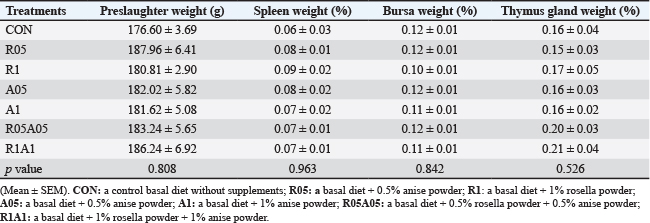
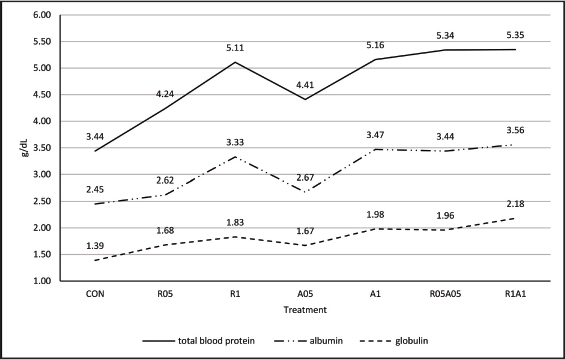
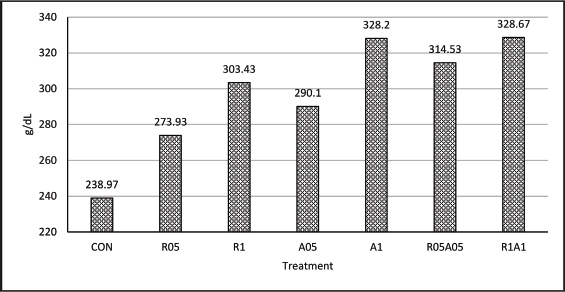
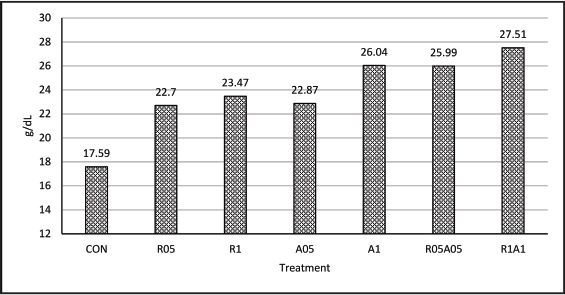
Immune responseTable 5 presents the effects of rosella and anise supplementation on the lymphoid organs of Japanese quails. Overall, the supplements had no significant effect on the weights of the spleen, bursa of Fabricius, and thymus. Addition of rosella and anise to the diet led to an increase (p < 0.01) in the average level of total blood protein (g/dl) compared with the control group (Fig. 1). Groups R1, A1, R05A05, and R1A1 exhibited higher total blood protein concentrations than the other experimental groups (p < 0.001). Birds that consumed R1, A1, or R1A1 had higher serum levels of both albumin and (p < 0.001). The data suggest that the blood protein levels of Japanese quail increase in response to increasing concentrations of rosella or anise in their diet in all groups. The most pronounced effect was observed in R1A1. Figures 2 and 3 show the humoral immune response [serum Immunoglobulin G (IgG) and Immunoglobulin M (IgM) levels], suggesting that both rosella and anise stimulated the humoral immune response (p < 0.001). Treatments A1 and R1A1 showed the highest IgG values (328.2 and 328.67 mg/dl, respectively), whereas R1A1 recorded the highest IgM (27.51 mg/dl), which was statistically different from that of the control group (17.59 mg/dl). The FWI test demonstrated a marked increase in cellular immunity, ranging from 33.33% to 61.9% above the control group (Fig. 4). The A1, R05A05, and R1A1 groups exhibited the highest immune activation, with R1A1 showing the highest levels of IgG, IgM, and FWI. DiscussionThe results indicated a significant increase in final BW and BWG with no significant changes in FIR and feed conversion ratio. Rosella and anise inclusion in poultry diets may improve growth performance according to published literature (Eltazi and S, 2014; Najm and al-Hilali, 2017; Mahmoud et al., 2024; Fayed et al., 2025). According to Hernández et al. (2004), this enhancement in growth performance may be attributed to the growth-promoting active compounds in anise seeds or to the increased activity of pancreatic enzymes, which facilitate digestion and nutrient absorption. The high ascorbic acid content of rosella improves all cell activities and increases oxygen consumption, which may act as a stimulant for the thyroid gland, a vital organ for metabolism (Hamodi and Al-Khalain, 2011). This, in turn, can improve intestinal flora and enhance nutrient absorption (Mazza and Miniti, 1993). This may be the key factor for the improved BW and cumulative weight gain over 6 weeks in the experiment. Table 3. Effect of rosella and anise supplementation on the weight of the carcass and internal organs of Japanese quails.
Table 4. Effect of rosella and anise supplementation on the meat quality of Japanese quails.
Table 5. Effect of rosella and anise supplementation on the lymphoid organs of Japanese quails.
Fig. 1. Effect of rosella and anise supplementation on total protein, albumin, and globulin levels in the blood of Japanese quails at 6 weeks of age. a, b, c: Means sharing at least one letter do not differ significantly in the line graph for total protein and albumin (p ≤ 0.01) and for globulin (p ≤ 0.05). CON: a control basal diet without supplements; R05: a basal diet + 0.5% anise powder; R1: a basal diet + 1% rosella powder; A05: a basal diet + 0.5% anise powder; A1: a basal diet + 1% anise powder; R05A05: a basal diet + 0.5% rosella powder + 0.5% anise powder; R1A1: a basal diet + 1% rosella powder + 1% anise powder.
Fig. 2. Effect of rosella and anise supplementation on the level of immunoglobulin (IgG) in the blood of Japanese quails at 6 weeks of age. a, b, c, d, and e: Means sharing at least one common letter within the same column do not differ significantly (p ≤ 0.001). CON: a control basal diet without supplements; R05: a basal diet + 0.5% anise powder; R1: a basal diet + 1% rosella powder; A05: a basal diet + 0.5% anise powder; A1: a basal diet + 1% anise powder; R05A05: a basal diet + 0.5% rosella powder + 0.5% anise powder; R1A1: a basal diet + 1% rosella powder + 1% anise powder.
Fig. 3. Effect of rosella and anise supplementation on the level of immunoglobulin (IgM) in the blood of Japanese quails at 6 weeks of age. a, b, c, and d: Means sharing at least one common letter within the same column do not differ significantly (p ≤ 0.001). CON: a control basal diet without supplements; R05: a basal diet + 0.5% anise powder; R1: a basal diet + 1% rosella powder; A05: a basal diet + 0.5% anise powder; A1: a basal diet + 1% anise powder; R05A05: a basal diet + 0.5% rosella powder + 0.5% anise powder; R1A1: a basal diet + 1% rosella powder + 1% anise powder. Our results revealed no significant changes in the relative weight of the carcass, liver, heart, and gizzard as a result of supplemental feeding with rosella and anise in Japanese quails. These findings align with those of Hamodi and Alkhilani (2011), who found that anise seeds had no significant impact on carcass parts, and Nasrawi (2013), who reported that adding rosella did not significantly affect the edible internal organs (heart, liver, and gizzards). More recently, Mahmoud et al. (2024) reported that adding a 10% concentration did not affect the dressed carcass and internal organs. Conversely, some studies have shown significant improvements in carcass weights, carcass cuts, and certain edible organs when poultry are fed rosella and anise (Seleem et al., 2008; Omolade et al., 2015). Supplementing Japanese quails with rosella and anise generally had no statistically significant effect on pH, WHC, meat tenderness, or color, except for the R05A05 treatment, which markedly decreased meat tenderness. Al-Nassiri and Hasan (2022) found that the inclusion of rosella at different levels (0.5%, 0.6%, 0.7%, and 0.8%) in broiler feed increased meat pH and decreased meat moisture, which negatively affected meat tenderness. In addition, Hemati et al. (2020) reported that the addition of anise extract (200 mg/kg) resulted in a significant increase in WHC, without affecting the broiler meat pH. Supplemental feeding of rosella at levels of 0.5%, 0.6%, 0.7%, and 0.8% did not affect the WHC of broiler meat, except for the group that consumed 0.5% rosella, which showed a significant increase (Al-Nassiri and Hasan, 2022). Such discrepancies in findings may be attributed to variations in administered dosages, differences in bird species and age, or fluctuations in environmental conditions and husbandry practices employed across studies.
Fig. 4. Effect of rosella and anise supplementation on the level of cellular immunity (FWI) in the blood of Japanese quails at 6 weeks of age. a, b, c: Means sharing at least one common letter within the same column do not differ significantly (p ≤ 0.001). CON: a control basal diet without supplements; R05: a basal diet + 0.5% anise powder; R1: a basal diet + 1% rosella powder; A05: a basal diet + 0.5% anise powder; A1: a basal diet + 1% anise powder; R05A05: a basal diet + 0.5% rosella powder + 0.5% anise powder; R1A1: a basal diet + 1% rosella powder + 1% anise powder. The immune response is a key indicator of bird health and is evaluated through various methods, such as measuring humoral and cellular immunity and weighing major lymphoid organs. Although the weight of lymphoid organs showed no significant changes in this trial, indicating neutral dietary effects of rosella and anise, an enhanced immune response was observed in birds fed hibiscus and anise. Similarly, Ben Naser et al. (2023) reported that feeding broiler chickens with clove buds did not affect the lymphoid organs but improved cell-mediated immunity. In addition, Csernus et al. (2020) found that anthocyanins did not affect spleen weight. Similarly, Amer et al. (2022) reported that the relative weights of the immune organs (spleen and bursa of Fabricius) were unaffected by anthocyanin-rich rosella extract supplements. Our study agrees with Al-Shammari et al. (2017), who reported an increase in the levels of total protein, albumin, and globulin in the blood of broiler chickens fed with anise aqueous extract on days 28 and 56. Similarly, Amer et al. (2022) concluded that a diet supplemented with anthocyanin-rich hibiscus extract led to an increase in total protein levels in the blood serum of broiler chickens. The increase in total protein, albumin, and globulin levels may be due to the effect of vitamin C-rich rosella in increasing the basal metabolic rate by stimulating cell activity, the thyroid gland, and oxygen consumption (Hamodi and Al-Khalain, 2011), and to the effect of anise in increasing the rates of digestion and absorption by increasing the activity of pancreatic juice (Hernandez et al., 2004). According to Tyler et al. (1996), IgG concentrations increase with increasing serum total protein concentrations, which is consistent with the results of this study. Craig (1999) reported that many medicinal and aromatic herbs, including rosella, can stimulate the immune system. According to Guo (2003), some components of medicinal and aromatic plants could improve the physical conditions of the intestinal ecosystem and enhance immune function in chicks. Park et al. (2011) also noted an increase in the number of immune cells in the thymus, spleen, and bursa of Fabricius. In addition, Amer et al. (2022) reported a significant increase in IgG antibody levels in the spleen, indicating an enhancement of humoral immunity. A remarkable increase in lysozyme, interleukin-10, and complement component (C3) levels was also observed in the serum of broiler chickens treated with rosella extract. Silybum marianum improved cellular immunity (the highest wing-web thickness of birds received 9% of Silybum marianum in the diet) in broilers (Shahsavan et al., 2021), ginger at levels up to 0.75% boosted cell-mediated immunity, as measured by the FWI in broilers (Dosu and G, 2021), herbal blend enhanced humoral immunity (IgY and IgA) and cellular immunity (FWI) in broilers (Chaple, 2023), and herbal mixture enhanced humoral immunity (IGY) and cellular immunity (PHA-P thickness and DNCB thickness) in broilers (Alizadeh-Ghamsari et al., 2025). The beneficial properties of medicinal and aromatic plants for improving cellular and biochemical parameters of the blood, stimulating resistance to various stress factors, and improving performance and growth may result from the enhancement of biological processes, metabolism, and utilization by powders and extracts of such plants. Optimal nutrients for the digestive system (Obianwuna et al., 2024). ConclusionIn conclusion, this study shows that supplementing with 1% rosella or anise significantly boosted the final weight and total weight gain in the groups administered these supplements, without affecting the feed intake or feed conversion ratio. Internal organ weights (heart, liver, and gizzard) and meat quality were unaffected by the supplements. A notable enhancement in immune response was evident, with higher IgG and IgM antibody levels and improved cellular immunity. Blood protein, albumin, and globulin levels also increased, indicating an immune boost, whereas lymphoid organ weights remained unchanged. Overall, adding rosella and anise at 1%, or their combination at 0.5% and 1%, to the diet of 6-week-old Japanese quail led to meaningful gains in growth and immune function with minimal downsides. AcknowledgmentsNone. Conflict of interestThe authors declare no conflicts of interest. FundingThis study received no specific grant. Authors’ contributionsSiham M. Othman: corresponding author and preparation of tables and figures. Khaled M. Ben Naser: statistical analysis and figure design. Suliman M. Omar: Data interpretation and manuscript revision. Bashir M. Sherif: conducted the experimental work, collected and analyzed the data, and drafted the manuscript. All authors have read and approved the final version of the manuscript before submission and agree to be accountable for all aspects of the work. Data availabilityAll data supporting this study’s findings are available within the manuscript. Any other data are available from the corresponding author upon reasonable request. ReferencesAhaotu, E.O., Uwalaka, R.E., Okonkwo, V.N. and Ikojo, H.A. 2013. Dried giant snail meal (Archachatina achatina) on the performance in broiler diets. Int. J. Agric. Biosci. 2(5), 270–276. Ahmed, M.E. and Shaarawy, A.M. 2019. Effect of feeding Moringa oleifera forage on productive performance of growing goat kids. Egypt. J. Sheep Goats Sci. 14(1), 25–37. Alizadeh-Ghamsari, A.H., Moftakharzadeh, S.A. and Hosseini, S.A. 2025. Evaluation of drinking water supplementation of two different herbal blends on productive performance and immune responses of broiler chickens. Acta. Scientiarum. 47, 1–9. Al-Kassie, G.A.M. 2008. The effect of anise and rosemary on broiler performance. Int. J. Poultry Sci. 7(3), 243–245. Al-Nassiri, A.M.N. and Hasan, M.O. 2022. Effect of adding different levels of roselle flowers powder (Hibiscus sabdariffa) to the dietary on meat traits of broilers. Biochem. Cellular Arch. 22(1), 3401. Al-Shammari, K.I.A., Batkowska, J. and Gryzińska, M.M. 2017. Effect of various concentrations of an anise seed powder (Pimpinella anisum L.) supplement on selected hematological and biochemical parameters of broiler chickens. Braz. J. Poultry Sci. 19(1), 41–46. Amer, S.A., Al-Khalaifah, H.S., Gouda, A., Osman, A., Goda, N.I.A., Mohammed, H.A., Darwish, M.I.M., Hassan, A.M. and Mohamed, S.K.A. 2022. Potential effects of anthocyanin-rich roselle (Hibiscus Sabdariffa L.) extract on the growth, intestinal histomorphology, blood biochemical parameters, and the immune status of broiler chickens. Antioxidants 11(3), 1–20. Ben Naser, K.M., Sherif, B.M., Othman, S.M. and Asheg, A.A. 2023. Effect of clove buds powder supplementation on hematological profile, biochemical parameters, lymphoid organs, and cell-mediated immunity of broilers. Open. Vet. J. 13(7), 854–863. Bertoloni, W., Silveira, E.T.F., Ludtke, C.B. and Costa, M.D.R. 2006. Avaliação de diferentes híbridos suínos submetidos à insensibilização elétrica e gasosa (CO2): parte 2-mensurações objetivas de qualidade. Food Sci. Technol. 26, 343–354. Cabuk, M., Bozkurt, M., Alcicek, A., Akbas, Y. and Kucukyilmaz, K. 2006. Effect of an herbal essential oil mixture on growth and internal organ weight of broilers from young and old breeder flocks. South. Afr. J. Anim. Sci. 36(2), 135–141. Castanon, J.I.R. 2007. History of the use of antibiotic as growth promoters in European poultry feeds. Poultry. Sci. 86(11), 2466–2471; doi:10.3382/ps.2007-00249 Chaple, P.S. 2023. To study the immunomodulatory effect of herbal feed additives in broiler chicken, Doctoral dissertation. U.P. Pandit Deen Dayal Upadhyaya pashu Chikitsa Vigyan Vishwavidyalaya Evam Go Anusandhan Sansthan (DUVASU) Mathura. Cheng, S. and Lamont, S.J. 1988. Genetic analysis of the immunocompetence measure in the White Leghorn chicken line. Poultry. Sci. 59, 989–995. Cohen, J. 1988. Statistical power analysis for the behavioral sciences, 2nd ed. Hillsdale, NJ: Lawrence Erlbaum Associates, Inc.. Coles. and East, H. 1974. Clinical veterinary pathology. Philadelphia, Canada: W. B. Saunders Company. Craig, W.J. 1999. Health promoting properties of common herbs. Am. J. Clin. Nutr. 70(3), 491–499. Csernus, B., Biró, S., Babinszky, L., Komlósi, I., Jávor, A., Stündl, L., Remenyik, J., Bai, P., Oláh, J. and Pesti-Asbóth, G. 2020. Effect of carotenoids, oligosaccharides, and anthocyanins on growth performance, immunological parameters, and intestinal morphology in chickens challenged with Escherichia coli lipopolysaccharide. Animals 10, 1–20. Dosu, G. 2021. Effect of dietary ginger root extract supplementation on immunocompetence and growth performance of broiler chickens. Greensboro, NC: North Carolina Agricultural and Technical State University. Doty, D.M. and Pierce, J.C. 1961. Beef muscle characteristics related to carcass grade, carcass weight, and age, 1st ed. Richmond, Virginia: U.S. Department of Agriculture. Doumas, B.T., Watson, W.A. and Biggs, H.G 1971. Albumin standards and the measurement of serum albumin with bromcresol green. Clinica Chimica acta. 31, 87–96. Duncan, D.B. 1955. Multiple range and multiple F-test. Biometrics 11, 1–42. Eltazi, S. 2014. Effect of using anise seeds powder as natural feed additive on performance and carcass quality of broiler chicks. Int. J. Pharm. Res. Allied Sci. 3(2), 1–8. Fayed, A.M., Salama, W.A., Shamesldeen, A.E., Mousa, M.A.M., A. El-komy, H.M. and Hassan, A.A. 2025. The using of roselle flower (Hibiscus sabdariffa l.) and anise seeds (Pimpinella anisum l.) as natural growth promoters in rabbits diets. Egypt. J. Nutr. Feeds 28(1), 95–113. Grau, R. and Hamm, R. 1954. Brühwurstqualität und bestimmung der wasserbindung in fleisch. Fleischwirtschaft 6, 36. Gulcin, I., Oktay, M., Kirecci, E. and Kufrevioglu, O.I. 2003. Antioxidant and antimicrobial activities of anise (Pimpinella anisum L) seed extracts. Food. Chem. 83, 371–382. Guo, F.C. 2003. Mushroom and herb polysaccharides as alternative for antimicrobial growth promoters on poultry. Wageningen, The Netherlands: Department of Animal Nutrition, Wageningen Institute of Animal Sciences, Wageningen University. Hamodi, S.J. and Alkhilani, F.M. 2011. Compared between anise seeds (Pimpinella anisum L.) and Roselle flowers (Hibiscus sabdariffa) by their affected-on production performance of broiler. Adv. Environ. Biol. 5(2), 461–465. Hemati, M., Fakhraei, J., Yaghobfar, A., and Yarahmadi, H.M. 2020. Effects of hydroalcoholic extract of hogweed and anise on broiler meat quality, immune responses, and intestinal microflora and morphology. Jundishapur J. Nat. Pharm. Prod. 15(1), 1–8. Henry. 1964. Clinical chemistry. New York, NY: Harper and Row Publishers. Hernandez, F., Madrid, J., Garcia, V., Orengo, J. and Megias, M.D. 2004. Influence of 2 plant extracts on broiler performance digestibility and size of the digestive organ. Poultry. Sci. 83, 169–174. Hernández, F., Madrid, J., García, V., Orengo, J. and Megías, M.D. 2004. Influence of two plant extracts on broilers performance, digestibility, and digestive organ size. Poultry. Sci. 83, 169–174. Inoue, M., Hayashi, S., Craker, L. and East. 2019. Role of medicinal and aromatic plants: past, present, and future pharmacognosy in medicinal plants. Tokyo, Japan: GREEN FLASK Inc; IntechOpen. Kirrella, A.A.K., El-Kassas, S., Mostfa, S.M., Younes, H.H., Helal, M. and Ragab, M. 2023. The comparison of two different plumage-color lines of Japanese quail (Coturnix japonica) disclosed a significant effect in increasing abdominal fat contents with increasing age. Trop. Anim. Health Prod. 55(3), 180. Kokare, S.A., Kalamb, V.S., Bakal, R.L. and Hatwar, P.R. 2025. Hibiscus sabdariffa L.: a comprehensive review of its phytochemistry, traditional uses and therapeutic potentials. Flora J. 13; doi:10.1016/j.flora.2025.07.011 Mahmoud, R., Ghanem, H., Wahed, N. and Ateya, A. 2024. Assessing the viability of incorporating sunflower meal and roselle seed meal as unconventional protein sources in the diets of Japanese quails on growth performance, carcass characteristics, serum metabolites, gene expression, and economic efficiency. Egypt. J. Vet. Sci. 55(5), 1371–1386. Mazza, G. and Miniti, E. 1993. Anthocyanin in fruit vegetables and grains. Boca Raton, FL: CRC Press. Micini, G., Garbonara, A.O. and Harmans, H. 1965. Immunochemical antigen quantitation by single radial immunodiffusion. Immunochemistry 2, 235–241. Najm, Z.M. and Al-Hilali, A.H.K. 2017. The effect of aqueous extract of anise seeds. Pimpinella anisum L. Effect on body weight, weight gain, feed consumption and feed conversion ratio of Japanese quail. Quart. J. Anim. Sci. 7(2), 139–212. Nasrawi, M.A. 2013. Evaluation of roselle hibiscus sabdariffa flower as a nutritive additive on the productive performance of broiler. Iraqi. J. Vet. Med. 37(1), 69–74; doi:10.1016/j.ijvm.2013.09.010 NRC. 1994. Nutrition requirements of poultry, 9th ed. Washington DC: National Academy Press. Nwozo, O.S., Effiong, E.M., Aja, P.M. and Awuchi, C.G. 2023. Antioxidant, phytochemical, and therapeutic properties of medicinal plants: a review. Int. J. Food. Properties. 26(1), 359–388. Obianwuna, U.E., Chang, X., Oleforuh-Okoleh, V.U., Onu, P.N., Zhang, H., Qiu, K. and Wu, S. 2024. Phytobiotics in poultry: revolutionizing broiler chicken nutrition with plant-derived gut health enhancers. J. Anim. Sci. Biotechnol. 15(1), 1–33. Omolade, A., Abiola, A.A. and Grace, L.O. 2015. Effect of graded levels of roselle (Hibiscus sabdariffa Linn.) calyx extract on performance and carcass characteristic of broiler chickens. Int. J. Poultry. Sci. 14(6), 343–347. Park, I.J., Cha, S.Y., Kang, M., So, Y.S., Go, H.G., Mun, S.P., Ryu, K.S. and Jang, H.K. 2011. Effect of proanthocyanidin-rich extract from Pinus radiata bark on immune response of specific-pathogen-free White Leghorn chickens. Poultry Sci. 90, 977–982. Peterson, C.T., Sharma, V., Uchitel, S., Denniston, K., Chopra, D., Mills, P.J. and Peterson, S.N. 2018. Prebiotic potential of herbal medicines used in digestive health and disease. J. Alternative. Complementary. Med. 24(7), 656–665. Seleem, T.S.T., Hanna, M.F.S., Radwan, H.E. and Ali, K.A.A. 2008. Some productive and reproductive aspects of rabbits as influenced Anise (Yansoon) seeds in diets. In 1 st Egyptian conference on rabbit Sciences, Department of Animal Production, pp: 155–166. Shahsavan, M., Salari, S. and Ghorbani, M. 2021. Effect of dietary inclusion of Silybum marianum oil extraction byproduct on growth performance, immune response and cecal microbial population of broiler chicken. Biotechnol. Anim. Husbandry 37(1), 45–64. Shinde, Y. and Deokar, G. 2024. Regulation of gut microbiota by herbal medicines. Curr. Drug Metab. 25(2), 110–127. Smits, J.E., Bortolotti, G.R. and Tella, J.L. 1999. Simplifying the phytohaemagglutinin skin-testing technique in studies of avian immunocompetence. Funct. Ecol. 13(4), 567–572. SPSS. 2007. SPSS 16.0.1 for Windows. Chicago, IL: SPSS Inc. Available via http://www.spss.com. Tyler, J.W., Besser, T.E., Wilson, L., Hancock, D.D., Sanders, S. and Rea, D.E. 1996. Evaluation of a whole blood glutaraldehyde coagulation test for the detection of failure of passive transfer in calves. J. Vet. Internal. Med. 10(2), 82–84. Venkatesh, U. and Ramana, B.V. 2025. Assessment of hepatoprotective and nephroprotective potentials of a novel anti-diabetic poly herbal preparation. Res. J. Pharm. Technol. 18(4). Venkatesh, U. and Ramana, B.V. 2025. Assessment of hepatoprotective and nephroprotective potentials of a novel anti-diabetic poly herbal preparation. Res. J. Pharm. Technol. 18(4). Volovinskaia, V.P. and Merkolova, M. 1958. Methods for determination of meat water holding capacity. Office of technical information. Allunion 1, 21–27. Windisch, W., Schedle, K., Plitzner, C. and Kroismayr, A. 2008. Use of phytogenic products as feed additives for swine and poultry. J. Anim. Sci. 86(suppl_14), 140–148; doi:10.2527/jas.2007-0459 Wong, P., Yusof, S., Ghazah, H.M. and Cheman, Y.E. 2002. Physico-chemical characteristics of roselle (Hibiscus sabdariffa L.). Nutr. Food Sci. 32, 68–73. Yamazake, T. 1981. Effect of age and fatness on the quality and quantity of beef cattle III. Changes in the marbling score of the cut surface of the loin and inner muscular fat contents of various cuts with age. Bull. Nat. Grassland Res. Inst. 18, 69–77. Yashin, A., Yashin, Y., Xia, X. and Nemzer, B. 2017. Antioxidant activity of spices and their impact on human health: a review. Antioxidants 6(3), 1–18. Zhang, W., Huai, Y., Miao, Z., Qian, A. and Wang, Y. 2019. Systems pharmacology for investigation of the mechanisms of action of traditional Chinese medicine in drug discovery. Front. Pharmacol. 10, 743; doi:10.1016/j.fpharma.2019.07.743 | ||

| How to Cite this Article |
| Pubmed Style Othman SM, Ben-naser KM, Omar SM, Sherif BM. Effects of dietary rosella and anise supplementation on growth performance, carcass traits, meat quality, and immune response of Japanese quail. Open Vet. J.. 2026; 16(8): 5412-5421. doi:10.5455/OVJ.2026.v16.i8.34 Web Style Othman SM, Ben-naser KM, Omar SM, Sherif BM. Effects of dietary rosella and anise supplementation on growth performance, carcass traits, meat quality, and immune response of Japanese quail. https://www.openveterinaryjournal.com/?mno=296209 [Access: August 08, 2026]. doi:10.5455/OVJ.2026.v16.i8.34 AMA (American Medical Association) Style Othman SM, Ben-naser KM, Omar SM, Sherif BM. Effects of dietary rosella and anise supplementation on growth performance, carcass traits, meat quality, and immune response of Japanese quail. Open Vet. J.. 2026; 16(8): 5412-5421. doi:10.5455/OVJ.2026.v16.i8.34 Vancouver/ICMJE Style Othman SM, Ben-naser KM, Omar SM, Sherif BM. Effects of dietary rosella and anise supplementation on growth performance, carcass traits, meat quality, and immune response of Japanese quail. Open Vet. J.. (2026), [cited August 08, 2026]; 16(8): 5412-5421. doi:10.5455/OVJ.2026.v16.i8.34 Harvard Style Othman, S. M., Ben-naser, . K. M., Omar, . S. M. & Sherif, . B. M. (2026) Effects of dietary rosella and anise supplementation on growth performance, carcass traits, meat quality, and immune response of Japanese quail. Open Vet. J., 16 (8), 5412-5421. doi:10.5455/OVJ.2026.v16.i8.34 Turabian Style Othman, Siham M., Khaled M. Ben-naser, Suliman M. Omar, and Bashir M. Sherif. 2026. Effects of dietary rosella and anise supplementation on growth performance, carcass traits, meat quality, and immune response of Japanese quail. Open Veterinary Journal, 16 (8), 5412-5421. doi:10.5455/OVJ.2026.v16.i8.34 Chicago Style Othman, Siham M., Khaled M. Ben-naser, Suliman M. Omar, and Bashir M. Sherif. "Effects of dietary rosella and anise supplementation on growth performance, carcass traits, meat quality, and immune response of Japanese quail." Open Veterinary Journal 16 (2026), 5412-5421. doi:10.5455/OVJ.2026.v16.i8.34 MLA (The Modern Language Association) Style Othman, Siham M., Khaled M. Ben-naser, Suliman M. Omar, and Bashir M. Sherif. "Effects of dietary rosella and anise supplementation on growth performance, carcass traits, meat quality, and immune response of Japanese quail." Open Veterinary Journal 16.8 (2026), 5412-5421. Print. doi:10.5455/OVJ.2026.v16.i8.34 APA (American Psychological Association) Style Othman, S. M., Ben-naser, . K. M., Omar, . S. M. & Sherif, . B. M. (2026) Effects of dietary rosella and anise supplementation on growth performance, carcass traits, meat quality, and immune response of Japanese quail. Open Veterinary Journal, 16 (8), 5412-5421. doi:10.5455/OVJ.2026.v16.i8.34 |


