




| Research Article | ||
Open Vet. J.. 2026; 16(5): 3192-3202 Open Veterinary Journal, (2026), Vol. 16(5): 3192-3202 Research Article Genotypic detection of some virulence factors and genetic tree of Staphylococcus aureus isolated from buffalo with subclinical mastitis in Nineveh governorateFahad Yaseen Taha1, Ayman Hani Taha2 and Omar Hashim Sheet2*1Department of Internal and Preventive Medicine, College of Veterinary Medicine, University of Mosul, Mosul, Iraq 2Department of Veterinary Public Health, College of Veterinary Medicine, University of Mosul, Mosul, Iraq *Corresponding Author: Omar Hashim Sheet. Department of Veterinary Public Health, College of Veterinary Medicine, University of Mosul, Mosul, Iraq. Email: omar.sheet [at] yahoo.com Submitted: 03/10/2025 Revised: 11/02/2026 Accepted: 23/02/2026 Published: 31/05/2026 © 2025 Open Veterinary Journal
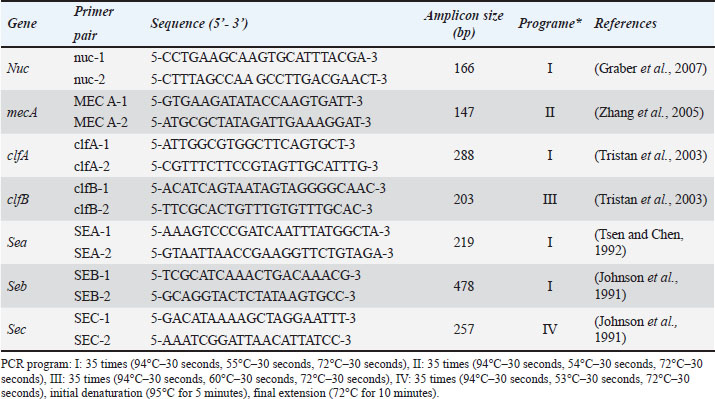
ABSTRACTBackground: Staphylococcus aureus (S. aureus) is identified as the foremost cause of inflammation of the milk-secreting glands of buffalo and all ruminant animals. This bacterium carries various genes that encode virulence factors. Aims: This study aimed to identify the prevalence of S. aureus in milk specimens from buffalo farms, identify specific genes associated with virulence, and compare the genetic similarity of the study isolates with S. aureus isolates from different regions worldwide. Methods: Sixty subclinical milk samples were collected from buffaloes from October to December 2024 across various locations in the Nineveh governorate. This study employed standard microbiological procedures, including the use of various types of media and biochemical tests. Additionally, the presence of nuc, mecA, clfA, clfB, sea, seb, and sec genes in the isolates was determined using polymerase chain reaction. Results: Staphylococcus aureus was detected in 15% (9/60) of buffalo subclinical mastitis milk samples, with a higher prevalence rate of 30% (3/10) in buffalo milk samples from the Kaneitra district. While nuc, clfA, and clfB were present in all S. aureus isolates, the mecA, sea, seb, and sec genes were not. Using clfA gene analysis, five distinct strain sequences were identified and deposited to GenBank. Conclusions: Five S. aureus strains were found to share characteristics with strains from all over the world using phylogenetic analysis; the isolates exhibit distinct characteristics according to strain type and global distribution. Keywords: Genetic tree, S. aureus, buffalo milk, virulence factors. IntroductionThere are two primary species of buffalo in the Bovidae family. The first is the Asiatic buffalo (Bubalus bubalis), which is found all over Asia and is also referred to as the domesticated water buffalo. The second species is the African buffalo (Syncerus caffer), which is native to sub-Saharan Africa and is now essentially wild. The most frequent livestock species raised in Asia are buffaloes, which generate about 97% of the world's milk. This exceptional contribution is responsible for the region's annual milk production of nearly 89.2 million tons (Qar and Governorates, 2007). Water buffalo may be seen in marshlands, rural communities, and some urban areas in Iraq (Sharma et al., 2012). There are about 318,000 water buffalo in Iraq, and they live in rural regions and marshes where their milk is an essential economic resource for dairy production (Ayied and Reiss, 2019). Buffalo milk is also the main source of dairy products in Mosul, where about 20 factories produce five tons of dairy every day. The local economy is greatly enhanced by the export of half of this supply to other parts of Iraq and the Kurdistan Region (Alfekaiki, 2018). In dairy buffaloes, mastitis is a prevalent and expensive disease that has a detrimental effect on their health. It causes significant financial losses for farmers by decreasing milk quality and output while raising veterinarian expenses and culling risk (Lamey et al., 2013; Aflakian et al., 2022). Subclinical mastitis is an asymptomatic disorder that is 15 times more frequent than clinical mastitis. It spreads rapidly across the herd and results in decreased milk production and quality (Shearer and Harris, 2003). However, one of the most significant diseases impacting buffalo producers and the larger dairy supply system is mastitis (Pisanu et al., 2019). Numerous microorganisms, including infectious diseases, have been associated with Mediterranean buffalo mastitis (Guccione et al., 2016a; Guccione et al., 2017). In dairy farms, Staphylococcus aureus is the main cause of mastitis. The infections are frequently resistant to conventional treatments, resulting in financial losses due to elevated inflammatory cell counts in milk, decreased output, and increased veterinary costs. For the pathogenicity and diagnosis of S. aureus, virulence-associated factors are essential. One important virulence factor unique to this bacteria is the thermonuclease (nuc) gene, which is frequently used as a genetic marker to identify it in different samples (Seegers et al., 2003; Sharma and Maiti, 2010; Hu et al., 2012). Moreover, clumping factors A and B are also important adhesion molecules that have been established as virulence factors in endocarditis models (Heilmann, 2011). Although the exact character of coagulase (coa) in intramammary infections is still unclear, it is well established that a large proportion of S. aureus recovered from these infections can coagulate bovine plasma (Sutra and Poutrel, 1994). Additionally, S. aureus can produce various exoproteins, and SEs are major contributors to food-borne illnesses (Argudín et al., 2010). It is estimated that enterotoxins are responsible for approximately 95% of cases of staphylococcal food poisoning, with the outstanding 5% caused by newly discovered SEs (Papadopoulos et al., 2019). Previous research has identified S. aureus in the milk of cows (Sheet, 2022), camels (Sheet et al., 2021), sheep (Alalaf et al., 2025), and goats (Taha et al., 2025). Furthermore, S. aureus has been detected in foods such as meat (Saber and Sheet, 2025) and fish (Taha et al., 2024). Molecular biology methods offer a rapid and sensitive alternative for detecting S. aureus, enabling identification within hours instead of the several days required by conventional methods (Gao et al., 2011). This study aimed to isolate S. aureus from the milk of buffaloes with subclinical mastitis and to detect genes associated with virulence factors—including nuc, mecA, clfA, and clfB, as well as genes encoding staphylococcal enterotoxins, including sea, seb, and sec. Additionally, the study aimed to compare the S. aureus strains identified here with those reported in previous studies to explore possible relationships using the phylogenetic tree. Materials and MethodsEthical approvalThe study was approved by the Institutional Animal Care and Use Committee of the College of Veterinary Medicine at Mosul University under ID number UM.Vet. 2024.097. Sample collection was conducted following approval from the owners and handled in accordance with the ethical guidelines. Samples collectionIn this study, 60 samples collected from lactating buffaloes with subclinical mastitis were analyzed using the California mastitis test between October and December 2024. Ten samples were obtained from each region in Nineveh province, including Kaneitra, Haey Al-Kanesa, Boseif, Al-Shamseat, Bedoush, and Koba. Each sample consisted of 25 ml of milk collected aseptically into sterile tubes. In order to preserve their original state, samples were brought to the central laboratory under chilled conditions in a cold box containing CO₂ ice (Quinn et al., 2011). After that, the milk samples were inoculated onto mannitol salt agar. Isolation and characterization of S. aureus To characterize S. aureus colonies, researchers have discovered the isolates using widely recognized microbiological culturing methods, relying on colony morphology on selective media to evaluate aspects such as size, shape, color, and texture. To further verify that the bacteria were Gram-positive, we performed Gram staining. Additional biochemical testing included examining coagulase and catalase activities. Collectively, these techniques provided reliable identification of S. aureus isolates (Quinn et al., 2002). DNA extractionStaphylococcus aureus isolates were cultivated overnight on a mannitol salt medium at 37°C, and fresh cultures were used for genomic DNA extraction. DNA was extracted using a genomic DNA extraction kit (Addbio, Korea), specially designed for Gram-positive bacteria, as recommended by the manufacturer. The amount of extracted DNA (18.5–50 ng/μl to 50 ng/μl) using Nanodrop (Jenway, UK) and preserved at −20°C. Reaction of the polymerase chain reaction (PCR)The PCR assay was performed to amplify the nuc, mecA, clfA, clfB, sea, seb, and sec genes using the assay conditions described in Table 1. DNA replication was performed in a 200 μl tube supplemented with an overall quantity of 50 μl. The reaction mixture comprised 8 μl of S. aureus genomic DNA, 25 μl Green Master Mix (2×) (Addbio, Korea), 2 μl of each specific primer, and 13 μl of RNase/DNase-free water (Addbio, Korea). The amplified PCR products were analyzed by agarose gel electrophoresis (2% agarose; Peqlab, Germany) using a DNA ladder (100 bp) as a molecular size marker. Table 1. PCR cycle conditions for different programs and primers used for detecting S. aureus genes.
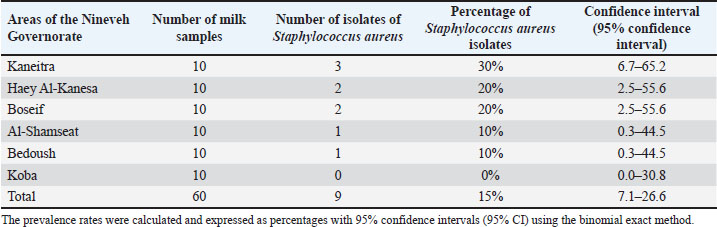
DNA sequencingFive PCR amplicons derived from S. aureus isolates obtained from buffalo milk were submitted to Macrogen Inc., a commercial sequencing facility located in the Republic of Korea, for purification and DNA sequencing. These amplicons had been previously confirmed as S. aureus-positive through conventional PCR. The clfA gene was selected for sequencing. The resultant clfA gene sequences were compared with previously published S. aureus sequences in the GenBank database (http://www.ncbi.nlm.nih.gov) using the NCBI BLASTn tool. The CLUSTALW tool in MEGA11 was used for multiple sequence alignment and homology assessment. CLUSTALW and MEGA11 were used to construct phylogenetic trees. A rigorous approach, including sequencing and bioinformatics analysis, has been developed to provide information regarding the genetic relationships and evolutionary history of S. aureus strains isolated from buffalo milk. Statistical analysisThe SAS Institute Inc. (2021) was employed for statistical analysis. Based on chi-square analysis, the percentage of S. aureus isolates varied significantly between the locations under study (p > 0.05). ResultsIncidence of S. aureus infectionAccording to our study, S. aureus isolates were detected in 15% (9/60) of buffaloes with SCM. The Kaneitra region showed the highest percentage of cases, with S. aureus isolated from 30% (3/10) of the samples. Consequently, 20% (2/10) of Haey Al-Kanesa and Boseif had a proportion of S. aureus. Subsequently, its occurrence rate in Al-Shamseat and Bedoush was 10% (1/10). No S. aureus was isolated from Koba (Table 2). The relationship between sampling locations in the Nineveh governorate and the presence of S. aureus in milk samples was assessed using the chi-square (χ²) test. According to the analysis, the distribution of S. aureus isolates did not differ significantly across the areas under study (p > 0.05). Table 2. The number and percentage of S. aureus isolates from buffalo milk with subclinical mastitis in different areas of the Nineveh governorate.
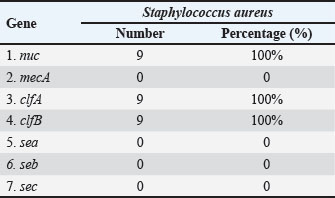
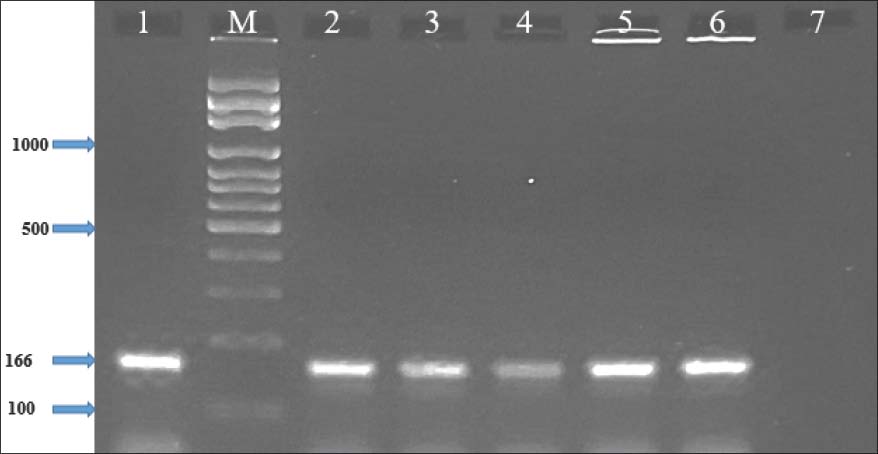
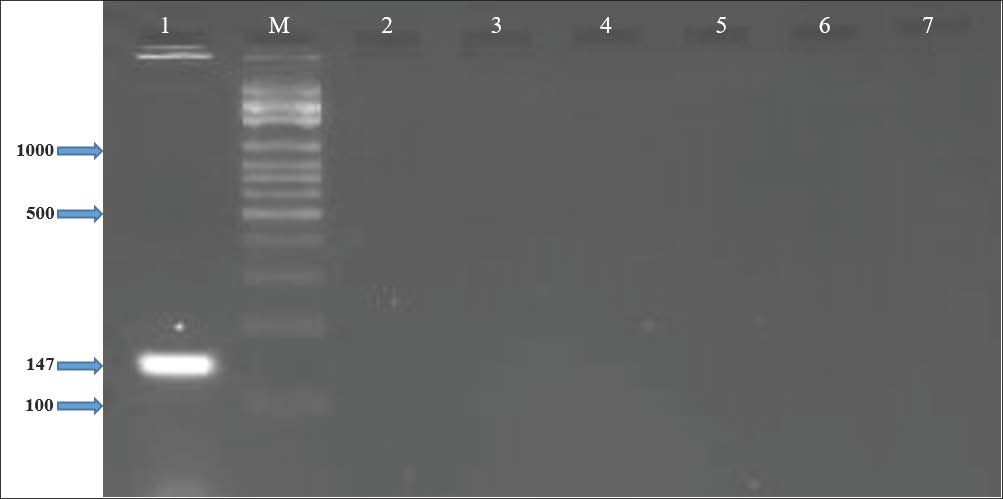
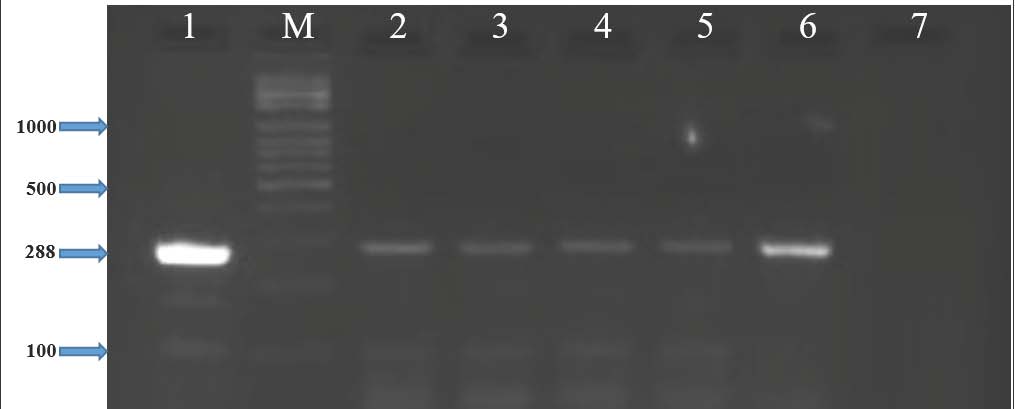
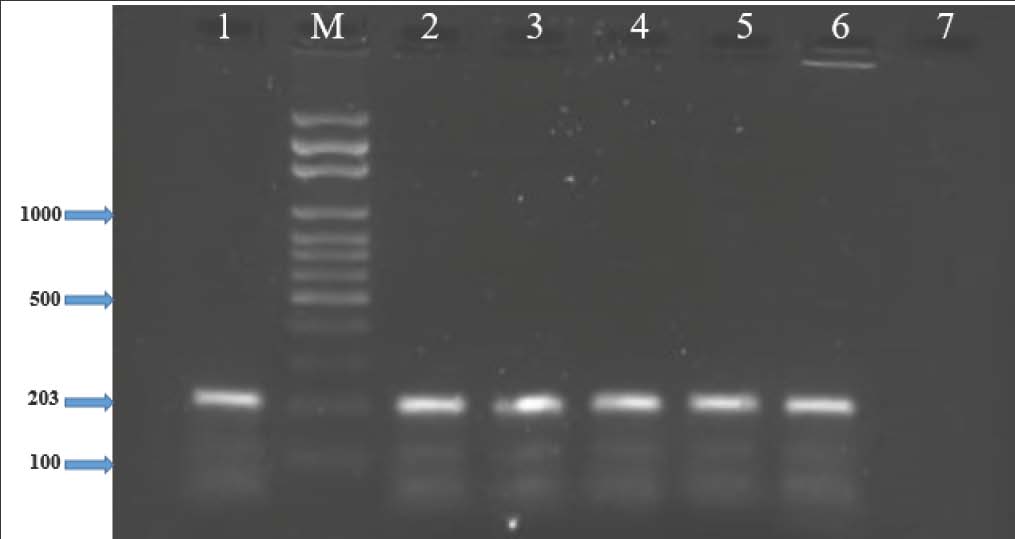
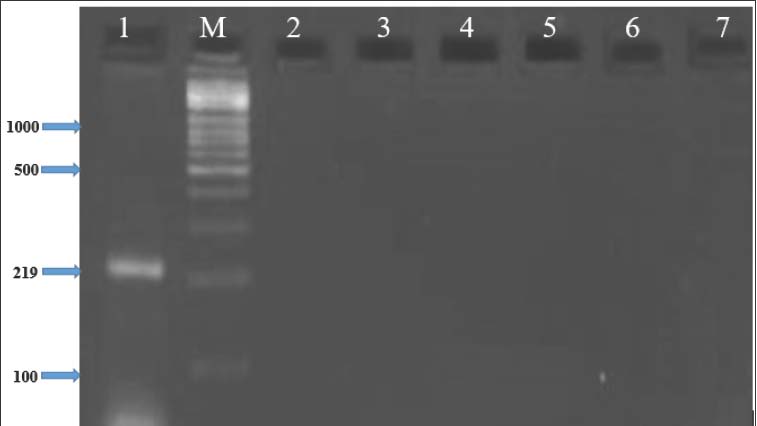
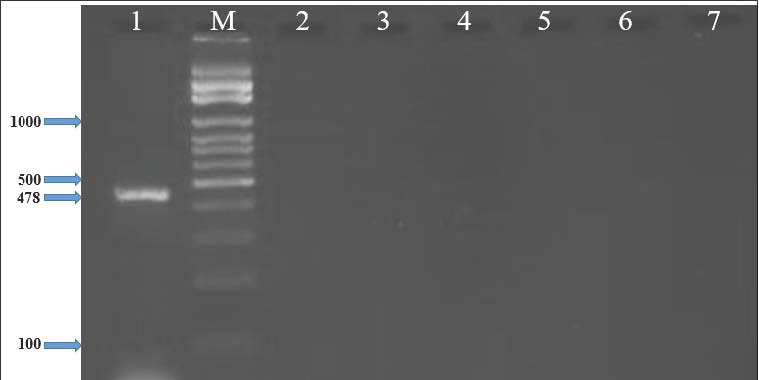
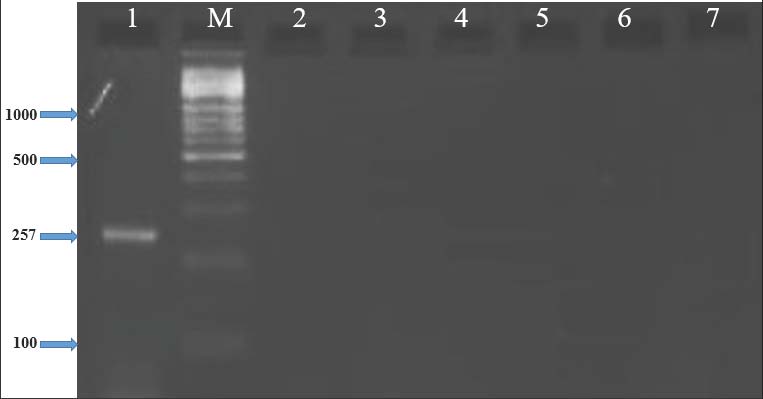
Virulence gene detection and phylogenetic analysisThe results of the PCR assay confirmed the conclusions reached from traditional techniques, demonstrating that 100% (9/9) of the isolates have the nuc gene (Table 3 and Fig. 1). As summarized in Table 3, all S. aureus isolates (9/90, 100%) harbored the clfA and clfB genes 100% (9/9) (Figs. 3 and 4). The mecA, sea, seb, and sec genes were not identified in the isolates (Figs. 2, 5–7). Table 3. Frequency and detection rate of selected virulence genes in S. aureus isolates from buffalo milk with SCM.
Fig. 1. Agarose gel electrophoresis (2%), showing the typical amplicon of the nuc gene (166 bp) product of S. aureus isolates. Lane 1 contains a positive control. Lane M, marked as "M" are DNA markers using a 100 bp ladder from Biozym Diagnostic. Lanes 2–6 display-positive isolates, whereas Lane 7 shows the negative control.
Fig. 2. Agarose gel electrophoresis (2%), showing the typical amplicon of the mecA gene (147 bp) product of S. aureus isolates. Lane 1 contains a positive control. Lane M, marked as "M" are DNA markers using a 100 bp ladder from Biozym Diagnostic. Lanes 2–6 display-negative isolates, whereas Lane 7 shows the negative control.
Fig. 3. Agarose gel electrophoresis (2%), showing the typical amplicon of the clfA gene (288 bp) product of S. aureus isolates. Lane 1 contains a positive control. Lane M, marked as "M" are DNA markers using a 100 bp ladder from Biozym Diagnostic. Lanes 2–6 display-positive isolates, whereas Lane 7 shows the negative control.
Fig. 4. Agarose gel electrophoresis (2%), showing the typical amplicon of the clfB gene (203 bp) product of S. aureus isolates. Lane 1 contains a positive control. Lane M, marked as "M" are DNA markers using a 100 bp ladder from Biozym Diagnostic. Lanes 2–6 display-positive isolates, whereas Lane 7 shows the negative control.
Fig. 5. Agarose gel electrophoresis (2%), showing the typical amplicon of the sea gene (219 bp) product of S. aureus isolates. Lane 1 contains a positive control. Lane M, marked as "M" are DNA markers using a 100 bp ladder from Biozym Diagnostic. Lanes 2–6 display-negative isolates, whereas Lane 7 shows the negative control.
Fig. 6. Agarose gel electrophoresis (2%), showing the typical amplicon of the seb gene (478 bp) product of S. aureus isolates. Lane 1 contains a positive control. Lane M, marked as "M" are DNA markers using a 100 bp ladder from Biozym Diagnostic. Lanes 2–6 display-negative isolates, whereas Lane 7 shows the negative control.
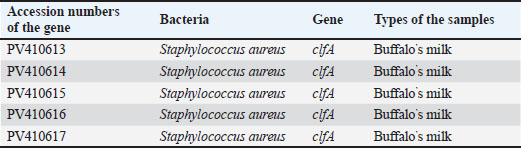
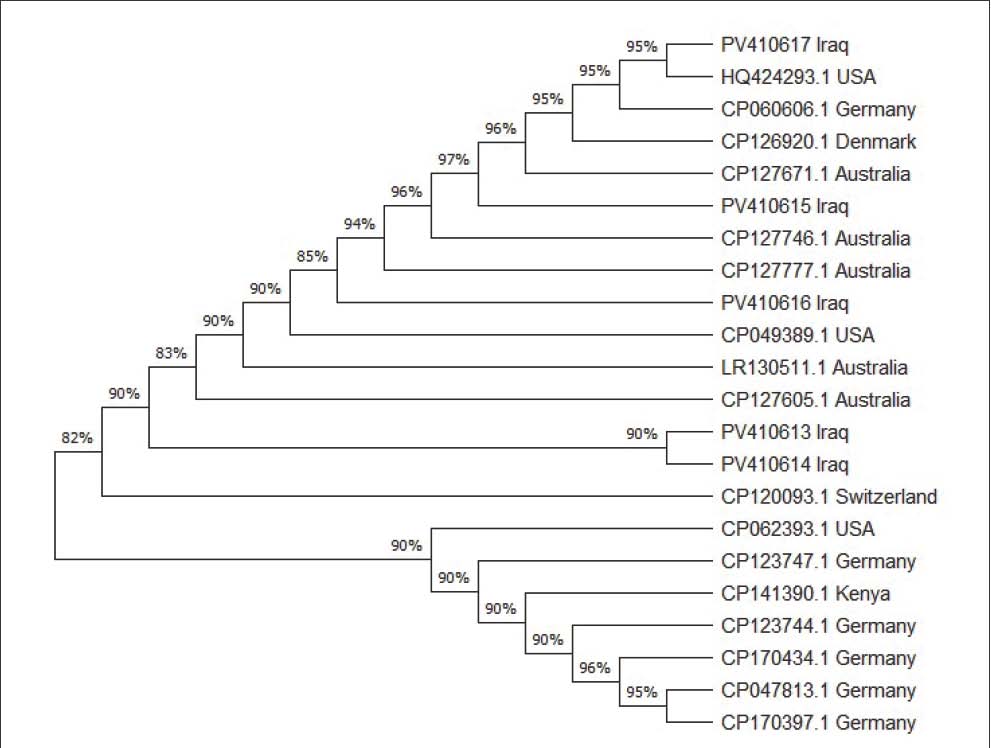
Fig. 7. Agarose gel electrophoresis (2%), showing the typical amplicon of the sec gene (257 bp) product of S. aureus isolates. Lane 1 contains a positive control. Lane M, marked as "M" are DNA markers using a 100 bp ladder from Biozym Diagnostic. Lanes 2–6 display-negative isolates, whereas Lane 7 shows the negative control. A BLASTn analysis was performed on five newly identified clfA gene sequences obtained from S. aureus isolates from buffalo milk. As illustrated in Figure 8, the generated S. aureus sequences were deposited in the NCBI GenBank database under accession numbers: PV410613, PV410614, PV410615, PV410616, and PV410617 (Table 4). Phylogenetic analysis using MEGA11 software and a maximum likelihood phylogenetic tree method demonstrated that the gene sequences of the local variants exhibited substantial differences compared with previously reported sequences available in GenBank. A strong 97% similarity was observed between the S. aureus sequence type PV410615 based on the clfA gene and the CP127671.1 sequence from Australia. The PV410617 sequence type identified in this study shared 95% similarity with the CP126920.1 sequence from Denmark. Additionally, the S. aureus sequence types PV410613 and PV410614 exhibited 90% similarity to CP127605.1 from Switzerland, and PV410616 showed 85% similarity to CP127777.1 from Australia. Table 4. NCBI GenBank accession numbers for the clfA gene sequences of S. aureus isolates from buffalo milk samples.
Fig. 8. Staphylococcus aureus gene sequences obtained from NCBI GenBank were subjected to clustering analysis, with their corresponding NCBI accession numbers provided in parentheses. DiscussionAll types of dairy animals can be affected by mastitis (Ali et al., 2021). Based on our previous studies, S. aureus is recognized as a prominent gram-positive organism responsible for udder infections in buffalo. This study revealed that S. aureus accounted for 15% of asymptomatic mastitis cases in buffaloes, with variations in frequency observed across the Nineveh governorate. Staphylococcus aureus was found in the milk of buffaloes at a lower rate in this study than in earlier research, which recorded prevalence rates of 45.83% in Egypt (Elsayed and Dawoud, 2015), 59.64% in Pakistan (Mustafa et al., 2013), 72.73% in India (Hase et al., 2013), and 75.31% in Pakistan (Javed et al., 2022). Subclinical mastitis is more serious than clinical mastitis because it is asymptomatic and can spread across the herd undetected. This investigation's result of 15% S. aureus in buffalo milk is in line with previous research (Vásquez-García et al., 2017). The frequency of S. aureus in milk is influenced by farm hygiene, geographic location, and diagnostic methods. Dust, bedding, farmers' hands, insects, and udder skin are some examples of environmental reservoirs where the disease might persist. During the milking process, these vectors can cause intramammary infections or both direct and indirect infections in milk (Piccinini et al., 2012). Additionally, because S. aureus is present on many parts of the bovine body, it can spread into the surrounding environment and be transmitted from dairy livestock to the following generation by feeding or airborne routes (Mørk et al., 2012). One of the primary factors promoting the spread of S. aureus is unclean milking equipment, which leads to cross-contamination. Inadequate udder preparation, such as improper washing and disinfection before milking, increases the risk of contamination substantially. Poor agricultural hygiene, including incorrect bedding and waste management, creates bacterial reservoirs. Finally, improper handling and transportation of milk, particularly when the refrigeration process breaks down, can lead to the growth of bacteria. The potential for S. aureus to enter and proliferate throughout the milk supply is increased by all of these factors (Regasa et al., 2019). Furthermore, this study demonstrated that 100% of S. aureus carried the nuc, clfA, and clfB genes. In contrast, none of the S. aureus isolates contained the genes mecA, sea, seb, and sec. In China, S. aureus isolated from buffalo milk affected by subclinical mastitis exhibited a 100% prevalence of the clfB gene, with approximately 90.27% harboring the clfA gene. In addition, the sec and sea genes were detected in 15.93% and 3.54% of the isolates, respectively, whereas none of the isolates carried the seb gene (Zhang Lu et al., 2023). Our results are in agreement with those of earlier studies, which reported the presence of the clfB gene in all isolates from bovine mastitis samples (Pereyra et al., 2016; Wang et al., 2016; Acosta et al., 2018). Additionally, 46.9% and 12.5% of S. aureus isolates from Egyptian buffaloes possessed the clfA and sed genes, respectively (Elsayed and Dawoud, 2015). The sea gene was not found in S. aureus isolates from cattle mastitis in India; nevertheless, seb and sec genes were found in 9.09% and 1.82% of isolates, respectively (Neelam Jain et al., 2022). In Bangladesh, S. aureus isolates from buffalo harbor the sea gene, with the sec gene detected in 11.9% and 7.4% of isolates, respectively (Hoque et al., 2022). The S. aureus strains differ in their genotypic profiles, which include genetic alterations and differences in gene frequency. Some of the factors causing this diversity include geographical region, ecological niche, and selective influences like antibiotic use (Al-Aalim et al., 2023; Iannuzzi et al., 2009; Othman et al., 2023; Taha and Alhankawe, 2023; Taha et al., 2024). ConclusionSIn the Nineveh Governorate of Iraq, S. aureus is the main cause of the high frequency of subclinical mastitis in water buffaloes. This silent bacterial shedding in milk makes it more difficult to diagnose and treat the disease and presents a major risk to public health. Because subclinical mastitis does not exhibit visible signs, owners continue to milk diseased animals, which promotes the spread of bacteria. Staphylococcus aureus and its virulence factors may be rapidly and sensitively detected using PCR, which helps with severity evaluation and control measures. Phylogenetic analysis indicates that S. aureus isolates from buffaloes with subclinical mastitis have a varied evolutionary origin. These isolates demonstrate close genetic relationships with numerous pathogenic S. aureus strains reported in animals from various countries worldwide. AcknowledgmentThe authors extend their sincere appreciation to the College of Veterinary Medicine, University of Mosul, for its valuable maintenance and for making available the resources required to conduct this research. FundingNo funding was obtained from any governmental or non-governmental agencies for the conduct of this study. Authors' contributionsAll authors were involved in sample collection and laboratory work, as well as data analysis and interpretation. The third author was responsible for drafting and revising the manuscript and approved the final manuscript. Data availabilityData are available from the corresponding author upon reasonable request. Conflict of interestThere are no conflicts of interest. ReferencesAcosta, A.C., Oliveira, P.R., Albuquerque, L., Silva, I.F., Medeiros, E.S., Costa, M.M., Pinheiro Junior, J.W. and Mota, R.A. 2018. Frequency of Staphylococcus aureus virulence genes in the milk of cows and goats with mastitis. Pesqui. Vet. Brasil. 38, 2029–2036; doi:10.1590/1678-5150-PVB-5786 Aflakian, F., Rad, M., Salimizand, H., Nemati, A. and Rafati Zomorodi, A. 2022. Detection of virulence genes and determination of the antimicrobial susceptibility of Escherichia coli isolates with mastitis in Mashhad, Iran: a short communication. Vet. Arch. 92(4), 525–530. Al-Aalim, A., Sheet, O.H., Al-Jumaa, Z.M. and Hamad, M.A. 2023. Molecular detection of Mycoplasma spp. in camel milk. Iraqi J. Vet. Sci. 37(2), 333–337; doi:10.33899/ijvs.2022.134635.2388 Alalaf, A.S., Taha, A.H. and Sheet, O.H. 2025. Genotypic characteristics and phylogenetic tree analysis of Staphylococcus aureus isolates from milk samples of sheep with subclinical mastitis. Open Vet. J. 15(1), 289–299; doi:10.5455/OVJ.2025.v15.i1.27 Alfekaiki, D.F. 2018. Characteristics of Iraqi buffalo fat milk (Bubalus bubalis). Res. J. Pharm. Technol. 11(10), 4349–4356; doi:10.5958/0974-360X.2018.00796.5 Ali, T., Kamran, N., Raziq, A., Wazir, I., Ullah, R., Shah, P., Ali, M.I., Han, B. and Liu, G. 2021. Prevalence of mastitis pathogens and antimicrobial susceptibility of isolates from cattle and buffaloes in Northwest Pakistan. Front. Vet. Sci. 8, 746–755; doi:10.3389/fvets.2021.746755 Argudín, M.A., Mendoza, M.C. and Rodicio, M.R. 2010. Food poisoning and Staphylococcus aureus enterotoxins. Toxins 2(7), 1751–1873; doi:10.3390/toxins2071751 Ayied, A.Y. and Reiss, P. 2019. Impact of the Iraq Marshlands restoration program on livestock population and production in Iraq’s Southern Marshes. J. Buffalo Sci. 8(2), 25–33; doi:10.6000/1927-520X.2019.08.02.1 Elsayed, M.S. and Dawoud. 2015. Phenotypic and genotypic detection of Staphylococcus aureus virulence factors isolated from clinical and subclinical mastitis in cattle and water buffaloes from different farms in Sadat City, Egypt. Vet. World. 8(9), 1051–1058; doi:10.14202/vetworld.2015.1051-1058 Gao, J., Ferreri, M., Liu, X.Q., Chen, L.B., Su, J.L. and Han, B. 2011. Multiplex polymerase chain reaction assay for rapid detection of Staphylococcus aureus and selected antibiotic resistance genes in bovine mastitic milk samples. J. Vet. Diagn. Invest. 23(5), 894–901; doi:10.1177/1040638711416964 Graber, H.U., Casey, M.G., Naskova, J., Steiner, A. and Schaeren, W. 2007. Development of a highly sensitive and specific assay to detect S. aureus in bovine mastitic milk. J. Dairy. Sci. 90(10), 4661–4669; doi:10.3168/jds.2006-902 Guccione, J., Perreten, V., Steiner, A., Thomann, A., Pesce, A., Ciaramella, P. and Bodmer, M. 2016. Role of Streptococcus pluranimalium in Mediterranean buffaloes with different udder health statuses. J. Dairy Sci. 99(4), 2945–2949; doi:10.3168/jds.2015-10291 Guccione, J., Pesce, A., Pascale, M., Salzano, C., Tedeschi, G., D’Andrea, L., De Rosa, A. and Ciaramella, P. 2017. Efficacy of a polyvalent mastitis vaccine against Staphylococcus aureus on a dairy Mediterranean buffalo farm: results of two clinical field trials. BMC. Vet. Res. 13, 1–9; doi:10.1186/s12917-017-0944-4 Hase, P., Digraskar K Ravikanth., Dandale. and Maini. 2013. Management of subclinical mastitis using castile gel and herbal spray (AV/AMS/15). Int. J. Pharm. Pharmacol. 4, 64–67. Heilmann. 2011. Adhesion mechanisms of staphylococci. In Bacterial adhesion: chemistry biology and physics. Eds., Linke, D. and Goldman, A. Dordrecht, The Netherlands: Springer (Springer Science+Business Media / Springer Nature), pp:105–23; doi:10.1007/978-94-007-0940-9_7. Hoque, M.N., Talukder, A.K., Saha, O., Hasan, M.M., Sultana, M., Rahman, A.A. and Das, Z.C. 2022. Antibiogram and virulence profiling revealed that multidrug-resistant Staphylococcus aureus was the predominant etiology of subclinical mastitis in riverine buffaloes. Vet. Med. Sci. 8(6), 2631–2645; doi:10.1002/vms3.942 Hu, Y., Xie, Y., Tang, J. and Shi, X. 2012. Comparative expression analysis of two thermostable nuclease genes in S. aureus. Foodborne Pathog. Dis. 9(3), 265–271; doi:10.1089/fpd.2011.1033 Iannuzzi, L., King, W.A. and Berardino, D. 2009. Chromosome evolution in domestic bovids as revealed by chromosome banding and fluorescence in situ hybridization mapping. Cytogenet. Genome. Res. 126(1-2), 49–62; doi:10.1159/000245906 Javed, S., Mcclure, J., Syed, M.A., Obasuyi, O., Ali, S., Tabassum, S., Ejaz, M. and Zhang, K. 2022. Epidemiology and molecular characterization of Staphylococcus aureus causing bovine mastitis in water buffaloes from the Hazara division of Khyber Pakhtunkhwa, Pakistan. PLos One 17(5), 268152; doi:10.1371/journal.pone.0268152 Johnson, W.M., Tyler, S.D., Ewan, E.P., Ashton, F.E., Pollard, D.R. and Rozee, K.R. 1991. Detection of genes for enterotoxins, exfoliative toxins, and toxic shock syndrome toxin 1 in S. aureus using polymerase chain reaction. J. Clin. Microbiol. 29(3), 426–430; doi:10.1128/jcm.29.3.426-430.1991 Lamey, A.E., Ammar, A.M., Zaki, E.R., Khairy, N., Moshref, B.S. and Refai, M.K. 2013. Virulence factors of Escherichia coli isolated from recurrent cases of clinical and subclinical mastitis in buffaloes. J. Microbiol. Res. 4(1), 86–94; doi:10.5829/idosi.ijmr.2013.4.1.71103 Mørk, T., Kvitle, B. and Jørgensen, H.J. 2012. Reservoirs of Staphylococcus aureus in meat sheep and dairy cattle. Vet. Microbiol. 155(1), 81–87. Mustafa, Y., Awan, F., Zaman, T., Chaudhry, S.R. and Zoyfro, V. 2013. Prevalence and antibacterial susceptibility in mastitis in buffalo and cows in and around Lahore district, Pakistan. Pak. J. Pharm. 24, 29–33; doi:10.14456/ku-bufbu.2013.42 Neelam Jain, V.K., Singh, M., Joshi, V.G., Chhabra, R., Singh, K. and Rana, Y.S. 2022. Virulence and antimicrobial resistance gene profiles of S. aureus associated with clinical mastitis in cattle. PLos One 17(5), 264762; doi:10.1371/journal.pone.0264762 Othman, S.M., Sheet, O.H. and Al-Sanjary, R. 2023. Phenotypic and genotypic characterization of Escherichia coli isolated from veal meats and butchers’ shops in the city of Mosul, Iraq. Iraqi. J. Vet. Sci. 37(1), 250–260; doi:10.33899/ijvs.2022.133819.2306 Papadopoulos, P., Angelidis, A.S., Papadopoulos, T., Kotzamanidis, C., Zdragas, A., Papa, A., Filioussis, G. and Sergelidis, D. 2019. Staphylococcus aureus and methicillin-resistant S. aureus in bulk tank milk, livestock, and dairy-farm personnel in north-central and northeastern Greece: prevalence, characterization, and genetic relatedness. Food Microb. 84, 103249. Pereyra, E.A., Picech, F., Renna, M.S., Baravalle, C., Andreotti, C.S. and Russi, R. 2016. Detection and expression of Staphylococcus aureus adhesion and biofilm-producing genes during internalization in bovine mammary epithelial cells. Vet. Microbiol. 183, 69–77; doi:10.1016/j.vetmic.2015.12.002 Piccinini, R., Tassi, R., Dapra, V., Pilla, R., Fenner, J. and Carter, B. 2012. Study of Staphylococcus aureus collected from dairy cows with chronic mastitis at slaughter. J. Dairy. Res. 79(2), 249–255; doi:10.1017/S002202991200009X Pisanu, S., Cacciotto, C., Pagnozzi, D., Puggioni, G.M., Uzzau, S., Ciaramella, P., Guccione, J., Penati, M., Pollera, C., Moroni, P. and Bronzo, V. 2019. Proteomic changes in the milk of water buffaloes (Bubalus bubalis) with subclinical mastitis due to intramammary infection by Staphylococcus aureus and non-aureus staphylococci. Sci. Rep. 9(1), 15850; doi:10.1038/s41598-019-52063-2 Qar, T. and Governorates, M. 2007. Water Buffalo in the Iraqi Marshes. Nature 1–27. Available via http://www.natureiraq.org/uploads/9/2/7/0/9270858/status_report_buffalothiqar.pdf Quinn, P.J., Markey, B.K., Carter, M.E., Donnelly, W.J.C., Leonard, F.C. and Maguire, D. 2002. Veterinary microbiology and microbial diseases. 1st ed West Sussex, UK: Blackwell Science Ltd, Chichester. Available from: https://www.wiley.com/en-us/Veterinary+Microbiology+and+ Microbial+Disease%2C+ 2nd +Edition-p-9781405158237. Quinn, P.J., Markey, B.K., Leonard, F.C., Hartigan, P., Fanning, S. and Fitzpatrick, E. 2011. Veterinary microbiology and microbial disease 2nd ed. Chichester, West Sussex, United Kingdom Wiley-Blackwell. Regasa, S., Mengistu, S. and Abraha, A. 2019. Milk safety assessment, isolation, and antimicrobial susceptibility profile of Staphylococcus aureus in selected dairy farms in Mukaturi and Sululta, Ethiopia. Vet. Med. Int. 28, 3063185; doi:10.1155/2019/3063185 Saber, A.S. and Sheet, O.H. 2025. Molecular detection of genes encoding virulence factors of coagulase-positive S. aureus isolated from restaurants. Iraqi J. Vet. Sci. 39(2), 217–224; doi:10.33899/ijvs.2025.155576.4042 SAS Institute Inc. 2021. JMP®, version 16. Cary, NC: SAS Institute Inc. Seegers, H., Fourichon. and Beaudeau. 2003. Effects of mastitis on production and mastitis economics in dairy cattle herds. Vet. Res. 34(5), 475–491; doi:10.1051/vetres:2003027 Sharma, N. and Maiti, S.K. 2010. Prevalence and etiology of sub-clinical mastitis in cows. Indian J. Vet. Pathol. 19(2), 45–54; doi:10.5555/20113162136 Sharma, N., Rho, G.J., Hong, Y.H., Kang, T.Y., Lee, H.K., Hur, T.Y. and Jeong, D.K. 2012. Bovine mastitis: an Asian perspective. Asian J. Anim. Vet. Adv. 7(6), 454–476; doi:10.3923/ajava.2012.454.476 Shearer, J.K. and Harris, B. Jr. 2003. Mastitis in dairy goats. Gainesville, USA: The University of Florida, Institute of Food and Agricultural Sciences, Extension. Available via http://ufdcimages.uflib.ufl.edu/IR/00/00/47/55/00001/DS12000.pdf/ (Accessed March 10, 2023). Sheet, O.H. 2022. Molecular detection of mecA in methicillin-resistant Staphylococcus aureus isolated from dairy mastitis in Nineveh governorate, Iraq. Iraqi. J. Vet. Sci. 36(4), 939–943; doi:10.33899/ijvs.2022.132643.2115 Sheet, O.H., Jwher, D.M., Al-Sanjary, R.A. and Alajami, A.D. 2021. Direct detection of Staphylococcus aureus in camel milk in the Nineveh Governorate by using the PCR technique. Iraqi. J. Vet. Sci. 35(4), 669–672; doi:10.33899/ijvs.2020.127725.1524 Sutra, L. and Poutrel, B. 1994. Virulence factors involved in the pathogenesis of bovine intramammary infections caused by S. aureus. J. Med. Microbiol. 40(2), 79–89; doi:10.1099/00222615-40-2-79 Taha, A.H., Al-Mahmood, O.A., Sheet, O.H., Hamed, A.A. and Al-Sanjary, R.A. 2024. Molecular detection of methicillin-resistant Staphylococcus aureus isolated from local fish in the city of Mosul. Iraqi J. Vet. Sci. 38(2), 437–441; doi:10.33899/ijvs.2023.142707.3191 Taha, A.H., Sheet, O.H. and Jwher, D.M. 2025. Molecular detection and phylogenetic diversity of Staphylococcus aureus isolated from goats with subclinical mastitis in Nineveh Governorate. Iraqi J. Vet. Sci. 39(1), 71–79; doi:10.33899/ijvs.2024.152066.3791 Taha, F.Y. and Alhankawe, O.K. 2023. Molecular evidence of Schmallenberg virus associated by ovine abortion with fetal anomalies in Nineveh province, Iraq. Iraqi J. Vet. Sci. 37(1), 115–120; doi:10.33899/ijvs.2022.133665.2276 Tristan, A., Ying, L., Bes, M., Etienne, J., Vandenesch, F. and Lina, G. 2003. Multiplex PCR to Identify Staphylococcus aureus Adhesins Involved in Human Hematogenous Infections. J. Clin. Microbiol. 41(9), 4465–4467; doi:10.1128/jcm.41.9.4465-4467.2003 Tsen, H.Y. and Chen, T.R. 1992. Polymerase chain reaction for the specific detection of type A, D, and E enterotoxigenic S. aureus in foods. Appl. Microbiol. Biotechnol. 37, 685–690. Available via https://link.springer.com/article/10.1007/BF00240750 Vásquez-García, A., Silva, T.D.S., Almeida-Queiroz, S.R.D., Godoy, S.H.S., Fernandes, A.M., Sousa, R.L.M. and Franzolin, R. 2017. Species identification and antimicrobial susceptibility profile of bacteria causing subclinical mastitis in buffalo. Pesquisa Veterinária Brasileira 37, 447–452; doi:10.1590/S0100-736X2017000500004 Wang, D., Zhang, L., Zhou, X., He, Y., Yong, C. and Shen, M. 2016. Antimicrobial susceptibility, virulence genes, and randomly amplified polymorphic DNA analysis of S. aureus recovered from bovine mastitis in Ningxia, China. J. Dairy. Sci. 99, 9560–9569; doi:10.1590/S0100-736X20170005000041 Zhang D Lu., Feng, X., Shang, X., Liu, X., Zhang, Q. and Yang, H. 2023. Molecular characteristics of Staphylococcus aureus strains isolated from water buffaloes with subclinical mastitis in Guangdong Province, China. Front. Vet. Sci. 10, 1177302; doi:10.3389/fvets.2023.1177302 Zhang, K., McClure, J.A., Elsayed, S., Louie, T. and Conly, J.M. 2005. Novel multiplex polymerase chain reaction assay for characterization and concomitant subtyping of staphylococcal cassette chromosome mec types I to V in methicillin-resistant Staphylococcus aureus. J. Clin. Microbiol. 43, 5026–5033. | ||
| How to Cite this Article |
| Pubmed Style Taha FY, Taha AH, Sheet OH. Genotypic detection of some virulence factors and genetic tree of Staphylococcus aureus isolated from buffalo with subclinical mastitis in Nineveh governorate. Open Vet. J.. 2026; 16(5): 3192-3202. doi:10.5455/OVJ.2026.v16.i5.59 Web Style Taha FY, Taha AH, Sheet OH. Genotypic detection of some virulence factors and genetic tree of Staphylococcus aureus isolated from buffalo with subclinical mastitis in Nineveh governorate. https://www.openveterinaryjournal.com/?mno=288093 [Access: June 26, 2026]. doi:10.5455/OVJ.2026.v16.i5.59 AMA (American Medical Association) Style Taha FY, Taha AH, Sheet OH. Genotypic detection of some virulence factors and genetic tree of Staphylococcus aureus isolated from buffalo with subclinical mastitis in Nineveh governorate. Open Vet. J.. 2026; 16(5): 3192-3202. doi:10.5455/OVJ.2026.v16.i5.59 Vancouver/ICMJE Style Taha FY, Taha AH, Sheet OH. Genotypic detection of some virulence factors and genetic tree of Staphylococcus aureus isolated from buffalo with subclinical mastitis in Nineveh governorate. Open Vet. J.. (2026), [cited June 26, 2026]; 16(5): 3192-3202. doi:10.5455/OVJ.2026.v16.i5.59 Harvard Style Taha, F. Y., Taha, . A. H. & Sheet, . O. H. (2026) Genotypic detection of some virulence factors and genetic tree of Staphylococcus aureus isolated from buffalo with subclinical mastitis in Nineveh governorate. Open Vet. J., 16 (5), 3192-3202. doi:10.5455/OVJ.2026.v16.i5.59 Turabian Style Taha, Fahad Yaseen, Ayman Hani Taha, and Omar Hashim Sheet. 2026. Genotypic detection of some virulence factors and genetic tree of Staphylococcus aureus isolated from buffalo with subclinical mastitis in Nineveh governorate. Open Veterinary Journal, 16 (5), 3192-3202. doi:10.5455/OVJ.2026.v16.i5.59 Chicago Style Taha, Fahad Yaseen, Ayman Hani Taha, and Omar Hashim Sheet. "Genotypic detection of some virulence factors and genetic tree of Staphylococcus aureus isolated from buffalo with subclinical mastitis in Nineveh governorate." Open Veterinary Journal 16 (2026), 3192-3202. doi:10.5455/OVJ.2026.v16.i5.59 MLA (The Modern Language Association) Style Taha, Fahad Yaseen, Ayman Hani Taha, and Omar Hashim Sheet. "Genotypic detection of some virulence factors and genetic tree of Staphylococcus aureus isolated from buffalo with subclinical mastitis in Nineveh governorate." Open Veterinary Journal 16.5 (2026), 3192-3202. Print. doi:10.5455/OVJ.2026.v16.i5.59 APA (American Psychological Association) Style Taha, F. Y., Taha, . A. H. & Sheet, . O. H. (2026) Genotypic detection of some virulence factors and genetic tree of Staphylococcus aureus isolated from buffalo with subclinical mastitis in Nineveh governorate. Open Veterinary Journal, 16 (5), 3192-3202. doi:10.5455/OVJ.2026.v16.i5.59 |


