




| Review Article | ||
Open Vet. J.. 2026; 16(8): 5063-5076 !
Open Veterinary Journal, (2026), Vol. 16(8): 5063–5076 Review Article Optimizing gilt development through integrated nutritional and health strategies: A narrative reviewTakalani J. Mpofu1*, Thembela H. Matukane1,2, Mamokoma C. Modiba1, Hezekiel Mpedi2 and Peter A. Idowu11Department of Animal Sciences, Tshwane University of Technology, Pretoria, South Africa 2Topigs Norsvin Animal Genetic Centre, Bronkhorstspruit, South Africa *Corresponding Author: Takalani J. Mpofu. Department of Animal Sciences, Tshwane University of Technology, Pretoria, South Africa. Email: MpofuTJ [at] tut.ac.za; ayodejiidowuolu [at] gmail.com Submitted: 03/09/2025 Revised: 22/06/2026 Accepted: 09/07/2026 Published: 08/08/2026 © 2025 Open Veterinary Journal
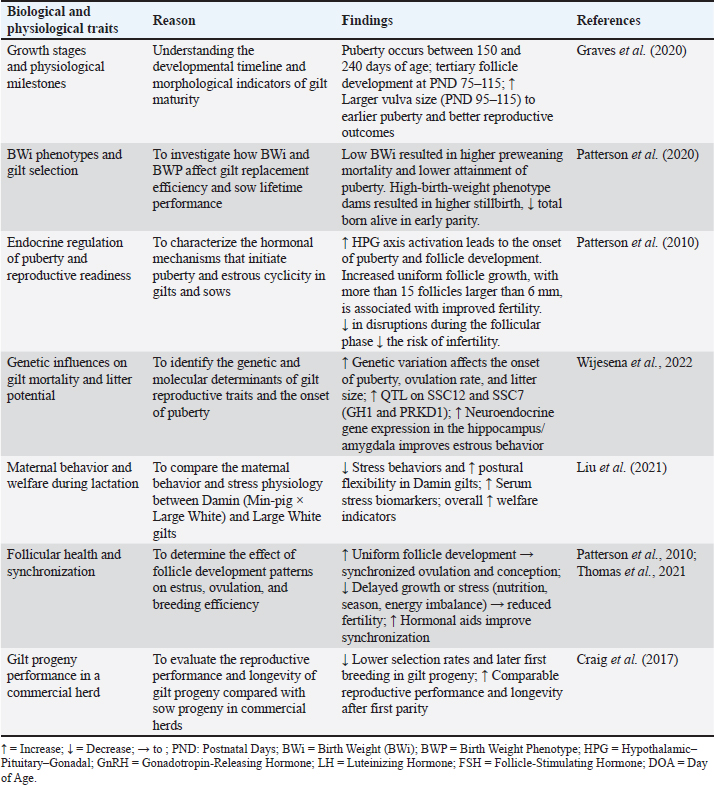
AbstractThis review extracts current evidence on the biological and health determinants of gilt performance, with a focus on management strategies that optimize reproductive efficiency, litter effects, and sow herd longevity. Preweaning factors, such as birth weight, colostrum consumption, and preweaning growth, have remarkable effects on reproductive organ development and lifetime productivity. The interaction of endocrine and genetic factors determines the onset of puberty and ovarian activity. Health management, such as systematic vaccination, parasite control, biosecurity, and stress mitigation, has emerged as a cornerstone for enhancing gilt resilience, reducing pre-breeding culling, and improving retention rates. Advancements in livestock farming, genomic-assisted selection, and automated monitoring offer new opportunities for incorporating health and performance data into predictive management frameworks, but the extent of their use varies among production systems. Simultaneously, the global need to reduce antimicrobial use underscores the importance of preventive health strategies and welfare-focused management. Despite progress, important knowledge gaps persist regarding the long-term effects of early-life interventions to improve health, as well as health–environment–gene interactions for their role in shaping reproductive trajectories. Addressing these gaps through integrated, health-oriented gilt development programs will be of great importance in improving reproductive outcomes, reducing inefficiencies, and ensuring the sustainability of modern pig production. Keywords: Breeding strategies, Litter size, Pig nutrition, Reproductive efficiency, Sow productivity. IntroductionGlobally, a 56% increase in food demand is estimated from a 25% increase in population and a change in food preferences (Van Dijk et al., 2021). Of these trends, the global consumption of animal-derived protein is also expected to increase due to population increase, urbanization, and economic development (Smith et al., 2024). According to the Organization for Economic Co-operation and Development (OECD) and the Food and Agriculture Organization (FAO) (2013), pig meat is estimated to contribute approximately 117 million tons of the world’s production in 2015 and is expected to reach 127 million tons by 2025, representing 36% of the world’s total meat production. Ensuring low-cost pork availability is vital for food security and economic animal production. To achieve this, understanding and improving reproductive efficiency are needed to ensure a consistent and productive sow herd (Maes et al., 2020). Reproductive and sow longevity are highly dependent on early-life replacement gilt development and management (Faccin et al., 2022; Buthelezi et al., 2024). Well-conditioned gilts achieve higher fertility, larger litters, and longer productive years (Langendijk et al., 2023). Poor reproductive returns and elevated sow replacement rates are hallmarks of poor management (Capper, 2021; Faccin et al., 2022). Early life characteristics, such as birth weight (BWi) (>1 kg), adequate colostrum and milk intake, and absence of structural and physical defects, are important predictors of gilt success (Magnabosco et al., 2015; DeClerck et al., 2016; Almeida et al., 2017; Faccin et al., 2022). Desirable selection at the time of weaning should focus on physical conformation, udder and teat quality, and reproductive performance. Nutritional management during the grower phase is also critical, as under- or over-conditioned gilts at breeding or weaning can compromise sow and piglet performance (Langendijk et al., 2023). Breeding herd productivity depends on careful selection of key attributes, including age, optimal body weight, and functional anatomical characteristics, such as teat number and morphology (Belkova and Rozkot, 2022). Health status is also crucial to the reproductive efficiency of the gilt. Herd health, which includes parasitic control, vaccination, and regular veterinary control, is crucial for survival, immunity, and long-term productivity (Van den Born et al., 2020; Björkman and Grahofer, 2021; Racewicz et al., 2021). Despite extensive research on gilt growth, nutrition, and health, knowledge gaps remain regarding the integrated influence of early-life management, nutrition, and immune competence on lifetime reproductive performance and sustainability outcomes. A better understanding of the relationships between these traits is critical for optimizing gilt selection and management protocols that enhance productivity and reduce replacement rates. This review summarizes research articles on gilt development, with a focus on integrated nutrition–health management approaches that may enhance reproductive potential and litter performance. The objectives of this study were to evaluate the impact of early-life nutrition on gilt reproductive potential, summarize health management practices that optimize gilt longevity, and highlight the interactions between nutrition, health, and litter performance. This study promotes better gilt management, which indirectly contributes to several Sustainable Development Goals (SDGs), namely, SDG 2 (zero hunger), SDG 3 (good health and well-being), and SDG 12 (responsible consumption and production), by fostering sustainable pork production, animal welfare, and responsible resource utilization. MethodsThis narrative review was developed to summarize and evaluate current knowledge on how integrated nutritional and health strategies influence gilt development and litter performance. Relevant studies published between 2015 and 2025 were retrieved from Google Scholar, Scopus, and Web of Science using key terms such as “gilt development,” “nutrition,” “health management,” “reproductive performance,” “immune system,” “gilt immunity,” and “litter size.” Only peer-reviewed articles written in English and focused on reproductive and developmental performance of swine were included. The information was organized around major themes, such as prepubertal nutrition, gestational feeding, immune and health management, and environmental influences. Findings were synthesized qualitatively to highlight different findings, emerging trends, and gaps requiring further research on optimizing gilt development for improved reproductive outcomes. Overview of gilt developmentGilts are classified as nonseasonal and polyestrous, with an estrous cycle lasting approximately 18–24 days (Das et al., 2023). Estrus for gilts lasts approximately 26–48 hours (1–2 days), and ovulation generally occurs in mid to late estrus. Approximately 15–24 ova are released during ovulation over a period of 1–4 hours. Ovulation rate can be decreased when gilts are undernourished. Estrous in gilts can be initiated with exogenous hormones, and they can exhibit good fertility when inseminated during estrus. Provided that the gilts are of proper age (200–225 days of age [DOA]) and body weight (135–159 kg), they are likely to have favorable reproductive outcomes (Matukane et al., 2024). However, gilts with no signs of estrus and a body weight of 136 kg at 220 DOA must be culled (Tummaruk and Kesdangsakonwut, 2014). However, most gilts are fully fed, thereby preventing the adverse effects of undernourishment on early reproductive performance (Muro, 2023). Biological, physiological, and genetic basis of gilt productionThe growth pattern of gilts influences sow herd productivity, reproductive performance, and replacement efficiency. An integrative model of the biological, physiological, and genetic mechanisms through which gilts develop entails growth profile, endocrine maturation, genetic background, and management-reactive traits. As indicated in Table 1, it is important for optimal reproductive success and longevity. Table 1. Biological and physiological basis of gilt production.
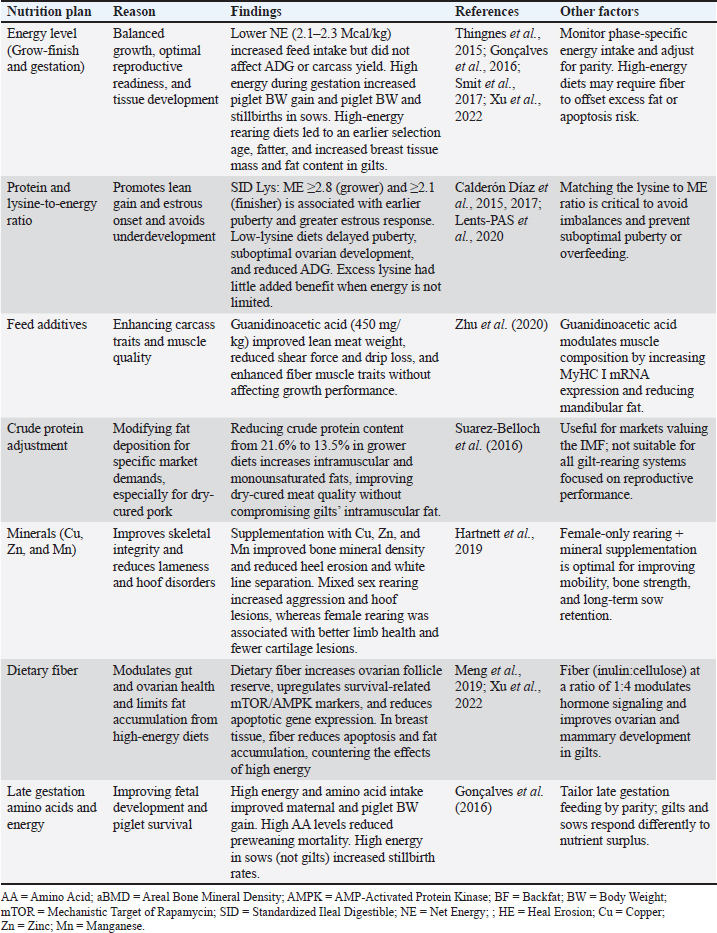
Hormonal regulation of puberty and reproductive maturationThe hypothalamic–pituitary–gonadal (HPG) axis regulates the onset of puberty in gilts (Zhou et al., 2014). This process is initiated when the hypothalamus excretes gonadotropin-releasing hormone (GnRH), which causes the pituitary gland to release follicle-stimulating hormone (FSH) and luteinizing hormone (LH) in a cascade effect, causing follicle development (Patterson et al., 2010). Involution of the corpus luteum and a decrease in progesterone concentration would be the beginning of the follicular phase in gilts (Knox et al., 2019). Synchrony in follicular development with a minimum of 15 follicles of more than 6 mm diameter developed within 4 days is crucial for ovulation and conception to occur. A recent study used classic endocrine pathways to explain the regulatory role of nutritional and metabolic signals in pubertal activation. Lu et al. (2024) showed that Vitamin D3 positively regulates intraovarian steroidogenesis by inducing VDR-mediated transcription of key steroidogenic enzymes and cholesterol transport, which is then converted to progesterone/estradiol. This modulation has been correlated to marked increases in ovary weight, serum estradiol levels, and steroidogenic enzyme activity during the breeding season (Dastorani et al., 2018; Wang et al., 2023). In vitro experiments further confirmed that 1,25(OH)2D3 supplementation of granulosa cells with 1,25(OH)2D3 increased Vitamin D3 receptor expression and elevated steroidogenic acute regulatory protein, 3β-hydroxysteroid dehydrogenase, and aromatase transcription. This resulted in a measurable rise in estradiol secretion (Lu et al., 2024). Collectively, these studies provide molecular and quantitative evidence that Vitamin D3 acts as a metabolic co-regulator of the HPG axis, amplifying both progesterone and estrogen biosynthesis. Nonetheless, the mechanistic interaction between Vitamin D3 signaling and other metabolic or immune modulators capable of controlling puberty remains unknown. Future studies should more precisely define the threshold levels of Vitamin D3 required to induce these responses in vivo and determine whether such actions are genotype- versus environment-dependent. Addressing these gaps could advance the development of precision nutritional strategies that improve gilt reproductive efficiency while minimizing endocrine disruptions. Ovarian development and foliculogenesisThe development of gilts is characterized by morphological and physiological changes. Behavioral estrus usually occurs from approximately 150 to 240 days of age, and tertiary follicular development starts after 75 to 115 days (Knox, 2023). Vulva size, also called vulva area between postnatal day (PND) 95–115, is a noninvasive indicator of early ovarian activation, which may help screen replacement gilts with superior breeding potential. Graves et al. (2022) showed that vulva area dynamics are strongly associated with ovarian follicular status and age at puberty. In their longitudinal analysis of 155 gilts, the mean vulva area increased from PND 75 (596 ± 206 mm2) to PND +115 (1,265 ± 252 mm2). This mirrors the onset of follicular activity. Additionally, no follicular activity was observed at PND 75, but 60%, 80%, 90%, and 100% of gilts had antral follicles at PND 85, 95, 105, and 115, respectively. The study further observed that body weight on PND 75 and vulva width at PND 115 were significantly associated with age at first estrus. Moreover, gilts with VA greater than 652 mm2at PND 95 reached puberty earlier, with 66% and 79% expressing estrus before PND 180 and 200, respectively, compared with only 31% and 50% in those below this threshold. This study observed that a 95–115-d interval is a critical period for gilts to differentiate reproductive maturity and indicated that the vulva area can be used as a developmental pointer of early folliculogenesis. Similarly, Romoser et al. (2022) observed that vulva formation before puberty can predict reproductive success. The study observed that gilts with small vulvas attain their first farrowing late, produce fewer total piglets, and have fewer piglets born alive than those in the medium or large groups. The study further investigates gilt performance across two parities. It was observed that gilts with medium or large vulvas consistently produced more total and live-born piglets. These results confirm that vulva development assessment before puberty can be a practical and effective tool for selecting replacement gilts with higher reproductive potential. Genetic influences on reproductive traitsReproductive traits such as age at puberty, ovulation count, and litter size of pigs are highly affected by genetic variation, yet they are generally of low to moderate heritability, ranging from 0.05 for piglet survival to 0.39 for ovulation rate (Li et al., 2018; Reproto, 2020). This low heritability explains these traits’ polygenic nature and their substantial dependence on environmental factors, making conventional selection alone insufficient for rapid genetic improvement. Genomic approaches have advanced the understanding of reproductive genetic traits in pigs. Genome-wide association studies have identified single-nucleotide polymorphisms (SNPs) on Sus scrofa chromosome (SSC) 13 linked to puberty traits (Ma et al., 2018) and QTLs on SSC2, SSC7, SSC14, and SSC18 associated with reproductive longevity (Wijesena et al., 2020). Candidate genes such as the estrogen receptor (ESR), growth hormone (GH1), and protein kinase D1 (PRKD1) are central to reproductive maturation and neuroendocrine regulation (Nonneman et al., 2016; Wijesena et al., 2022). The ESR gene, first detected in Meishan pigs, has been consistently associated with increased litter size and is now incorporated into commercial breeding indices (Rothschild et al., 1996; Reproto, 2020). However, the reproducibility of these associations remains limited because of population-specific linkage disequilibrium structures and antagonistic genetic correlations, such as those between litter size and piglet BWi (Kemp et al., 2018; Matheson et al., 2018). Future studies should focus on validating candidate loci across diverse genetic backgrounds and production systems to enhance predictive accuracy and practical application. Integrating genomic selection with transcriptomic profiling offers a promising approach to identify causal variants and link them to functional pathways. Transcriptomic data reveal that gene expression in the hippocampus and amygdala influences estrous behavior and sexual readiness (Vaishnav et al., 2023). This highlights an underexplored neurogenetic axis that requires further functional validation. Therefore, further studies are needed to quantify how neural transcriptomic patterns correlate with measurable reproductive outcomes under different environmental conditions. The combined use of genomic selection, genome-wide assay studies, and best linear unbiased prediction has revolutionized breeding programs with the possibility to phenotype early, reduce generation intervals, and accelerate genetic gains on reproductive efficiency (Reproto, 2020). Nevertheless, standardized models for integrating these genomic tools with physiological and behavioral indicators remain understudied and should be prioritized. Finally, exploiting prolific breeds such as Meishan, Large White, and Landrace under genomic-assisted frameworks provides a sustainable avenue for improving reproductive potential while maintaining piglet survival and overall productivity. Developmental programming and long-term reproductive performanceThe mothering characteristics of gilts strongly influence their reproductive performance, early-life growth, genotype, and nutritional management during gestation. BWi and birth weight phenotype (BWP) are associated with gilts’ survival, age at puberty, and gilt retention (Patterson et al., 2020). Low-BWi gilts typically have increased preweaning mortality, delayed age at puberty, and reduced sow productive lifetime (Xayalath, 2023). Although targeted management practices may facilitate their inclusion into breeding herds (Patterson et al., 2020), their long-term efficacy across multiple parities remains unclear. Nutritional management during late gestation improves piglet BWi and subsequent reproductive outcomes (Langendijk et al., 2023). Precisely, feeding gilts with ME diets of > 6,800 kcal/day during gestation can increase body weight and backfat; nevertheless, feeding in excess could be detrimental to lactation performance (Jin et al., 2016). Mallmann et al. (2018) reported that increasing feed intake from 1.8 to 2.2 kg/day between days 6 and 30 of gestation enhanced maternal weight gain but had no significant effect on individual piglet BWi, within-litter variation, stillbirth rates, or subsequent sow reproductive performance. Feed quantity alone is insufficient to support fetal growth effectively. Therefore, nutrient composition with energy and amino acids at the right time is important for optimal fetal growth and litter uniformity. Genotype–nutrition interactions modulate reproductive traits; Zhukovskyi et al. (2023) demonstrated that the genotype influences the reproductive performance of gilts in response to feeding level. Under feed restriction, the AG genotype sows produced more piglets and heavier litters at birth than the GG genotype sows. Under high feeding, the GG genotype outperformed the AG genotype with respect to piglets born alive, litter weight at birth, weaning weight, and average daily gain. These results highlight the potential of genotype-guided nutritional management in replacement gilts. However, replication in diverse commercial herds must validate these interactions and establish genotype-based practical feeding recommendations. Maternal parity and preweaning environment also influence gilt performance. Vallet et al. (2016) observed that BWi, colostrum intake (immunocrit), preweaning growth rate, and sow parity were positively associated with gilt growth, backfat, uterine length, and earlier puberty onset. Colostrum intake and BWi may influence the development of reproductive tissue and endocrine maturation. This explains that epigenetic regulation of reproductive traits has potential. Mechanistic studies are needed to define the hormonal and molecular pathways linking early-life nutrition to uterine and ovarian development. Craig et al. (2017) found that gilt progeny were lighter and reached first breeding slightly later than sow progeny, yet their performance across four parities was comparable once incorporated into the breeding herd. This demonstrates that initial developmental disadvantages can be mitigated through careful selection and management, supporting the continued use of gilt progeny in replacement programs. This explains the impact of the progeny origin on the long-term reproductive performance of the gilt. Collectively, these studies indicate that the reproductive performance of gilts is determined by the integrated effects of maternal environment, early-life growth, genotype, and nutritional interventions. Measuring key physiological and developmental indicators, such as vulva size, BWi, and colostrum intake, alongside genotype-informed feeding strategies, could offer a predictive framework for gilt selection and reproductive optimization. Therefore, a critical knowledge gap remains in the development of integrative predictive models that combine these multifactorial determinants to maximize gilt reproductive efficiency, retention, and lifetime productivity. Nutritional program recommendationsProper nutritional management, including growth curves, sexual maturity, skeletal health, longevity, and lifetime productivity, is a key contributor to gilt development (Niblett, 2024). Precision feeding adapted according to the different phases is important to achieve an increase in lean tissue mass, reduce body fat accretion, and create physiological conditions for optimal fertility. Energy intake plays a pivotal role in gilt development by influencing growth rate, body composition, sexual maturity, and reproductive efficiency. Diets with 3000–3200 kcal/kg ME and 18% crude protein enable gilts to achieve the threshold body weight, backfat, and body condition required for timely attainment of puberty and future reproductive processes, while leaner carcass outcomes can be achieved with 2800 kcal/kg ME, albeit with a risk of delayed reproductive readiness (Machebe, 2010). Broader evidence confirms that energy intake during the grow-finish and gestation phases affects sexual maturity and litter traits, with low-energy diets enhancing feed efficiency without compromising carcass quality but potentially slowing fat deposition and puberty onset, whereas high-energy gestation diets increase maternal and piglet weights but may also elevate stillbirth risk (Thingnes et al., 2015; Gonçalves et al., 2016; Smit et al., 2017; Xu et al., 2022). Precision feeding strategies that optimize energy provision, often with fiber supplementation, are essential to prevent excessive adiposity while promoting ovarian development, mammary tissue growth, and long-term reproductive performance. Suboptimal energy or protein intake during critical growth phases may compromise immune organ development and cytokine regulation, as shown in diet-restricted pig models where reduced feed allowance impaired lymphocyte proliferation and antioxidant status (Kongsted et al., 2015). Protein and lysine intake play a decisive role in shaping gilt development by regulating tissue accretion, body composition, and reproductive maturity timing. While energy determines growth potential, the lysine-to-energy ratio determines whether nutrients are partitioned toward lean or fat deposition. Evidence shows that adequate standardized ileal digestible (SID) lysine-to-energy ratios of ≥2.8 g/Mcal in growers and ≥2.1 g/Mcal in finishers accelerate puberty onset and enhance ovarian responsiveness, whereas lysine deficiency delays estrus and diminishes reproductive performance (Calderón Díaz et al., 2015, 2017; Lents et al., 2020). Large-scale trials further demonstrate that altering SID lysine and ME within industry ranges had minimal effects on growth or carcass composition, except for backfat, as gilts compensated through changes in feed intake (Calderón Díaz et al., 2015). In contrast, experimental designs that manipulate protein-to-energy supply more drastically have shown that low protein combined with high energy intake yields smaller but fatter gilts, with greater backfat and body fat percentage, whereas higher protein with lower energy intake promotes heavier gilts with leaner carcasses (Strate et al., 2015). These findings highlight that dietary protein not only influences growth trajectories but can also be strategically manipulated to design leaner or fatter gilt phenotypes, depending on production goals. Amino acid adequacy contributes to immunoglobulin synthesis and mucosal immunity, and maternal nutritional status has been linked to improved IgA levels in colostrum and piglets, which strengthens neonatal immune defense and long-term health (Jahan et al., 2017). Feed additives represent an emerging tool to optimize gilt development beyond conventional energy and protein nutrition by modulating growth, body composition, resilience, and reproductive preparedness. Functional additives, such as guanidinoacetic acid, have been shown to enhance muscle deposition and carcass quality without compromising overall growth, thereby improving tissue readiness for reproduction (Zhu et al., 2020). Similarly, strategic protein modification in combination with additives can be used to increase IMF for niche pork markets without impairing gilt growth (Suarez-Belloch et al., 2016). Broader evaluations of additive types, including probiotics, herbal extracts, vitamins, bile acids, and fermented or micellar Chinese medicines, indicate that some formulations improve survival rates, growth resilience, and health status during the nursery stage, particularly under stress conditions (Guan et al., 2024). The antioxidant-promoting feed additive Butaselmevit-plus further demonstrates how supplementation with milk thistle, methionine, selenium, and vitamins A, E, and D3 enhances enzymatic antioxidant defenses during weaning stress, thereby safeguarding gilt health and supporting long-term development (Martyshuk et al., 2021). Vitamins A, D3, and E, with carotenoid derivatives (oxidized β-carotene), act as antioxidants and regulate cytokine balance and immune tolerance by reducing inflammatory markers such as TNF-α and IL-8, thereby enhancing immunoglobulin synthesis (Chen et al., 2020). Such immune-nutrient modulation underscores the role of feed additives in shaping the metabolic and immune programming that determines gilt productivity. Trace minerals (Cu, Zn, and Mn) play a crucial role in bone structure, hoof status, and mobility, and female-only rearing would maximize these benefits by minimizing aggression-related lesions (Phoebe et al., 2019, 2020). Dietary fiber also promotes ovarian reserve, inhibits apoptosis in reproductive tissues, and modulates hormone signaling, which contributes to the development of reproductive organs and long-term fertility (Meng et al., 2019; Xu et al., 2022). Moreover, fiber-mediated modulation of the gut microbiota supports the integrity of the immune barrier and metabolic stability, linking intestinal health with systemic inflammatory control, a critical determinant of gilt reproductive efficiency. Therefore, providing a diet with a density of energy, protein, minerals, and fiber will provide the basis for gilt replacement programs. Together, these strategies improve reproductive preparedness, feed efficiency, and herd productivity and provide an important template for maximizing lifetime productivity in commercial and nucleus herds. Table 2 presents the nutritional approaches, the basis rationale, and results reported on replacement gilts. Table 2. Nutritional program recommendations for gilt replacement.
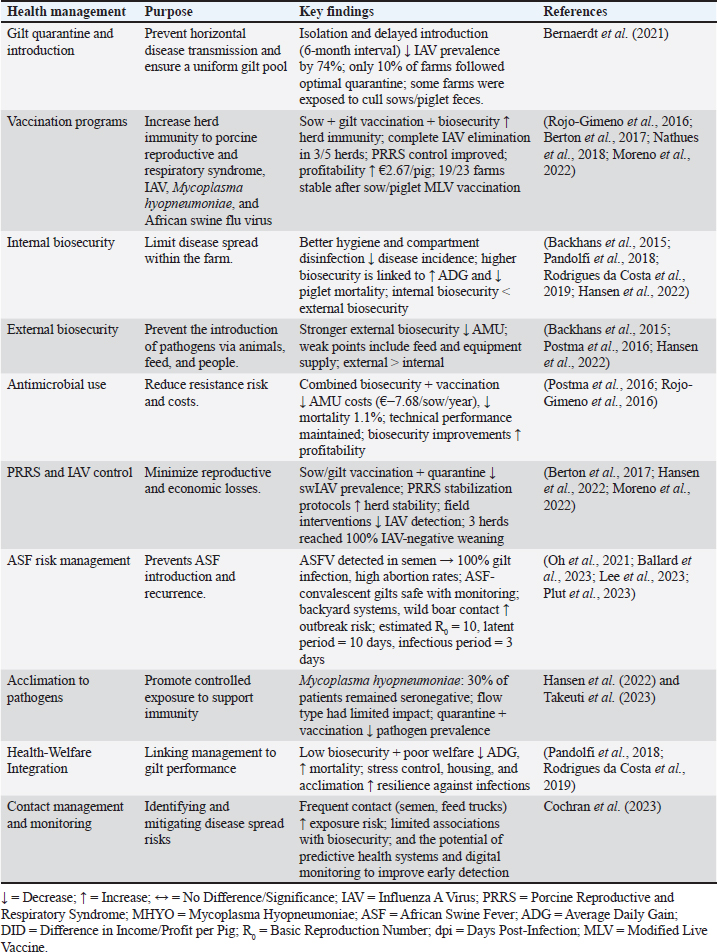
Impact of health management on gilt developmentEfficient gilt health management plays a key role in the development of a productive breeding herd because early-stage health status has long-term effects on longevity, reproductive efficiency, and global herd performance (Faccin et al., 2022). Instead of examining each intervention individually, effective health management should be considered as a whole system, involving biosecurity, vaccination, welfare, and reproductive monitoring (Singh, 2025). The basis remains strong internal and external biosecurity. Herds with high scores, consistent hygiene between compartments, and strict control of animal, feed, and human movement show lower disease prevalence, greater average daily gain, and reduced piglet mortality (Backhans et al., 2015; Rodrigues da Costa et al., 2019; Hansen et al., 2022). Quarantine, delayed introduction, and targeted acclimation for replacement gilts not only mitigate pathogens, such as influenza A virus (IAV) and porcine reproductive and respiratory syndrome virus (PRRSV), but also have benefits, including fewer replacement gilts, lower endemic status, and better reproductive performance (Berton et al., 2017; Hansen et al., 2022). Vaccination further strengthens herd immunity, with evidence showing that combined sow and gilt vaccination can eliminate IAV in commercial herds and improve PRRS control, profitability, and sow retention (Rojo-Gimeno et al., 2016; Nathues et al., 2018; Moreno et al., 2022). Importantly, vaccination and biosecurity together reduce antimicrobial use without compromising productivity, aligning gilt health management with global demands for antimicrobial stewardship (Postma et al., 2016; Rojo-Gimeno et al., 2016). Disease-specific strategies, such as PRRS stabilization protocols or managing the risk of African swine fever (ASF) through semen control and repopulation monitoring, highlight that gilt health management also plays a critical role in safeguarding reproductive performance and preventing catastrophic production losses (Oh et al., 2021; Gallardo et al., 2023; Paiva et al., 2024). In addition to preventing infectious disease, gilt health includes welfare practices that minimize stress, maximize facility, and allow for acclimation to breeding environments (Buthelezi et al., 2024). These practices contribute to immune competence and lower susceptibility to lameness and structural disorders, which are still key reasons for early culling. Integrating veterinary expertise enhanced tailored vaccination programs, reproductive health monitoring, and precision antimicrobial stewardship. The movement toward predictive and preventative health care, fueled by digital monitoring systems and precision livestock farming, offers new opportunities for the early detection of reproductive and health challenges (Kaur and Virk, 2024). These advances provide immediate benefits for animal welfare and farm economics. Table 3. Health management influencing gilt development.
Collectively, the evidence highlights that gilt health management is not only about disease prevention but also about establishing resilient, reproductively efficient animals that support herd productivity Table 3. Where nutrition dictates gilt growth and body conformation, disease management allows the strength and breeding consistency to achieve prospective genetic and nutritional potential. Advances in gilt management and future directionsNotable progress has been made in gilt management over recent years, integrating nutrition, health, and reproductive strategies to optimize lifetime productivity. Conventional interventions, such as artificial insemination and estrus synchronization, remain widely employed (Tummaruk et al., 2023). However, the full potential of emerging technologies, such as genomic selection, wearable biosensors, automated estrus detection, and precision feeding platforms, remains underutilized. These tools offer substantial opportunities to enhance reproductive efficiency, monitor gilt health and metabolism in real-time, and tailor individualized nutritional and management plans to support optimal growth, body composition, and reproductive readiness (Brossard et al., 2023). Consequently, further research is needed to assess these technologies’ economic feasibility, practical implementation, and adoption across diverse production systems. Current gilt management practices often emphasize short-term productivity at the expense of welfare and environmental sustainability (Düpjan et al., 2021). Limited studies have explored the long-term effects of intensive feeding regimes, flushing protocols, space allocation, and early-life stressors on gilt behavior, physiology, and welfare outcomes (Monteiro et al., 2025). Integrating welfare-friendly strategies, such as optimal space design, stress mitigation, and precision nutrition, not only promotes gilt health and reproductive preparedness but also reduces greenhouse gas emissions, minimizes feed wastage, and aligns with ethical standards in livestock production. Most gilt production studies are from high-input, intensive farming systems in North America and Europe. Nevertheless, as reviewed by Adesehinwa et al. (2024), low- and middle-income countries face unique constraints, such as limited access to high-quality feed ingredients, veterinary services, and genetically superior breeding stock. Therefore, context-specific gilt management strategies are essential, including the use of adapted local breeds, alternative feed resources, and community-based AI programs that are both economically viable and biologically effective under resource-limited conditions (Banayo et al., 2024). Early-life factors, such as BWi, growth rate, body composition, age at puberty, and timing of first insemination, have clear implications for litter performance and sow longevity (Langendijk et al., 2023). However, longitudinal studies tracking gilts across multiple parities are scarce. Understanding how early nutritional, health, and management interventions influence lifetime productivity, reproductive efficiency, and culling rates is critical for refining gilt selection criteria, reproductive protocols, and herd replacement strategies. The development of integrated decision-support systems that combine genetic, nutritional, health, and reproductive information to inform real-time on-farm gilt management is promising. These types of systems could provide producers with the opportunity to fine-tune breeding schedules, forecast reproductive success, match input to output, improve gilt well-being, and increase the long-term robustness of the female herd. ConclusionOptimizing gilt development is essential for enhancing sow longevity, reproductive efficiency, and overall herd productivity. Evidence indicates that integrated management strategies include early-life selection, precision nutrition, functional feed additives, estrus synchronization, and rigorous health and biosecurity measures. All these strategies synergistically improve reproductive physiology, piglet survival, and sow lifetime performance. Early-life indicators, such as BWi, growth trajectory, and body composition, serve as reliable predictors of reproductive readiness and litter outcomes, whereas structured boar exposure and vaccination programs reinforce herd resilience and reduce nonproductive days. Future research should focus on uncovering the molecular, epigenetic, and microbiota-mediated pathways through which nutrition and immune modulation influence ovarian reserve, estrous behavior, and reproductive longevity during early development. Integrating omics technologies, such as transcriptomics, metabolomics, and microbiomics, with precision farming tools, including automated health and body condition monitoring, will facilitate individualized gilt management and data-driven decision-making. Implementing these evidence-based strategies will support the rearing of robust, high-performing sows, advancing sustainable, welfare-conscious, and efficient pork production while contributing to global food security. AcknowledgmentsNone. Conflict of interestThe authors declare that there is no conflict of interest. FundingNone. Authors’ contributionsTakalani J. Mpofu: Conceptualization, writing, supervision, editing. Thembela H. Matukane: Conceptualization, writing. Mamokoma C. Modiba: Editing and review. Hezekiel Mpedi: Editing and review. Peter A. Idowu: Conceptualization, writing, editing, revision. Data availabilityAll data were provided in the manuscript. ReferencesAdesehinwa, A.O., Boladuro, B.A., Dunmade, A.S., Idowu, A.B., Moreki, J.C. and Wachira, A.M. 2024. Pig production in Africa: current status, challenges, prospects and opportunities. Anim. Biosci. 37(4), 730. Almeida, F.R.C.L., Alvarenga Dias, A.L.N., Moreira, L.P., Fiúza, A.T.L. and Chiarini-Garcia, H. 2017. Ovarian follicle development and genital tract characteristics in different birthweight gilts at 150 days of age. Reprod. Domest. Anim. 52(5), 756–762. Backhans, A., Sjölund, M., Lindberg, A. and Emanuelson, U. 2015. Biosecurity level and health management practices in 60 Swedish farrow-to-finish herds. Acta Vet. Scand. 57(1), 14. Banayo, J., Manese, K.L., Furusho, K., Kingan, M., Ayomen, J., Saliw-An, M., Nicolas, K.M., Petipit, K.J., Pagbilao, D., Arellano, V.R. and Santiago, R. 2024. Production objectives and trait preferences of smallholder farmers in the Philippines: implications for designing breeding schemes utilizing indigenous swine genetics. Philipp. Agric. Sci. 107(4), 10. Belkova, J. and Rozkot, M. 2022. Gilt rearing impacts in sow performance and longevity–a review. J. Swine Health Prod. 30(1), 10–16. Bernaerdt, E., Dewulf, J., Verhulst, R., Bonckaert, C. and Maes, D. 2021. Purchasing policy, quarantine and acclimation practices of breeding gilts in Belgian pig farms. Porcine Health Manag. 7(1), 25. Björkman, S. and Grahofer, A. 2021. Tools and protocols for managing hyperprolific sows at parturition: optimizing piglet survival and sows’ reproductive health. In Animal Reproduction in Veterinary Medicine. IntechOpen; doi: 10.5772/intechopen.91337 Björkman, S. 2017. Parturition And Subsequent Uterine Health and Fertility in Sows (Doctoral Dissertation, University of Helsinki). Brossard, L., van Milgen, J., Dourmad, J. Y. and Gaillard, C. 2023. Smart pig nutrition in the Digital Era. In Smart livestock nutrition, Ed., I. Kyriazakis. Cham, Switzerland: Springer International Publishing, pp: 169–199. Buthelezi, N.L., Mtileni, B., Nephawe, K.A., Modiba, M.C., Mpedi, H., Idowu, P.A. and Mpofu, T.J. 2024. Effects of parity, season of birth, and sex on within-litter variation and pre-weaning performance of F1 Large White× Landrace pigs. Vet. World 17(7), 1459. Calderón Díaz, J.A., Vallet, J.L., Prince, T.J., Phillips, C.E., DeDecker, A.E. and Stalder, K.J. 2015. Optimal dietary energy and amino acids for gilt development: growth, body composition, feed intake, and carcass composition traits. J. Anim. Sci. 93(3), 1187–1199. Capper, J.L. 2021. Healthy livestock produce sustainable food–the impacts of livestock health and the performance-enhancing technologies on environmental and economic sustainability. Merck Animal Health. Cochran, H.J., Bosco-Lauth, A.M., Garry, F.B., Roman-Muniz, I.N. and Martin, J.N. 2023. African swine fever: a review of current disease management strategies and risks associated with exhibition swine in the United States. Animals 13(23), 3713. Dastorani, M., Aghadavod, E., Mirhosseini, N., Foroozanfard, F., Zadeh Modarres, S., Amiri Siavashani, M. and Asemi, Z. 2018. The effects of vitamin D supplementation on metabolic profiles and gene expression of insulin and lipid metabolism in infertile polycystic ovary syndrome candidates for in vitro fertilization. Reprod. Bio. Endocrinol. 16(1), 94. Declerck, I., Dewulf, J., Sarrazin, S. and Maes, D. 2016. Long-term effects of colostrum intake in piglet mortality and performance. J. Anim. Sci. 94(4), 1633–1643. Düpjan, S., Moscovice, L.R. and Puppe, B. 2021. The role of enrichment in optimizing pig behaviour and welfare. In Understanding the behaviour and improving the welfare of pigs.Ed., Sandra Edwards. London, UK:Burleigh Dodds Science Publishing, pp: 401–427. Faccin, J.E., Tokach, M.D., Goodband, R.D., Derouchey, J.M., Woodworth, J.C. and Gebhardt, J.T. 2022. Gilt development to improve offspring performance and survivability. J. Anim. Sci. 100(6), Skac128. Faccin, J.E., Tokach, M.D., Goodband, R.D., Derouchey, J.M., Woodworth, J.C. and Gebhardt, J.T., 2022. Gilt Development to improve offspring performance and survivability. J. Anim. Sci. 100(6), 128. FAOstat 2020. Livestock Primary. Available via Http://www. Fao. Org/Faostat/En/#Data/Ql (Accessed 01 April 2023) Farmer, C., Mathews, A.T. and Hovey, R.C. 2019. Using domperidone to induce and sustain hyperprolactinemia in late-pregnant gilts. Domest. Anim. Endocrinol. 66, 14–20. Filha, W.A., Bernardi, M.L., Wentz, I. and Bortolozzo, F.P. 2010. Reproductive performance of gilts according to growth rate and backfat thickness at mating. Anim. Reprod. Sci. 121(1–2), 139–144. Flisar, T., Malovrh, Š., Urankar, J. and Kovač, M. 2012. Effect of gilt growth rate and backfat thickness on reproductive performance. Fu, L., Li, H., Liang, T., Zhou, B., Chu, Q., Schinckel, A.P., Yang, X., Zhao, R., Li, P. and Huang, R. 2016. Stocking density affects welfare indicators of growing pigs of different group sizes after regrouping. Appl. Anim. Behav. Sci. 174, 42–50. García-Morante, B., Noguera, M., Klocke, S., Sommer, K. andBridger, P. 2020. Duration of immunity against heterologous porcine parvovirus 1 challenge in gilts immunized with a novel subunit vaccine based on the viral protein 2. BMC Vet. Res. 16, 1–10. Gonçalves, M.A.D., Gourley, K.M., Dritz, S.S., Tokach, M.D., Bello, N.M., DeRouchey, J.M., Woodworth, J.C. and Goodband, R.D. 2016. Effects of amino acids and energy intake during late gestation of high-performing gilts and sows on litter and reproductive performance under commercial conditions. J. Anim. Sci. 94(5), 1993–2003. Graves, K.L., Mordhorst, B.R., Wright, E.C., Hale, B.J., Stalder, K.J., Keating, A.F. and Ross, J.W. 2020. Identification of measures predictive of age of puberty onset in gilts. Transl. Anim. Sci. 4(1), 285–292. Grzesiak, M., Kaminska, K., Bodzioch, A., Drzewiecka, E.M., Franczak, A. and Knapczyk-Stwora, K. 2022. Vitamin D3 metabolic enzymes in the porcine uterus: expression, localization and autoregulation by 1, 25 (Oh) 2d3 in vitro. Int. J. Mol. Sci. 23(7), 3972. Hansen, C.F., Hales, J., Amdi, C. and Moustsen, V.A. 2018. Intrauterine growth-restricted piglets defined by their head shape have impaired survival and growth during the suckling period. Anim. Prod. Sci. 59(6), 1056–1062. Hartnett, P., Boyle, L., Younge, B. and O’Driscoll, K. 2019. The effect of group composition and mineral supplementation during rearing on measures of cartilage condition and bone mineral density in replacement gilts. Animals 9(9), 637. Hawe, S.J., Scollan, N., Gordon, A. and Magowan, E. 2020. What is the current significance of low birthweight pigs on commercial farms in Northern Ireland in terms of impaired growth and mortality. Transl. Anim. Sci. 4(3), P.Txaa147. Hazeleger, W., Soede, N.M. and Kemp, B. 2005. The effect of feeding strategy during the pre-follicular phase on subsequent follicular development in the pig. Domest. Anim. Endocrinol. 29(2), 362–370. Henchion, M., Hayes, M., Mullen, A.M., Fenelon, M. and Tiwari, B. 2017. Future protein supply and demand: strategies and factors influencing a sustainable equilibrium. Foods 6(7), 53. Jankowska-Mąkosa, A., Knecht, D., Wyrembak, S. and Zwyrzykowska-Wodzińska, A. 2023. Evaluation of the level of parasites infection in pigs as an element of sustainable pig production. Sustainability 15(4), 3671. Jarrett, S. and Ashworth, C.J. 2018. The role of dietary fibre in pig production, with a particular emphasis on reproduction. J. Anim. Sci. Biotechnol. 9, 1–11. Jawor, P., Mee, J.F. and Stefaniak, T. 2021. Role of infection and immunity in bovine perinatal mortality: part 2. fetomaternal response to infection and novel diagnostic perspectives. Animals 11(7), 2102. Johnson, R.K., Trenhaile-Grannemann, M.D., Moreno, R., Ciobanu, D.C. and Miller, P.S. 2022. Effects of restricting energy during the gilt development period on growth and reproduction of lines differing in lean growth rate: responses in reproductive performance and longevity. J. Anim. Sci. 100(1), Skab352. Kaur, D. and Virk, A.K. 2024. Leveraging IoT for precision health monitoring in livestock with artificial intelligence. In Data-driven farming.Ed., Syed Nisar Hussain Bukhari. New York, NY: Auerbach Publications, pp: 1–18. Knauer, M.T., Cassady, J.P., Newcom, D.W. and See, M.T. 2011. Phenotypic and genetic correlations between gilt estrus, puberty, growth, composition, and structural conformation traits with first-litter reproductive measures. J. Anim. Sci. 89(4), 935–942. Knauer, M.T. and Baitinger, D.J. 2015. The sow body condition caliper. Appl. Eng. Agric. 31(2), 175–178. Knecht, M.R., Munro, C.J., Nguyen, M.A., Falgons, C., Chaudhry, S., Olagunju, M.O., Bode, A., Bobé, C., Portela, M.E. and Collins, K.M. 2020. Identification of toxicity effects of Cu 2 O materials on C. Elegans as a function of environmental ionic composition. Environ. Sci. Nano 7(2), 645–655. Knox, R.V. 2023. Follicle development in pigs: state of the art. Mol. Reprod. Dev, 90(7), 480–490. Knox, R., Arend, L., Gall, T., Connor, J. and Lower, A. 2019. Seasonal effects of photoperiod and heat stress on fertility in The Swine Breeding Herd. In Annals of International Symposium on Pig Farming. Advances In Health, Production, Swine Reproduction. Ed., Bortolozzo, FP. Anais: Porto Alegre, pp: 17–29. Kraeling, R.R. and Webel, S.K. 2015. Current strategies for reproductive management of gilts and sows in North America. J. Anim. Sci. Biotechnol. 6, 1–14. Krause, S., Bauske, N., Sigmarsson, H.L., Grahofer, A., Tietje, H., Sperling, D. and Kauffold, J. 2025. An investigation into the effect of body condition and other gilt characteristics on estrus responses post altrenogest treatment and on reproductive performance. Animals, 15(5), 623. Kummer, R., Bernardi, M.L., Wentz, I. and Bortolozzo, F.P. 2006. Reproductive performance of high growth rate gilts inseminated at an early age. Anim. Reprod. Sci. 96(1–2), 47–53. Langendijk, P., 2015. Early gestation feeding and management for optimal reproductive performance. In The gestating and lactating sow. Wageningen Academic, pp: 27–45. Langendijk, P., Fleuren, M., Venrooy, K., Ernst, K. and Page, G. 2023. Effect of low colostrum intake on gastrointestinal development and uterine and cervical morphometrical architecture in the neonatal gilt. Animal 17(3), 100725. Langendijk, P., Fleuren, M. and Page, G. 2023. Targeted nutrition in gestating sows: opportunities to enhance sow performance and piglet vitality. Animal, 17 100756. Lavery, A., Lawlor, P.G., Magowan, E., Miller, H.M., O’driscoll, K. and Berry, D.P. 2019. An association analysis of sow parity, live-weight and back-fat depth as indicators of sow productivity. Animal 13(3), 622–630. Le Dividich, J., Charneca, R. and Thomas, F. 2017. Relationship between birth order, birth weight, colostrum intake, acquisition of passive immunity and pre-weaning mortality of piglets. Span. J. Agric. Res. 15(2), 0603. Leal, D.F., Viana, C.H.C., Almond, G.W., Monteiro, M.S., Garbossa, C.A.P., Carnevale, R.F., Muro, B.B.D., Poor, A.P., Pugliesi, G., Nichi, M. and Watanabe, T.T.N. 2022. Estrus synchronization of replacement gilts using Estradiol Cipionate and Pgf2α and its effects on reproductive outcomes. Animals 12(23), 3393. Li, Q., Yuan, X., Chen, Z., Zhang, A., Zhang, Z., Zhang, H. and Li, J. 2018. Heritability estimates and effect on lifetime reproductive performance of age at puberty in sows. Anim. Reprod. Sci. 195, 207–215. Liu, Y., Zhou, Q., Theil, P.K., Fang, Z., Lin, Y., Xu, S., Feng, B., Zhuo, Y., Wu, F., Jiang, X. and Zhao, X. 2021. The differences in energy metabolism and redox status between sows with short and long farrowing duration. Animal 15(10), 100355. Lu, W., Chen, Y., Ramírez, M.D.A., Liu, Y., Zhang, H., Yuan, Z., Han, Y. and Weng, Q. 2024. Vitamin D status alters genes involved in ovarian steroidogenesis in muskrat granulosa cells. Biochim. Biophys. Acta (BBA)-Mole. Cell Biol. Lipids 1869(4), 159469. Ma, X., Li, P.H., Zhu, M.X., He, L.C., Sui, S.P., Gao, S., Su, G.S., Ding, N.S., Huang, Y., Lu, Z.Q. and Huang, X.G. 2018. Genome-wide association analysis reveals genomic regions on Chromosome 13 affecting litter size and candidate genes for uterine horn length in Erhualian pigs. Animal 12(12), 2453–2461. Machebe, N.S. 2010. Influence of nutrition and body condition at first mating on the reproductive performance of gilts in the humid tropics.Doctoral dissertation from University of Nigeria, Nsukka. Maes, D.G., Dewulf, J., Piñeiro, C., Edwards, S. and Kyriazakis, I. 2020. A critical reflection on intensive pork production with an emphasis on animal health and welfare. J. Anim. Sci. 98(Suppl1), S15–S26. Magnabosco, D., Bernardi, M.L., Wentz, I., Cunha, E.C.P. and Bortolozzo, F.P. 2016. Low birth weight affects lifetime productive performance and longevity of female swine. Livest. Sci. 184, 119–125. Magnabosco, D., Cunha, E.C.P., Bernardi, M.L., Wentz, I. and Bortolozzo, F.P. 2015. Impact of the birth weight of landrace X large white dam line gilts on mortality, culling and growth performance until selection for breeding herd. Acta Sci. Vet. 43, 1–8. Mainardi, E., Corino, C. and Rossi, R. 2024. The effect of vitamins on the immune systems of pigs. Animals 14(14), 2126. Mallmann, A.L., Oliveira, G.S., Ulguim, R.R., Mellagi, A.P.G., Bernardi, M.L., Orlando, U.A., Gonçalves, M.A., Cogo, R.J. and Bortolozzo, F.P. 2020. Impact of feed intake in early gestation on maternal growth and litter size according to body reserves at weaning of young parity sows. J. Anim. Sci. 98(3), Skaa075. Małopolska, M.M., Tuz, R., Lambert, B.D., Nowicki, J. and Schwarz, T. 2018. The replacement gilt: current strategies for improvement of the Breeding Herd. J. Swine Health Prod.` 26(4), 208–214. Manu, H. and Baidoo, S.K. 2020. Nutrition and feeding of swine. In Animal Agriculture: sustainability, challenges and innovations . Eds., Bazer, F.W., Lamb, G.C. and Wu, G. London, UK: Academic Press, pp: 299–313; doi: 10.1016/B978-0-12-817052-6.00017-3 Menegat, M. and Tokach, M.D. 2021. 263 review of current nutrition knowledge and practices for gilt development. J. Anim. Sci. 99(Suppl 1), 105. Mészáros, I., Olasz, F., Cságola, A., Tijssen, P. and Zádori, Z. 2017. Biology of porcine parvovirus (Ungulate Parvovirus 1). Viruses 9(12), 393. Miranda, A.S., Andrade, M.A., Nascimento, K.B., Santos, T.G., Lessa, M.B., Gomes, D.I., Oliveira, L.R.S., Ladeira, M.M., Gionbelli, T.R.S., Mezzomo, R. and Alves, K.S. 2023. Effect of supplementing rumen-protected fat during the second half of gestation on maternal performance and metabolism in ewes during pregnancy and subsequent lactation. Anim. Feed Sci. Technol. 304, 115754. Monteiro, M.S., Carnevale, R.F., Muro, B.B.D., Mezzina, A.L.B., Carnino, B.B., Poor, A.P., Matajira, C.E.C. and Garbossa, C.A.P. 2025. The role of nutrition across production stages to improve sow longevity. Animals 15(2), 189. Mun, H.S., Ampode, K.M.B., Lagua, E.B., Park, H.R., Kim, Y.H., Sharifuzzaman, M., Hasan, M.K. and Yang, C.J. 2023. Backfat thickness at pre-farrowing: indicators of sow reproductive performance, milk yield, and piglet birth weight in smart farm-based systems. Agriculture 14(1), 24. Muro, B.B., Carnevale, R.F., Leal, D.F., Almond, G.W., Monteiro, M.S., Poor, A.P., Schinckel, A.P. and Garbossa, C.A. 2023. The importance of optimal body condition to maximise reproductive health and perinatal outcomes in pigs. Nutr. Res. Rev., 36(2), 351–371. Muthu, S., Jacob, S.S., Dangoudoubiyam, S. and Ram, H. 2025. Parasitic diseases of pig: Signs, prevention, and control. In Commercial pig farming: a guide for swine production and management. Eds., Chauhan, A., Tarafdar, A., Gaur, G.K., Jadhav, S.E., Tiwari, R. and Dutt, T. London, UK: Academic Press, pp: 263–279; doi: 10.1016/B978-0-443-23769-0.00016-6 Niblett, R.T. 2024. Feeding strategies to enhance gilt reproduction and subsequent longevity and productivity in the breeding herd. Oecd-Fao. 2013. Agricultural outlook 2013-2022. OECD Publishing, pp: 99–103. Ózsvári, L. 2018. Production impact of parasitisms and coccidiosis in swine. J. Dairy, Vet. Anim. Res. 7(5), 217–222. Patterson, J., Bernardi, M.L., Allerson, M., Hanson, A., Holden, N., Bruner, L., Pinilla, J.C. and Foxcroft, G. 2020. Associations among individual gilt birth weight, litter birth weight phenotype, and the efficiency of replacement gilt production. J. Anim. Sci., 98(11), skaa331. Patterson, J. and Foxcroft, G. 2019. Gilt management for fertility and longevity. Animals 9(7), 434. Patterson, J.L., Beltranena, E. and Foxcroft, G.R. 2010. The effect of gilt age at first estrus and breeding on third estrus on sow body weight changes and long-term reproductive performance. J. Anim. Sci. 88(7), 2500–2513. Pohl, C.S., Moeser, A.J. and Rajput, M. 2017. Weaning stress and gastrointestinal barrier development: implications for lifelong gut health in pigs. Anim. Nutr. 3(4), 313–321. Quirino, M., Da Rosa Ulguim, R., Bernardi, M.L., Pereira, V.N., Magoga, J., Gianluppi, R.D.F., Mellagi, A.P.G., Gasperin, B.G. and Bortolozzo, F.P. 2020. Follicular dynamic and reproductive performance of gilts submitted to estrous cycle synchronization using two different progestogen sources. Theriogenology 158, 31–38. Racewicz, P., Ludwiczak, A., Skrzypczak, E., Składanowska-Baryza, J., Biesiada, H., Nowak, T., Nowaczewski, S., Zaborowicz, M., Stanisz, M. and Ślósarz, P. 2021. Welfare health and productivity in commercial pig herds. Animals: An Open Access Journal from MDPI 11(4), 1176. Reproto, R. O. 2020. Genetic selection and advances in swine breeding: a review of its impact on sow’s reproductive traits. Int. J. Res. 7, 41–52. Romoser, M.R., Gall, T., Baumgard, L.H., Keating, A.F., Stalder, K.J. and Ross, J.W. 2020. Evaluating the efficacy of visual assessment of gilt vulva size prior to puberty on subsequent reproductive performance. Appl. Anim. Sci. 36(5), 694–700. Roongsitthichai, A. and Tummaruk, P. 2014. Importance of backfat thickness to reproductive performance in female pigs. Thai J. Vet. Med. 44(2), 171–178. Ryt-Hansen, P., Nielsen, H.G., Sørensen, S.S., Larsen, I., Kristensen, C.S. and Larsen, L.E. 2022. The role of gilts in transmission dynamics of swine influenza virus and impacts of vaccination strategies and quarantine management. Porcine Health Manag. 8(1), 19. Singh, D., Sharma, P., Gaur, A. and Kant, L. 2025. Prevention and control strategies for swine zoonoses. In Emerging zoonotic threats from swine: a public health perspective. Singapore: Springer Nature Singapore, pp: 397–421. Singh, M., Mollier, R.T., Pongener, N., Patton, R.N., Yadav, R., Chaudhary, J.K., Katiyar, R., Babu, S., Rajkhowa, D.J. and Mishra, V.K. 2022. Effect of artificial insemination in comparison to natural mating on the reproductive performance and profitability of smallholder pig production system in Indian Himalaya. Front. Sustain. Food Syst. 6, 1067878. Smith, K., Watson, A.W., Lonnie, M., Peeters, W.M., Oonincx, D., Tsoutsoura, N., Simon-Miquel, G., Szepe, K., Cochetel, N., Pearson, A.G. and Witard, O.C. 2024. Meeting the global protein supply requirements of a growing and ageing population. Eur. J. Nutr. 63(5),1425–1433. Soede, N.M., Langendijk, P. and Kemp, B. 2011. Reproductive cycles in pigs. Anim. Reprod. Sci. 124(3–4), 251–258. Stalder, K., Graves, K.L., Mordhorst, B.R., Wright, E.C., Keating, A., Hale, B.J., Stalder, K.J., Keating, A.F. and Ross, J.W. 2019. Identification of measures predictive of age of puberty onset in gilts. Strathe, A.V., Hales, J., Brandt, P., Bruun, T.S., Amdi, C. and Hansen, C.F. 2019. Effects of dietary protein level and energy intake from 50 to 120 kg on body weight, back fat thickness and body composition in gilts. Livest. Sci. 227, 11–16. Szuk, T. and Omasz B. 2013. Reproduction of mechanization means on farms in lower silesia. 209–212. Takeuti, K.L., Betlach, A.M., Fano, E., Schwartz, M., Yaros, J., Wayne, S., Schmaling, E., de Barcellos, D.E. and Pieters, M. 2023. The effect of gilt flow management during acclimation on Mycoplasma hyopneumoniae detection. Vet. Microbiol. 276, 109554. Theil, P.K., Farmer, C. and Feyera, T. 2022. Physiology and nutrition of late gestating and transition sows. J. Anim. Sci. 100(6), Skac176. Thiengpimol, P., Koonawootrittriron, S. and Suwanasopee, T. 2022. Genetic and phenotypic correlations between backfat thickness and weight at 28 weeks of age, and reproductive performance in primiparous landrace sows raised under tropical conditions. Trop. Anim. Health Prod. 54(1), 43. Thingnes, S.L., Hallenstvedt, E., Sandberg, E. and Framstad, T. 2015. The effect of different dietary energy levels during rearing and mid-gestation on gilt performance and culling rate. Livest. Sci. 172, 33–42. Thomas, L.L., Herd, L.K., Goodband, R.D., Tokach, M.D., Woodworth, J.C., Derouchey, J.M., Dritz, S.S., Goncalves, M.A. and Jones, D.B. 2021. Effects of increasing standardized ileal digestible lysine during gestation on reproductive performance of gilts and sows. Animal 15(7), 100221. Tokach, M.D., Menegat, M.B., Gourley, K.M. and Goodband, R.D. 2019. Nutrient requirements of the modern high-producing lactating sow, with an emphasis on amino acid requirements. Animal 13(12), 2967–2977. Tummaruk, P. and Kesdangsakonwut, S. 2014. Uterine size in replacement gilts associated with age, body weight, growth rate, and reproductive status. Tummaruk, P., De Rensis, F. and Kirkwood, R. N. 2023. Managing prolific sows in tropical environments. Mol. Reprod. Dev. 90(7), 533–545. Vaishnav, S., Chauhan, A., Ajay, A., Saini, B.L., Kumar, S., Kumar, A., Bhushan, B. and Gaur, G.K. 2023. Allelic to genome wide perspectives of swine genetic variation to litter size and its component traits. Mol. Biol. Rep., 50(4), 3705–3721. Vallet, J.L., Calderón-Díaz, J.A., Stalder, K.J., Phillips, C., Cushman, R.A., Miles, J.R., Rempel, L.A., Rohrer, G.A., Lents, C.A., Freking, B.A. and Nonneman, D.J. 2016. Litter-Of-origin trait effects on gilt development. J. Anim. Sci. 94(1), 96–105. Van Dijk, M., Morley, T., Rau, M. L. and Saghai, Y. 2021. A meta-analysis of projected global food demand and population at risk of hunger for the period 2010–2050. Nature Food 2(7), 494–501. Wang, S., Yao, Q., Zhao, F., Cui, W., Price, C.A., Wang, Y., Lv, J., Tang, H. and Jiang, Z. 2023. 1α, 25 (OH) 2D3 promotes the autophagy of porcine ovarian granulosa cells as a protective mechanism against ROS through the BNIP3/PINK1 pathway. Int. J. Mol. Sci. 24(5), 4364. Wei, G., Wang, M., Yang, Y. and He, F. 2023. Development of research on the etiology and pathogenesis of polycystic ovary syndrome. Curr. Res. Med. Sci. 2(4), 31–46. Whitney, M.H. and Masker, C. 2010. Replacement gilt and boar nutrient recommendations and feeding management. Us Pork Center of Excellence, Ames, Ia. Wiegert, J.G., Garrison, C. and Knauer, M.T. 2017. Characterization of birth weight and colostrum intake on piglet survival and piglet quality. J. Anim. Sci. 95, 32. Wijesena, H.R., Keel, B.N., Nonneman, D.J., Cushman, R.A. and Lents, C.A. 2024. Clustering of multi-tissue transcriptomes in gilts with normal cyclicity or delayed puberty reveals genes related to pubertal development. Biol. Reprod. 110(2), 261–274. Xayalath, S. 2023. Comparative study on reproductive performance and management methods of Hungarian and Lao indigenous pig breeds (Doctoral dissertation. Debreceni Egyetem (Hungary). Yang, Z., Yang, X., Liu, G., Deng, M., Sun, B., Guo, Y., Liu, D. and Li, Y. 2022. Polymorphisms in BMPR-IB gene and their association with litter size trait in Chinese Hu Sheep. Anim. Biotechnol. 33(2), 250–259. Zhang, J., Guo, P., Jiang, Z.Y., Gao, K.G., Wang, L., Yang, X.F., Hu, Y.J. and Ma, X.Y. 2016. Low-level arginine supplementation (0.1%) of wheat-based diets in pregnancy increases the total and live-born litter sizes in gilts. Anim. Prod. Sci. 57(6), 1091–1096. Zhuo, Y., Zhou, D., Che, L., Fang, Z., Lin, Y. and Wu, D. 2014. Feeding prepubescent gilts, a high-fat diet induces molecular changes in the hypothalamus-pituitary-gonadal axis and predicts early timing of puberty. Nutrition 30(7–8), 890–896. | ||
| How to Cite this Article |
| Pubmed Style Mpofu TJ, Matukane TH, Modiba MC, Mpedi H, Idowu PA. Optimizing gilt development through integrated nutritional and health strategies: A narrative review. Open Vet. J.. 2026; 16(8): 5063-5076. doi:10.5455/OVJ.2026.v16.i8.4 Web Style Mpofu TJ, Matukane TH, Modiba MC, Mpedi H, Idowu PA. Optimizing gilt development through integrated nutritional and health strategies: A narrative review. https://www.openveterinaryjournal.com/?mno=281856 [Access: August 08, 2026]. doi:10.5455/OVJ.2026.v16.i8.4 AMA (American Medical Association) Style Mpofu TJ, Matukane TH, Modiba MC, Mpedi H, Idowu PA. Optimizing gilt development through integrated nutritional and health strategies: A narrative review. Open Vet. J.. 2026; 16(8): 5063-5076. doi:10.5455/OVJ.2026.v16.i8.4 Vancouver/ICMJE Style Mpofu TJ, Matukane TH, Modiba MC, Mpedi H, Idowu PA. Optimizing gilt development through integrated nutritional and health strategies: A narrative review. Open Vet. J.. (2026), [cited August 08, 2026]; 16(8): 5063-5076. doi:10.5455/OVJ.2026.v16.i8.4 Harvard Style Mpofu, T. J., Matukane, . T. H., Modiba, . M. C., Mpedi, . H. & Idowu, . P. A. (2026) Optimizing gilt development through integrated nutritional and health strategies: A narrative review. Open Vet. J., 16 (8), 5063-5076. doi:10.5455/OVJ.2026.v16.i8.4 Turabian Style Mpofu, Takalani J., Thembela H. Matukane, Mamokoma C. Modiba, Hezekiel Mpedi, and Peter A. Idowu. 2026. Optimizing gilt development through integrated nutritional and health strategies: A narrative review. Open Veterinary Journal, 16 (8), 5063-5076. doi:10.5455/OVJ.2026.v16.i8.4 Chicago Style Mpofu, Takalani J., Thembela H. Matukane, Mamokoma C. Modiba, Hezekiel Mpedi, and Peter A. Idowu. "Optimizing gilt development through integrated nutritional and health strategies: A narrative review." Open Veterinary Journal 16 (2026), 5063-5076. doi:10.5455/OVJ.2026.v16.i8.4 MLA (The Modern Language Association) Style Mpofu, Takalani J., Thembela H. Matukane, Mamokoma C. Modiba, Hezekiel Mpedi, and Peter A. Idowu. "Optimizing gilt development through integrated nutritional and health strategies: A narrative review." Open Veterinary Journal 16.8 (2026), 5063-5076. Print. doi:10.5455/OVJ.2026.v16.i8.4 APA (American Psychological Association) Style Mpofu, T. J., Matukane, . T. H., Modiba, . M. C., Mpedi, . H. & Idowu, . P. A. (2026) Optimizing gilt development through integrated nutritional and health strategies: A narrative review. Open Veterinary Journal, 16 (8), 5063-5076. doi:10.5455/OVJ.2026.v16.i8.4 |


