




| Research Article | ||
Open Vet. J.. 2026; 16(5): 2899-2910 Open Veterinary Journal, (2026), Vol. 16(5): 2899-2910 Research Article Molecular profiling of Escherichia coli and Campylobacter jejuni isolated from captive avian species: Virulence factors and resistance patternsAqsa Imtiaz1, Syed Mohsin Bukhari1*, Ali Hussain2, Shahid Mehmood3 and Fareeha Akhtar41Department of Wildlife and Ecology, University of Veterinary and Animal Sciences, Lahore, Pakistan 2Institute of Zoology, University of Punjab, Lahore, Pakistan 3Department of Poultry Production, University of Veterinary and Animal Sciences, Lahore, Pakistan 4University Diagnostic Lab (UDL), Institute of Microbiology, University of Veterinary and Animal Sciences, Lahore, Pakistan *Corresponding Author: Syed Mohsin Bukhari. Department of Wildlife and Ecology, University of Veterinary and Animal Sciences, Lahore, Pakistan. Email: mohsin.bukhari [at] uvas.edu.pk Submitted: 01/09/2025 Revised: 25/03/2026 Accepted: 08/04/2026 Published: 31/05/2026 © 2025 Open Veterinary Journal
AbstractBackground: This study characterizes Escherichia coli and Campylobacter jejuni isolated from the fecal samples of captive avian species. Aim: This study aimed to assess their molecular and genetic profiles, including virulence and antimicrobial resistance (AMR) traits. Methods: Fecal samples were collected from peafowl, pheasant, chukar partridge, turkey, and quail reared in avian farms in Kasur, Pakistan. Bacterial species were isolated and identified using selective culture techniques and biochemical tests. DNA was extracted through the phenol-chloroform method, and the 16S rRNA gene was amplified using species-specific primers for molecular identification. Sanger sequencing and Basic Local Alignment Search Tool analysis were employed for species confirmation and submission of sequences to National Center for Biotechnology Information. Virulence genes (flaA, cdtA, cdtB, and dnaJ for C. jejuni; fimA, eae, stx1, and stx2 for E. coli) and AMR genes (tet(O) and blaOXA-61 for C. jejuni; tetA, tetB, blaTEM, blaSHV, and blaCMY for E. coli) were detected using polymerase chain reaction (PCR). Results: The 16S rRNA gene sequences confirmed the identity of E. coli and C. jejuni. Virulence genes were widespread in C. jejuni (cdtA and cdtB: 100%; flaA: 80%; dnaJ: 40%) and E. coli (fimA: 100%; eae 20%; stx1/stx2 10%). AMR genes were highly prevalent in both species. According to PCR results, all the examined E. coli isolates had both beta lactam and (tetA, tetB) resistance genes. The presence of virulence and resistance genes highlights the pathogenic potential of E. coli and C. jejuni in captive avian species, underscoring the importance of monitoring these pathogens in avian farms. Conclusion: The findings contribute to understanding the role and molecular epidemiology of these bacterial species in public health. Keywords: Antimicrobial resistance, Pathogenic bacteria, Virulence genes, 16S rRNA. IntroductionBirds show diversity and evolutionary lineage containing more than 10,000 species, including the smallest bird, i.e., humming bird (2 g) and the largest ostrich (100 kg in weight and 2 m in length) (Waite and Taylor, 2015). Wild birds are believed to be one of the reservoirs for pathogens, contaminating the environment and water with their feces. Furthermore, birds travel long distances due to their migration and foraging movements, and they have a significant impact on the spread of bacteria worldwide (Llarena et al., 2015). The gut microbial composition affected by dietary habits and the health of the host is dependent on microbial metabolism. The gut microbiota of the host is reflected by their specific behavior (Zhang et al., 2015). "Captive avian species" refers bird species confined to cages, aviaries, or restricted environments. The risk of contracting zoonotic illnesses from caged birds and companion birds is higher for zoonotic disease visitors and pet owners (Conrad et al., 2017). Escherichia coli is a naturally occurring component of human and animal microbiota; although pathogenic strains can lead to a variety of gut diseases both in wild and domestic birds (Machado et al., 2018). Campylobacter is a significant zoonotic pathogen that is widely known as a major causes for bacterial food poisoning worldwide (Han et al., 2019). Shotgun Meta genomics, 16S rRNA, and next generation sequencing are the advance techniques used to study gut microbiota. Numerous studies have suggested an association between virulence genes and antimicrobial resistance (AMR) in bacterial pathogens, highlighting a possible connection between antibiotic resistance and the ability of bacteria to colonize or invade host tissues (Raeisi et al., 2017). Antibiotic resistance genes (ARGs) in bacteria can enable them to survive severe conditions. Due to selective pressure, mutation, or induction, E. coli acquire resistance genes (Shaikh et al., 2015). The high level of antibiotic resistance in E. coli isolates is due to the encoding genes. Oxytetracycline, streptomycin, gentamicin, and β–lactamase is connected to the genes tetA, aadAI, balTEM, aac(3)-IV, QnrA, and sul1, respectively (Amani et al., 2020). Campylobacter strains that are resistant to antibiotics can lead to prolonged diarrhea (Raeisi et al., 2017). Tetracycline resistance is commonly associated with the presence of the tetO gene, which encodes a ribosomal protection protein (Laprade et al., 2016). Several ARGs, such as erm(B) for erythromycin resistance, aadE/sat4 for streptomycin and streptothricin resistance, blaOXA-61 for beta-lactam resistance, and aphA-3 for aminoglycoside resistance, have been linked to multidrug resistance in Campylobacter strains (Wang et al., 2014). This research aimed to analyze the molecular as well as genetic profiles of E. coli and Campylobacter jejuni isolated from the fecal samples of captive avian species, with a focus on assessing their virulence factors and AMR characteristics. Materials and MethodsSample siteThe samples were collected from different bird farms (n=07) in the Kasur district, as shown in Fig. 1. The bird farms were chosen from the four tehsils of the Kasur district, UVAS Avian Conservation and Research Centre, Pattoki Bird Market, Hafiz bird Shop Chunian, Jahanzaib Hassan Private Farm Chunian, Shali’s Bird Aviary Kot Radha Kishan, AS Birds Farm Kasur, Kasur Bird’s Point.
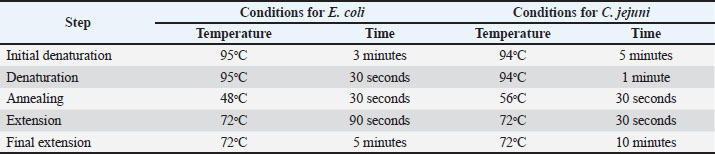
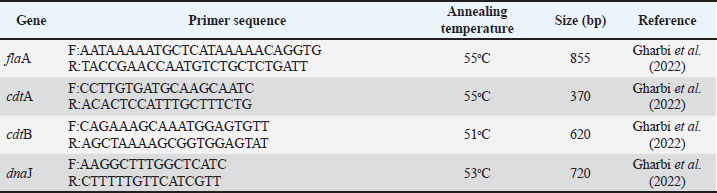
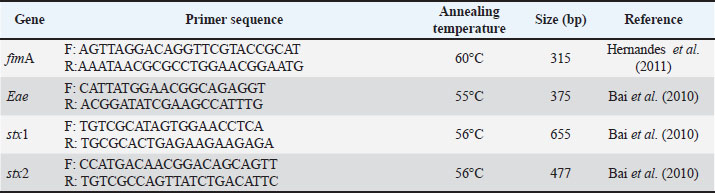
Fig. 1. Extraction of E. coli DNA from fecal samples obtained from birds. Collection of fecal samplesFresh fecal samples (n=175) were collected from captive Peafowl (n=5), Pheasant (n=5), Chukar partridge (n=5), Turkey (n=5), and Quail (n=5) reared privately in bird farms (n=07) in district Kasur, Pakistan. Fecal samples (2 g) were collected in sterile flasks having sterile phosphate buffer saline solution (1%) and refrigerated until processing. The samples were centrifuged at 3,000 rpm for 5 minutes on Bio-Rad centrifuge equipment. The supernatant was then serially diluted up to 10-6 fold (Ramires et al., 2020). Isolation and identification of bacterial speciesThe sample (100 µl) was inoculated into MacConkey broth and incubated aerobically at 37°C for 24 hours to isolate the E. coli. A loop of the broth culture was streaked onto MacConkey agar and incubated under the same conditions for 24 to 72 hours. Lactose-fermenting colonies, appearing pink, were transferred to eosin methylene blue agar. Phenotypic identification included tests for growth on Triple Sugar Iron agar, indole production, urease activity, citrate utilization, and motility (Silva et al., 2009). For C. jejuni isolation, 100 µl of the sample was added to 10 ml of selective enrichment broth and incubated at 42°C in a microaerophilic environment for 48 hours (Bolton, 2015). Cultures were then plated onto Campylobacter blood-free selective agar and incubated under similar conditions. Colonies were sub-cultured on blood agar at 42°C for 24 hours. After Gram staining, curved or spiral-shaped motile rods were examined microscopically and subjected to biochemical tests for species confirmation (Dipineto et al., 2017). DNA extraction, amplification, and data analysisDNA was extracted from pure cultures of C. jejuni and E. coli using the Phenol Chloroform (Organic) method (Dwivedi and Kumar, 2019). Initially, colonies from the culture plate samples were selected and placed in Eppendorf tubes, where they were suspended in a solution consisting of 1% phosphate buffer saline and injection water. The samples were vortexed and thoroughly mixed to ensure homogenization. Subsequently, the mixture was centrifuged at 13,000 rpm for 5 minutes. After pellet formation, the samples were incubated at 56°C for 2 hours with the addition of 20 µl proteinase K and 500 µl of lysis buffer. Subsequently, upon removal from the incubator, phenol, chloroform, and iso-amyl alcohol were added, and the mixture underwent centrifugation at 13,000 rpm for 10 minutes. Supernatant was collected and processed by adding isopropanol and sodium acetate, with an overnight incubation. On the following day, samples were centrifuged at high speed for 10 minutes, and the supernatant was disposed of; the residual pellet underwent a wash with 70% cold ethanol, followed by another round of centrifugation and supernatant removal. The samples were left to air dry, and the resulting pellet was suspended in 60 µl of Tris-EDTA buffer. The presence and concentration of DNA were examined using Thermo Scientific TM NanoDrop 2000c and Agarose Gel electrophoresis. These primers were used to amplify a segment of the bacterial 16S rRNA region. The gene of 16S rRNA for E. coli 27F-(5'-AGAGTTTGATCMTGGCTCAG-3') and 1492R-(5'-CGGTTACCTTGTTACGACTT-3') was employed to amplify the target region (Habib et al., 2021). The 16S rRNA primer for C. jejuni F-(5'-TTGATCCTGGCTCAGAGT-3') and R-(5' TTCACCCCAGTCGCTGAT-3') was used to amplify the target region of 16S rRNA (Alarjani et al., 2021). The polymerase chain reaction (PCR) products were purified and checked through 1% agarose gel. Pure samples were sent for Sanger sequencing analysis to Alpha Genomics Company, Islamabad. Identification of virulent and resistant genes in C. jejuni and E. coliVirulent genes flaA (motility), cdtA, cdtB (cytotoxin production), and dnaJ (colonization and adherence) from C. jejuni and E. coli (fimA, eae, stx1, stx2) isolates were detected by PCR (Robins-Browne et al., 2016). According to previous studies, virulence factors directly impact the E. coli pathogenesis. Schaufler et al. (2019)found that pathogenic E. coli, which is virulent and resistant to several drugs, is emerging now. The amplified reaction conditions were exactly the same as mentioned above. Tables 1 and 2 showed the annealing temperatures and primer sequences for C. jejuni and E. coli, respectively. Table 1. PCR conditions for bacterial species.
Table 2. Primers of virulent genes, annealing temperature for C. jejuni.
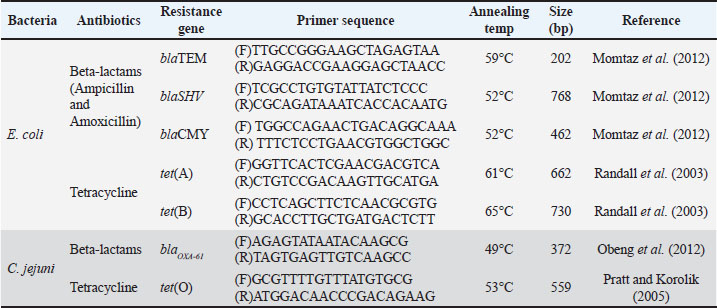
We tested a total positive of E. coli (150/175) and C. jejuni (85/175) strains. These isolates have previously been isolated from captive avian species and tested against ciprofloxacin, gentamicin, enrofloxacin, nalidixic acid, streptomycin, tetracycline, chloramphenicol, erythromycin, amoxicillin, and doxycycline. Our previous research showed their AMR patterns. The set of primers for beta lactams and tetracycline resistance genes in E. coli and C. jejuni was used to amplify AMR genes. The primers are shown in Table 3. The Basic Local Alignment Search Tool (BLAST) was used to automatically match the whole gene sequences with the bacterial sequences found in databanks. Table 3. Primers of virulent genes, annealing temperatures for E. coli.
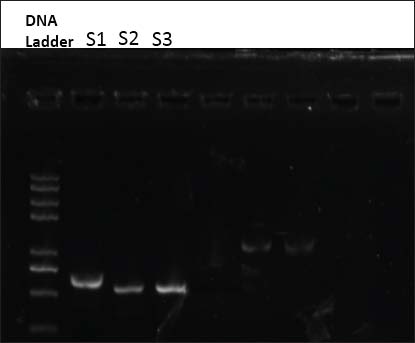
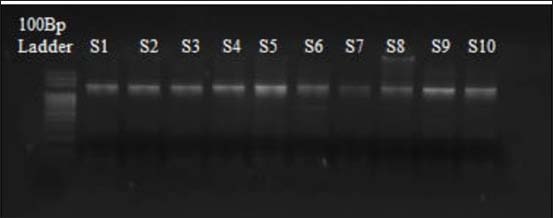
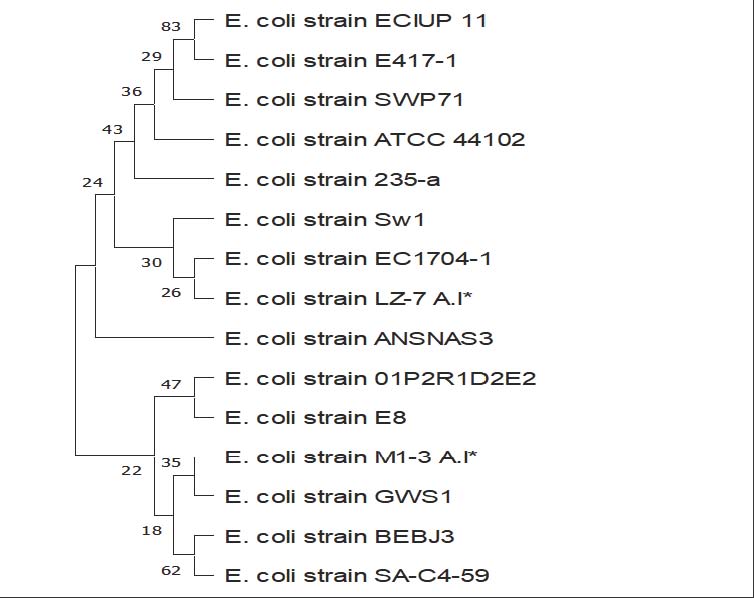
Sequence analysisThe sequence of 16S rRNA was edited, corrected, and compared to exclude the PCR primer binding sites using MEGA 5.2, and the BLAST was used to compare the sequences against the available sequences of bacteria in databank (www.ncbi.nlm.nih.gov) (Narcana et al., 2020). Ethical approvalNot needed for this study. ResultsDNA extraction of E. coli and amplification of 16S rRNA from the fecal samples of selected captive avian speciesThe 16S rRNA gene was identified and amplified using these primers utilizing the genome of E. coli received as shown in (Fig. 1) as a template. The 16S rRNA gene for E. coli was employed to amplify genomic DNA. The PCR amplification product underwent gel electrophoresis to confirm the PCR (Fig. 2). After editing, BLAST was run on the sequenced data, and it was submitted to National Center for Biotechnology Information (NCBI) to obtain the accession numbers shown in Table 5. A phylogenetic tree was constructed for the 16S rRNA gene sequence of E. coli using neighbor joining method (Bootstrap analysis) to examine its evolutionary relationships (Fig. 3). Table 5. Accession numbers attained from the NCBI of the isolated sequences.
Fig. 2. In lane 1, DNA ladder, Lanes S1-S5 indicate the amplification of the 16S gene for E. coli while lanes S6-S10 represents the amplification of the 16S gene for C. jejuni.
Fig. 3. Construction of phylogenetic tree on the basis of 16S rRNA gene. DNA extraction of C. jejuni and amplification of 16s rRNA from the fecal samples of selected captive birdsA template of C. jejuni (Fig. 4) was utilized to identify and amplify the 16S rRNA gene. The PCR amplification product underwent gel electrophoresis to confirm the PCR (Fig. 2). After editing, BLAST was run on the sequenced data, and it was submitted to NCBI to obtain the accession numbers shown in Table 4. Table 4. Primers of resistance gene for E. coli and C. jejuni.
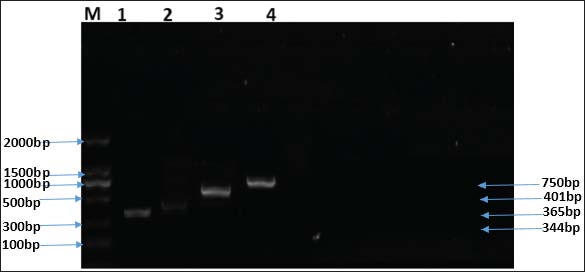
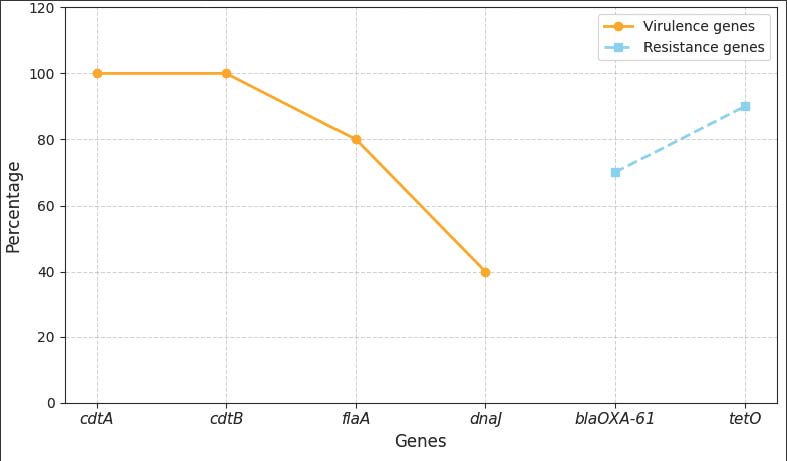
Fig. 4. Extraction of C. jejuni DNA from the fecal samples of captive birds. Virulent and resistance genes of C. jejuniThe virulence genes cdtA and cdtB were present in all C. jejuni tested isolates (n=10). FlaA (80%) was the most abundant gene in C. jejuni, followed by dnaJ (40%) (Fig. 5). Tet (O) and blaOXA-61 were the most common AMR genes found in C. jejuni tested isolates (90% and 70% respectively) (Fig. 6).
Fig. 5. PCR product of virulent genes in C. jejuni, Lane 1=cdtA, Lane 2=dnaJ, Lane 3=cdtB Lane 4=fla genes for the species identification.
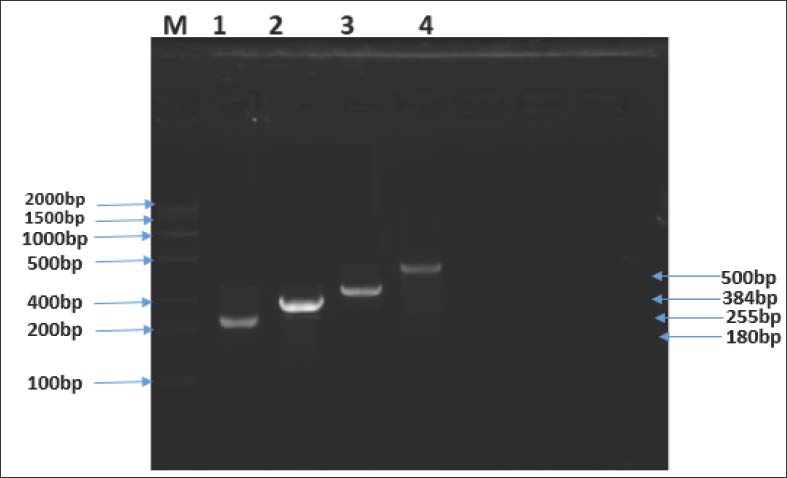
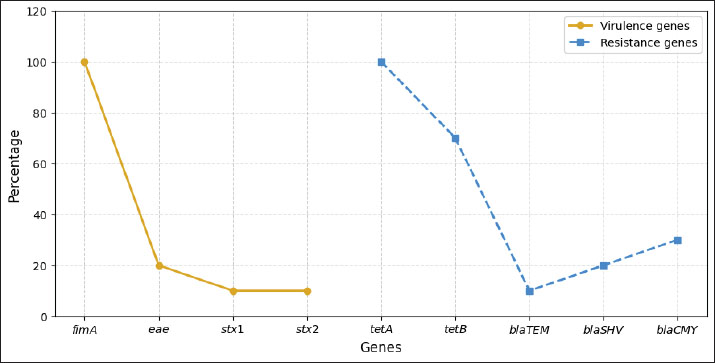
Fig. 6. The %age of virulence and resistance genes found in C. jejuni isolates. Virulent and resistance genes of E. coliIn the present study, all the E. coli isolates (n=10) tested positive to the virulence factor gene fimA (100%), but for eae (20%), stx1 and stx2 (10%) (Fig. 7). Regarding resistance, E. coli isolates were tested against five resistance genes, including tetracycline resistance (tetA, tetB) and beta lactam resistance (blaTEM, blaSHV, and blaCMY). PCR results showed that all 10 tested isolates had both beta lactam and (tetA, tetB) resistance genes (Fig. 8).
Fig. 7. PCR product of virulent genes in E. coli, Lane M=2,000 bp markers, Lane 1=stx1, Lane 2=stx2 Lane 3=eae, Lane 4=fimA genes for the species identification.
Fig. 8. The %age of virulence and resistance genes found in E. coli isolates. DiscussionIn this study, C. jejuni and E. coli were molecularly characterized after being isolated from the fecal matter of avian species. The infections have public health significance because these infections are zoonotic. The organisms' identification was based on their cultural morphology and the results of their 16S rRNA gene sequences. The intestines of birds provide an ideal habitat for Campylobacter colonization, which raises the risk of human campylobacteriosis by eating the flesh of infected birds. This is extremely concerning for human health (Kaakoush et al., 2015). Millions of individuals worldwide acquire the highly significant food-borne zoonotic pathogen C. jejuni every year. Although there are other ways that humans might become infected, research has shown that caged birds are the main source (Mirzaie et al., 2011). As C. jejuni is a zoonotic pathogen, there is a significant risk of human infection from poultry-derived strains. Several previous reports of human diseases by C. jejuni from poultry originating strains were anticipated using the findings of the evolutionary tree where human strains were located in the similar cluster with the research strains (Friis et al., 2010). DNA from pure cultures of C. jejuni and E. coli were extracted using the Phenol Chloroform (Organic) method (Dwivedi and Kumar, 2019). The presence and concentration of DNA were examined using Thermo Scientific TM NanoDrop 2000c and Agarose gel electrophoresis. The 16S rRNA gene was identified and amplified using these primers utilizing the 16s rRNA of E. coli and C. jeuni obtained as shown in Figures 1 and 4 as a template, respectively. Amplified products were visualized under UV light after electrophoresis on a 1% agarose gel. Campylobacter-associated diseases are linked to the expression of gene responsible for motility, colonization, epithelial cell invasion, and toxin generation, according to many global researches (Dasti et al., 2010). The current study found that most Campylobacter isolates had virulence genes related to pathogen colonization, adhesion, and invasion, including flaA. Additionally, all Campylobacter isolates had the cdtA and cdtB genes, which are required for the expression of the cytolethal distending toxin toxin, as reported in previous studies (Ghorbanalizadgan et al., 2014). Increasing the number of genes in a PCR multiplex reaction can lead to challenges with primer pair specificity and amplification efficiency. The virulence mechanisms that differentiate these types of E. coli are genetically encoded by chromosomal, plasmid, and the bacteria DNA, and are expressed by specified genes including eae (attaching and effacing lesions), bfpA (localized adherence), ipaH (enteroinvasive mechanism), heat-labile toxin (elt) and heat-stable toxin (est), and the Shiga toxins, stx1 and stx2 (Persson et al., 2007). This study reported a 44% increase in the frequency of fimA virulence genes among E. coli isolates (Promite and Saha, 2020). In the present study, all the E. coli isolates (n=10) tested positive to the virulence factor gene fimA (100%), eae (20%), stx1 and stx2 (10%) (10) (Fig. 7). Regarding resistance, E. coli isolates were tested against five resistance genes, including tetracycline resistance genes (tetA, tetB) and beta lactam resistance genes (blaTEM, blaSHV, and blaCMY). PCR results showed that all 10 tested isolates had both beta lactam and (tetA, tetB) resistance genes. Related to our findings, seven of the 14 E. coli samples tested positive for at least one virulence gene (50%) had eaeA, which found that 40% of E. coli isolates carried the gene (Dutta et al., 2011). The high prevalence of these genes in the isolates suggests their strong pathogenic potential and poses a significant threat to human health. Campylobacter-associated disorders are linked to amplification of genes responsible for motility, colonization, epithelial cell invasion, and toxin generation, according to many global researches (Dasti et al., 2010). Antibiotic resistance characteristics in tested isolates are strongly linked to the presence of genes and mutations that encode resistance. Campylobacter's tet(O) gene confers resistance to tetracycline. Tetracycline-resistant C. jejuni strains tested for the tet(O) gene may include other ARGs. The results showed that C. jejuni is resistant to tetracycline (62%), it may not be a suitable treatment for campylobacteriosis. The blaOXA-61 gene, which encodes resistance to b-lactams, was found in 70% of isolates resistant to tested antibiotic (amoxicillin). Although resistance to b-lactam medicines is strongly associated with the presence of blaOXA-61, our investigation found that 70% of b-lactam C. jejuni possessed this gene. Our findings support previous research indicating that the blaOXA-61 gene in Campylobacter may have a purpose other than resistance to b-lactam antibiotics (Gharbi et al., 2022). Tetracycline resistance genes were identified for E. coli, including tetA, tetB, tetC, tetD, and tetE (Ng et al., 2001). The tet determinants, such as tetA, tetB, tetC, tetD, tetE, tetG, tetH, tetK, tetL, and tetA(P), have been extensively studied found that energy-dependent membrane proteins transport tetracycline from of the cell, lowering its intercellular concentration and protecting bacterial ribosomes. They discovered the tetA (A) gene in all tested isolates, supporting our results of 100% detection. This research supports our findings (Guerra, 2006) discovered that the most common resistance gene in E. coli was tetA (86%). (Guerra et al., 2003) found a prevalence of 66% of tetA, whereas (Younis et al., 2017) reported a prevalence of 60% for tetA and (Momtaz et al., 2012) reported a prevalence of 52.6% for tetA genes. In contrast, found resistance to tetA and tetB genes in only 40% and 55% of 20 E. coli isolates, respectively (Amer et al., 2018). Radwan et al. (2016)discovered the tetA gene in 35.7% of isolates, whereas Adelowo et al. (2014)detected resistance genes tetA and tetB in 21% and 17% of E. coli isolates. ConclusionThis study confirms the molecular and phylogenetic identification based on 16S rRNA of E. coli and C. jejuni from captive avian species in Kasur, Pakistan, highlighting their pathogenic and drug-resistant potential. The high prevalence of virulence (flaA, cdtA, cdtB, fimA) and AMR (tetO, tetA, and blaOXA-61) genes emphasizes the role of these birds as reservoirs of zoonotic pathogens. These findings underscore the need for effective surveillance and control measures to address public health risks associated with these bacteria. AcknowledgmentsThe authors would like to express their sincere gratitude to Prof. Dr. Arshad Javid and Dr. Waqas Ali for their invaluable guidance, support, and expertise throughout the research. Conflict of interestThe authors declare no conflict of interest regarding the publication of this article. FundingThere’s no funding from any agency. Authors’ contributionsSyed Mohsin Bukhari: Conceived and designed the study, supervised the research work, and critically revised the manuscript and also corresponding author as well. Aqsa Imtiaz: Performed the experiments, collected data, and contributed to data interpretation. Ali Hussain: Assisted in methodology development, data analysis, and manuscript writing. Shahid Mehmood: Contributed to statistical analysis, validation, and preparation of figures and tables. Fareeha Akhtar: Assisted in literature review, manuscript formatting, and proofreading. Data availabilityThe data that support the findings of this study are not openly available due to reasons of sensitivity and are available from the corresponding author upon reasonable request. ReferencesAdelowo, O.O., Fagade, O.E. and Agersø, Y. 2014. Antibiotic resistance and resistance genes in Escherichia coli from poultry farms, southwest Nigeria. J. Infect. Dev. Count. 8(09), 1103–1112. Alarjani, K.M., Elkhadragy, M.F., Al-Masoud, A.H. and Yehia, H.M. 2021. Detection of Campylobacter jejuni and Salmonella typhimurium in chicken using PCR for virulence factor hipO and inv A gene (Saudi Arabia). Biosci. Rep. 41(9), 1–17. Amani, F., Hashemitabar, G., Ghaniei, A. and Farzin, H. 2020. Antimicrobial resistance and virulence genes in the Escherichia coli isolates obtained from ostrich. Trop. Anim. Health Prod. 52(6), 3501–3508. Amer, M.M., Mekky, H.M., Amer, A.M. and Fedawy, H.S. 2018. Antimicrobial resistance genes in pathogenic Escherichia coli isolated from diseased broiler chickens in Egypt and their relationship with the phenotypic resistance characteristics. Vet. World 11(8), 1082. Bai, J., Shi, X. and Nagaraja, T.G. 2010. A multiplex PCR procedure for the detection of six major virulence genes in Escherichia coli O157: H7. J. Microbiol. Methods 82(1), 85–89. Bolton, D.J. 2015. Campylobacter virulence and survival factors. Food. Microbiol. 48, 99–108; doi:10.1016/j.fm.2014.11.017 Conrad, C.C., Stanford, K., Narvaez-Bravo, C., Callaway, T. and Mcallister, T. 2017. Farm fairs and petting zoos: a review of animal contact as a source of zoonotic enteric disease. Foodborne Pathogens Dis. 14(2), 59–73. Dasti, J.I., Tareen, A.M., Lugert, R., Zautner, A.E. and Groß, U. 2010. Campylobacter jejuni: a brief overview on pathogenicity-associated factors and disease-mediating mechanisms. Int. J. Med. Microbiol. 300, 205–211; doi:10.1016/j.ijmm.2009.07.002 Dipineto, L., Borrelli, L., Pace, A., Romano, V., D’Orazio, S., Varriale, L., Russo, T.P. and Fioretti, A. 2017. Campylobacter coli infection in pet birds in southern Italy. Acta. Vet. Scand. 59, 1–3. Dutta, T.K., Roychoudhury, P., Bandyopadhyay, S., Wani, S.A. and Hussain, I. 2011. Detection & characterization of Shiga toxin producing Escherichia coli (STEC) & enteropathogenic Escherichia coli (EPEC) in poultry birds with diarrhea. Indian J. Med. Res. 133(5), 541–545. Dwivedi, P. and Kumar, S. 2019. Isolation and characterization of Escherichia coli in street fast foods in rural areas. J. Biotechnol. Biochem. 5(6), 50–53. F.R, E.S., A.H, A., M.m. H, W., A.S, B. and Mwafy, A. 2019. Antimicrobial resistance and molecular characterization of pathogenic E. coli isolated from chickens. J. Vet. Med. Res. 26(2), 280–292. Friis, C., Wassenaar, T.M., Javed, M.A., Snipen, L., Lagesen, K., Hallin, P.F., Newell, D.G., Toszeghy, M., Ridley, A., Manning, G. and Ussery, D.W. 2010. Genomic characterization of Campylobacter jejuni strain M1. PLos One 5(8), M1–M12; doi:10.1371/journal.pone.0012253 Gharbi, M., Béjaoui, A., Hamda, C.B., Ghedira, K., Ghram, A. and Maaroufi, A. 2022. Distribution of virulence and antibiotic resistance genes in Campylobacter jejuni and Campylobacter coli isolated from broiler chickens in Tunisia. J. Microbiol. Immunol. Infect. 55(6), 1273–1282. Ghorbanalizadgan, M., Bakhshi, B., Kazemnejad Lili, A., Najar-Peerayeh, S. and Nikmanesh, B. 2014. A molecular survey of Campylobacter jejuni and Campylobacter coli virulence and diversity. Iran. Biomed. J. 18(3), 158. Guerra, B. 2006. Phenotypic and genotypic characterization of antimicrobial resistance in Escherichia coli O111 isolates. J. Antimicrob. Chemother. 57(6), 1210–1214. Guerra, B., Junker, E., Schroeter, A., Malorny, B., Lehmann, S. and Helmuth, R. 2003. Phenotypic and genotypic characterization of antimicrobial resistance in German Escherichia coli isolates from cattle, swine and poultry. J. Antimicrob. Chemother. 52(3), 489–492. Habib, A., Afroz, F., Rahman, M.M., Begum, M.D., Kamruzzaman, M. and Haque, M.A. 2021. Molecular characterization and antimicrobial resistance of Escherichia coli isolated from retail chicken meat. South. Asian. J. Biotechnol. Res. 4(2), 38–47. Han, X., Guan, X., Zeng, H., Li, J., Huang, X., Wen, Y., Zhao, Q., Huang, X., Yan, Q., Huang, Y., Cao, S., Wu, R., Ma, X. and Zou, L. 2019. Prevalence, antimicrobial resistance profiles and virulence-associated genes of thermophilic Campylobacter spp. isolated from ducks in a Chinese slaughterhouse. Food Control 104, 157–166; doi:10.1016/j.foodcont.2019.04.038 Hernandes, R.T., Velsko, I., Sampaio, S.C., Elias, W.P., Robins-Browne, R.M. and Girï, J.A. 2011. Fimbrial adhesins produced by atypical enteropathogenic Escherichia coli strains. Appl. Environ. Microbiol. 77, 8391–8399. Kaakoush, N.O., Castaño-Rodríguez, N., Mitchell, H.M. and Man, S.M. 2015. Global epidemiology of Campylobacter infection. Clin. Microbiol. Rev. 28(3), 687–720. Laprade, N., Cloutier, M., Lapen, D.R., Topp, E., Wilkes, G., Villemur, R. and Khan, I.U. 2016. Detection of virulence, antibiotic resistance and toxin (VAT) genes in Campylobacter species using newly developed multiplex PCR assays. J. Microbial. Methods. 124, 41–47; doi:10.1016/j.mimet.2016.03.009 Llarena, A.K., Skarp., De Haan, C.P.A., Rossi, M. and Hänninen, M.L. 2015. Characterization of the Campylobacter jejuni population in the barnacle geese reservoir. Zoonoses. Public. Health. 62(3), 209–221. Machado, D., Lopes, E., Albuquerque, A., Horn, R., Bezerra, W., Siqueira, R., Lopes, I., Nunes, F., Teixeira, R. and Cardoso, W. 2018. Isolation and antimicrobial resistance profiles of Enterobacteria from nestling grey-breasted parakeets (Pyrrhura griseipectus). Rev. Bras. Ciênc. Avíc. 20(01), 103–110; doi:10.1590/1806-9061-2017-0551 Mirzaie, S., Hassanzadeh, M., Bashashati, M. and Barrin, A. 2011. Campylobacter occurrence and antimicrobial resistance in samples from ceca of commercial turkeys and quails in Tehran, Iran. Inter. Res. J. Microbiol. 2(9), 338–342. Momtaz, H., Rahimi, E. and Moshkelani, S. 2012. Molecular detection of antimicrobial resistance genes in E. coli isolated from slaughtered commercial chickens in Iran. Vet. Med. 57(4), 193–197. Narcana, I.K., Suardana, I.W. and Besung, I.N.K. 2020. Molecular characteristic of Pasteurella multocida isolates from Sumba Island at East Nusa Tenggara Province, Indonesia. Vet. World 13(1), 104. Ng, L.K., Martin, I., Alfa, M. and Mulvey, M. 2001. Multiplex PCR for the detection of tetracycline resistant genes. Mol. Cellular. Probes. 15(4), 209–215. Obeng, A.S., Rickard, H., Sexton, M., Pang, Y., Peng, H. and Barton, M. 2012. Antimicrobial susceptibilities and resistance genes in Campylobacter strains isolated from poultry and pigs in Australia. J. Appl. Microbiol. 113(2), 294–307. Persson, S., Olsen, K.E.P., Scheutz, F., Krogfelt, K.A. and Gerner-Smidt, P. 2007. A method for fast and simple detection of major diarrhoeagenic Escherichia coli in the routine diagnostic laboratory. Clin. Microbiol. Infect. 13(5), 516–524; doi:10.1111/j.1469-0691.2007.01692.x Pratt. A. and Korolik. V. 2005. Tetracycline resistance of Australian Campylobacter jejuni and Campylobacter coli isolates. J. Antimicrob. Chemother. 55(4), 452–60. Promite, S. and Saha, S.K. 2020. Escherichia coli in respiratory tract infections: evaluating antimicrobial resistance and prevalence of fimA, neuC and iutA virulence genes. Gene. Rep. 18, 100576; doi:10.1016/j.genrep.2019.100576 Radwan, I.A., Abed, A.H., Abd Al-wanis, S.A., Abd El-aziz, G.G. and El-Shemy, A. 2016. Antibacterial effect of cinnamon and oregano oils on multidrug resistant Escherichia coli and Salmonellae isolated from broiler chickens. J. Egy. Vet. Med. Ass. 76(2), 169–186. Raeisi, M., Khoshbakht, R., Ghaemi, E.A., Bayani, M., Hashemi, M., Seyedghasemi, N.S. and Shirzad-Aski, H. 2017. Antimicrobial resistance and virulence-associated genes of Campylobacter spp. isolated from raw milk, fish, poultry, and red meat. Microb. Drug. Resist. 23(7), 925–933; doi:10.1089/mdr.2016.0183 Ramires, T., De Oliveira, M.G., Kleinubing, N.R., De Fátima Rauber Würfel, S., Mata, M.M., Iglesias, M.A., Lopes, G.V., Dellagostin, O.A. and Da Silva, W.P. 2020. Genetic diversity, antimicrobial resistance, and virulence genes of thermophilic Campylobacter isolated from broiler production chain. Braz. J. Microbiol. 51, 2021–2032. Randall, L.P., Cooles, S.W., Osborn, M.K., Piddock, L.J.V. and Woodward, M.J. 2004. Antibiotic resistance genes, integrons and multiple antibiotic resistance in thirty-five serotypes of Salmonella enterica isolated from humans and animals in the UK. J. Antimicrob. Chemother. 53(2), 208–216. Robins-Browne, R.M., Holt, K.E., Ingle, D.J., Hocking, D.M., Yang, J. and Tauschek, M. 2016. Are Escherichia coli pathotypes still relevant in the era of whole-genome sequencing?. Front. Cell. Infect. Microbiol. 6, 141–150; doi:10.3389/fcimb.2016.00141 Schaufler, K., Semmler, T., Wieler, L.H., Trott, D.J., Pitout, J., Peirano, G., Bonnedahl, J., Dolejska, M., Literak, I., Fuchs, S., Ahmed, N., Grobbel, M., Torres, C., Mcnally, A., Pickard, D., Ewers, C., Croucher, N.J., Corander, J. and Guenther, S. 2019. Genomic and functional analysis of emerging virulent and multidrug-resistant Escherichia coli lineage sequence type 648. Antimicrob. Agents Chemother. 63(6), 10–1128; doi:10.1128/aac.00243-19 Shaikh, S., Fatima, J., Shakil, S., Rizvi, S.M.D. and Kamal, M.A. 2015. Antibiotic resistance and extended spectrum beta-lactamases: types, epidemiology and treatment. Saudi J. Biolo. Sci. 22(1), 90–101; doi:10.1016/j.sjbs.2014.08.002 Silva, V.L., Nicoli, J.R., Nascimento, T.C. and Diniz, C.G. 2009. Diarrheagenic Escherichia coli strains recovered from urban pigeons (Columba livia) in Brazil and their antimicrobial susceptibility patterns. Curr. Microbiol. 59, 302–308. Waite, D.W. and Taylor, M. 2015. Exploring the avian gut microbiota: current trends and future directions. Front. Microbiol. 6(6), 1–12; doi:10.3389/fmicb.2015.00673 Wang, Y., Zhang, M., Deng, F., Shen, Z., Wu, C., Zhang, J., Zhang, Q. and Shen, J. 2014. Emergence of multidrug-resistant Campylobacter species isolates with a horizontally acquired rRNA methylase. Antimicrob. Agents. Chemother. 58(9), 5405–5412; doi:10.1128/aac.03039-14 Younis, G., Awad, A. and Mohamed, N. 2017. Phenotypic and genotypic characterization of antimicrobial susceptibility of avian pathogenic Escherichia coli isolated from broiler chickens. Vet. World 10(10), 1167–1172; doi:10.14202/vetworld.2017.1167-1172 Zhang, J., Guo, Z., Xue, Z., Sun, Z., Zhang, M., Wang, L. and Zhang, H. 2015. A phylo-functional core of gut microbiota in healthy young Chinese cohorts across lifestyles, geography and ethnicities. ISME. J. 9(9), 1979–1990. | ||

| How to Cite this Article |
| Pubmed Style Imtiaz A, Bukhari SM, Hussain A, Mehmood S, Akhtar F. Molecular profiling of Escherichia coli and Campylobacter jejuni isolated from captive avian species: Virulence factors and resistance patterns. Open Vet. J.. 2026; 16(5): 2899-2910. doi:10.5455/OVJ.2026.v16.i5.32 Web Style Imtiaz A, Bukhari SM, Hussain A, Mehmood S, Akhtar F. Molecular profiling of Escherichia coli and Campylobacter jejuni isolated from captive avian species: Virulence factors and resistance patterns. https://www.openveterinaryjournal.com/?mno=281219 [Access: June 26, 2026]. doi:10.5455/OVJ.2026.v16.i5.32 AMA (American Medical Association) Style Imtiaz A, Bukhari SM, Hussain A, Mehmood S, Akhtar F. Molecular profiling of Escherichia coli and Campylobacter jejuni isolated from captive avian species: Virulence factors and resistance patterns. Open Vet. J.. 2026; 16(5): 2899-2910. doi:10.5455/OVJ.2026.v16.i5.32 Vancouver/ICMJE Style Imtiaz A, Bukhari SM, Hussain A, Mehmood S, Akhtar F. Molecular profiling of Escherichia coli and Campylobacter jejuni isolated from captive avian species: Virulence factors and resistance patterns. Open Vet. J.. (2026), [cited June 26, 2026]; 16(5): 2899-2910. doi:10.5455/OVJ.2026.v16.i5.32 Harvard Style Imtiaz, A., Bukhari, . S. M., Hussain, . A., Mehmood, . S. & Akhtar, . F. (2026) Molecular profiling of Escherichia coli and Campylobacter jejuni isolated from captive avian species: Virulence factors and resistance patterns. Open Vet. J., 16 (5), 2899-2910. doi:10.5455/OVJ.2026.v16.i5.32 Turabian Style Imtiaz, Aqsa, Syed Mohsin Bukhari, Ali Hussain, Shahid Mehmood, and Fareeha Akhtar. 2026. Molecular profiling of Escherichia coli and Campylobacter jejuni isolated from captive avian species: Virulence factors and resistance patterns. Open Veterinary Journal, 16 (5), 2899-2910. doi:10.5455/OVJ.2026.v16.i5.32 Chicago Style Imtiaz, Aqsa, Syed Mohsin Bukhari, Ali Hussain, Shahid Mehmood, and Fareeha Akhtar. "Molecular profiling of Escherichia coli and Campylobacter jejuni isolated from captive avian species: Virulence factors and resistance patterns." Open Veterinary Journal 16 (2026), 2899-2910. doi:10.5455/OVJ.2026.v16.i5.32 MLA (The Modern Language Association) Style Imtiaz, Aqsa, Syed Mohsin Bukhari, Ali Hussain, Shahid Mehmood, and Fareeha Akhtar. "Molecular profiling of Escherichia coli and Campylobacter jejuni isolated from captive avian species: Virulence factors and resistance patterns." Open Veterinary Journal 16.5 (2026), 2899-2910. Print. doi:10.5455/OVJ.2026.v16.i5.32 APA (American Psychological Association) Style Imtiaz, A., Bukhari, . S. M., Hussain, . A., Mehmood, . S. & Akhtar, . F. (2026) Molecular profiling of Escherichia coli and Campylobacter jejuni isolated from captive avian species: Virulence factors and resistance patterns. Open Veterinary Journal, 16 (5), 2899-2910. doi:10.5455/OVJ.2026.v16.i5.32 |


