




| Research Article | ||
Open Vet. J.. 2026; 16(8): 5644-5656 !
Open Veterinary Journal, (2026), Vol. 16(8): 5644–5656 Research Article Herd genetic composition and improvement criteria for dual-purpose cattle in production systems in the Peruvian high tropicsAníbal Rodríguez-Vargas1,2, Elmer Meza-Rojas3, José Barrón-Lopez2, Emmanuel Alexander Sessarego4*, Francisco Vargas-Gonzales5, Fiorela Hermitaño-Osorio6, Lucinda Tafur-Gutiérrez7 and Cecilio Barrantes-Campos21Instituto de Investigación Especializada en Ganadería Oxapampa, Universidad Nacional Daniel Alcides Carrión, Pasco, Perú 2Facultad de Zootecnia, Universidad Nacional Agraria La Molina, Lima, Perú 3Facultad de Zootecnia, Universidad Nacional del Centro del Perú, Junín, Perú 4Facultad de Medicina Veterinaria, Universidad Nacional Mayor de San Marcos, Lima, Perú 5Dirección Regional Agraria Pasco, Pasco, Perú 6Estación Experimental Agraria Pasco, Instituto Nacional de Innovación Agraria, Pasco, Perú 7Estación Experimental Agraria Amazonas, Instituto Nacional de Innovación Agraria, Amazonas, Perú *Corresponding Author: Emmanuel Alexander Sessarego. Facultad de Medicina Veterinaria, Universidad Nacional Mayor de San Marcos, Lima, Perú. Email: esessaregod [at] unmsm.edu.pe Submitted: 28/08/2025 Revised: 25/06/2026 Accepted: 09/07/2026 Published: 20/08/2026 © 2025 Open Veterinary Journal
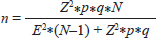
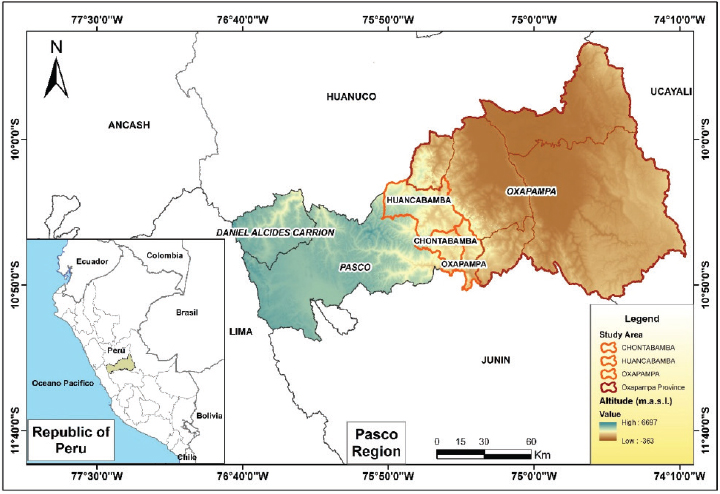
AbstractBackground: Livestock farming in Peru’s high tropics, especially in the Oxapampa Valley, represents a strategic activity due to its socio-economic importance, contribution to food security, and adaptation to specific agroecological conditions. Aim: This study characterized the genetic composition, herd size, and structure of dual-purpose cattle populations in the Oxapampa Valley and identified breeding objectives and selection criteria to support sustainable breeding programs for both dairy and beef production. Methods: The research was conducted in the Oxapampa, Chontabamba, and Huancabamba districts of Pasco, Peru, at elevations ranging from 1,600 to 1,900 meters above sea level, under ecological conditions favorable for tropical livestock farming. A mixed-methods approach was employed, involving surveys of 210 producers, technical visits, and participatory workshops that utilized brainstorming techniques. Categorical variables were analyzed across four dimensions: genetic composition, herd structure, breeding objectives, and selection criteria. Analyses were differentiated between extensive (ES) and semi-intensive (SIS) production systems, using frequency analysis and the priority index, processed in SPSS v. 27. Results: The results revealed notable differences: the ES predominantly featured animals crossed with specialized breeds (Holstein 46.2%, Brown Swiss 40.3%) and prioritized adaptability. In contrast, the SIS showed a higher proportion of pure breeds (Brown Swiss 35.2%, Holstein 33.1%) and more technical management structures, characterized by larger herds and the use of artificial insemination. Both systems prioritized immediate performance traits, specifically daily milk production (up to 0.582) and yearling weight (0.442–0.536), while relegating functional attributes such as fertility, longevity, and resilience (<0.065 in milk; <0.030 in beef). Conclusion: This reflects a short-term, phenotype-driven approach lacking systematic record-keeping, which limits genetic progress and compromises long-term sustainability. Keywords: Animal breeding, Selection, Oxapampa, Production systems. IntroductionLivestock farming in Peru’s high tropics, especially in the Oxapampa Valley, represents a strategic activity due to its socio-economic importance, contribution to food security, and adaptation to specific agroecological conditions. In this context, the use of dual-purpose (dairy–beef) crossbred cattle has emerged as an efficient alternative for enhancing herd productivity and meeting local and regional market demands (Rodríguez et al., 2023). The predominant production systems, the extensive system (ES) and the semi-intensive system (SIS), rely on grazing of grass-based pastures with limited nutritional supplementation. Under these conditions, animals with high genetic resilience are required to tolerate heat stress, adapt to climate variability, and maintain production levels despite endemic diseases (Galina and Geffroy, 2023). In this context, herd genetic composition becomes a key determinant of zootechnical efficiency and systems sustainability. Herd characterization, including variables such as size, age structure, sex ratio, and genetic makeup, is fundamental for guiding breeding improvement programs tailored to the local environment. Research on dual-purpose cattle systems in Latin America has shown that the absence of systematic technical records, combined with high genetic diversity, complicates the design of coherent genetic improvement strategies (Burgos-Paz et al., 2025). Defining distinct breeding objectives and selection criteria according to production type enables the optimization of animal performance based on their specific aptitudes. For dairy cattle, prioritized traits include daily milk yield, lactation persistence, and reproductive efficiency. In beef cattle, emphasis is placed on postnatal growth, body conformation, and carcass quality (Bourdon, 2000; Cortés Mora et al., 2012). However, these criteria must be adapted to local agroecological and socio-economic conditions, as demonstrated by the results from the different districts of the Oxapampa Valley. From a quantitative genetics perspective, productive traits result from the interaction between genotype and environment, necessitating continuous evaluation of populations within their local contexts (García, 2008). Consequently, integrating local genetic diversity with improved lines can produce animals with greater adaptation and performance, aligning with contemporary breeding approaches for tropical regions. Moreover, active producer participation is essential for defining breeding objectives and selection criteria, as they are the ones who will implement strategies to maximize economic returns in their own herds (Barrantes, 2007). Despite the growing body of scientific evidence on dual-purpose cattle systems in tropical Latin America, there remains a limited empirical characterization of herd genetic composition and breeding decision-making processes in small- and medium-scale production systems in the Peruvian high tropics. Previous literature has primarily focused on productivity indicators and breed performance, with insufficient integration of producer-defined selection criteria and their alignment with long-term genetic improvement objectives. This evidence gap limits the development of context-specific breeding strategies that integrate adaptability, productivity, and sustainability. Importantly, the findings of this study provide a technical baseline to support the design and implementation of targeted genetic and productive improvement programs for dual-purpose cattle systems in the Oxapampa Valley, Peru. Within this framework, the present study aimed to: (i) characterize the genetic composition, herd size, and structure of dual-purpose crossbred cattle in the Oxapampa Valley; and (ii) identify breeding objectives and selection criteria applied to cattle oriented toward milk and meat production. This study provides empirical evidence to support the design of targeted genetic and productive improvement programs aimed at enhancing the sustainability and competitiveness of livestock production systems in the Peruvian high tropics. Materials and MethodsPlace of studyThe study was conducted in the districts of Oxapampa, Chontabamba, and Huancabamba, located in Oxapampa Province, Pasco region, within Peru’s Central Jungle (Fig. 1). The area features an irregular topography ranging from 1,000 to 3,500 m above sea level (SENAMHI, 2019), with a humid-temperate climate characterized by average annual temperatures of 16°C–23°C and a pronounced rainy season from November to March. Relative humidity ranges between 80% and 90%, supporting dense and diverse vegetation. According to Holdridge’s (2000) life zone classification, the area corresponds mainly to tropical humid low-montane forests (bmh-MBT) and montane forests (bmh-MT). These agroecological conditions are highly favorable for dual-purpose livestock production, ensuring a continuous supply of forage and an environment suitable for a variety of cattle breeds. The fieldwork was structured into three sequential stages: (i) structured surveys administered to producers to gather data on herd composition, genetic improvement objectives, and selection practices; (ii) on-site technical visits to validate and complement survey data via direct observation and examination of farm records; and (iii) participatory workshops conducted in each district, involving producers, technicians, and local authorities. The workshops were designed to build consensus on breeding objectives and selection criteria, tailored to the ecological and socio-productive conditions of each area. Sample selectionThe sample size was determined using the formula for finite populations proposed by Cochran (1977):
where n is the sample size, N is the population size, Z is the value corresponding to the 95% confidence level (1.96), p is the expected probability of occurrence (0.5), q is the probability of nonoccurrence (0.5), and E is the margin of error considered (3.5%). Under these assumptions, a sample size of 210 producers (73.9% of the population) was determined, providing adequate statistical power for the study. The sample was proportionally allocated among the districts of Oxapampa (n=76), Chontabamba (n=40), and Huancabamba (n=94), ensuring spatial representativeness and heterogeneity of the production systems. The sampling design utilized simple random selection, providing each unit with an equal probability of inclusion. This approach effectively controlled for selection bias, thereby bolstering internal validity and ensuring robust statistical inference.
Fig. 1. Geographic location of the study area. Design and data collectionA mixed-methods framework was implemented, strategically integrating quantitative and qualitative techniques through three sequentially complementary phases. Phase 1—Data Collection integrated three methodological components: structured surveys, record analysis, and direct observation to characterize dual-purpose cattle systems. Genetic composition included genotype classification (crossbreeds, Holstein, Brown Swiss, Zebu, Santa Gertrudis) and crossbreeding patterns. Herd structure variables encompassed herd size, reproductive category proportions, and replacement rates. Improvement objectives were derived from producer rankings of productive and functional goals. Selection criteria evaluated production (milk/meat), quality, conformation, and functional traits (fertility, longevity, resilience). Phase 2—Technical Validation encompassed production unit site visits to validate data consistency and accuracy. This triangulation approach incorporated direct observation and documentary analysis. Phase 3—Participatory Workshops were conducted across district with producers, technicians, and local authorities. These workshops enabled collective data validation, prioritization of genetic improvement objectives, and consensus on selection criteria based on local ecological, socio-economic, and productive conditions. Participants included key stakeholders from production systems and institutions such as the Oxapampa Agrarian Agency, SENASA, INIA, local governments, municipal committees, breeder associations, and dairy processors. Workshop methodology combined brainstorming with card sorting or metaplan for anonymous proposal collection. The research facilitated thematic grouping, systematization, analysis, and consensus-based prioritization. Quantitative assessment employed a ranking index adapted from established cattle genetic improvement methodologies (Agudelo Simbaqueba et al., 2022). This participatory approach facilitated systematic structuring of local knowledge, promoted equitable stakeholder engagement, and ensured that objectives and criteria addressed Oxapampa’s production needs. Consequently, it enhanced the validity, contextual relevance, and practical applicability of the research outcomes. Statistical analysisData processing encompassed analysis of categorical variables (nominal and ordinal) structured across four dimensions: (i) herd genetic composition, (ii) herd size and structure, (iii) improvement objectives, and (iv) selection criteria for dual-purpose (dairy-beef) cattle. Analyses utilized IBM SPSS Statistics (version 27). Frequency distributions and contingency tables identified genotype distribution patterns, characterized herd structure, and established prioritization hierarchies for producer-defined objectives and selection criteria. Analyses were structured according to the two primary management systems in the study area: ES and SIS (Rodríguez-Vargas et al., 2025). For each system, relative frequencies and proportions were calculated for key variables including herd breed composition, herd size, and selection priority distribution. The prioritization of improvement objectives and selection criteria was performed using the methodology proposed by Guangul (2014), which involves calculating a priority index (I), defined as follows:
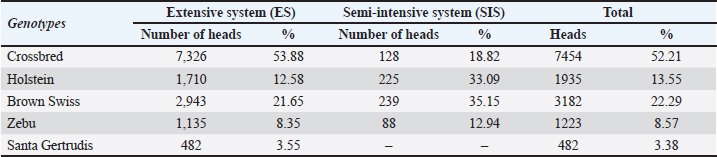
where R1, R2, and R3 represent the number of responses categorized as high priority (rank 1), medium priority (rank 2), and low priority (rank 3), respectively. The sum of the indices for all categories within a variable equals 1, which enables the quantification of their relative importance. Ethical approvalNot needed for this study. ResultsGenetic composition of animals in the herdTable 1 shows differences in the herd’s genetic composition between the ES and SIS systems in Oxapampa. In the ES, crossbred genotypes predominate (53.88%). In contrast, the SIS features a higher proportion of specialized breeds, mainly Brown Swiss (35.15%) and Holstein (33.09%). Zebu genotypes constitute 8.57% of the total and are similarly distributed across both systems. The Santa Gertrudis breed (3.38%) is found exclusively in the ES. Table 2 shows the distribution of crossbred cattle genotypes by production system in the evaluated districts of Oxapampa. These genotypes are predominantly found in the ES, with a high frequency of Holstein (46.23%) and Brown Swiss (40.33%) crosses, which together account for over 86% of the total. In the SIS, crossbred genotypes are present only marginally (<1%). Similarly, crosses tending toward Brahman (4.09%) and other Zebu breeds (Gyr, Guzerat, and Nelore) (7.98%) are mostly recorded in the ES. Overall, the results reveal contrasting production strategies: the ES relies primarily on crossbred genotypes, whereas the SIS is predominantly based on specialized genetics. Herd size and structureTable 3 shows that herds under the SIS are larger on average (62–82 animals) than those under the ES (33–39 animals). In both systems, adult cows are the predominant category, comprising between 56.4% and 59.8% of the herds. Replacement females (heifers and young cows) represent a higher proportion in the SIS, reaching up to 25.6%, whereas calves maintain similar proportions in both systems (10.8–13.4%). Bulls are present only in the ES, at a frequency of less than 3%, and are absent in the SIS. Table 1. Distribution of cattle genotypes according to production system in the evaluated districts of Oxapampa.
Table 2. Distribution of crossbred genotypes of cattle according to production system in the evaluated districts of Oxapampa.
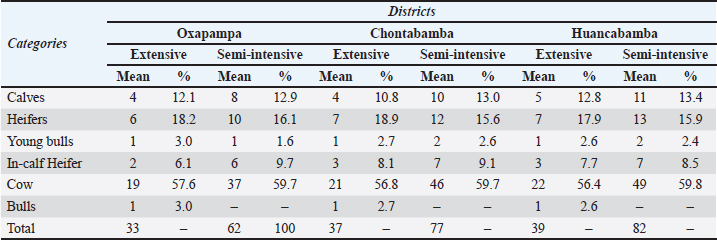
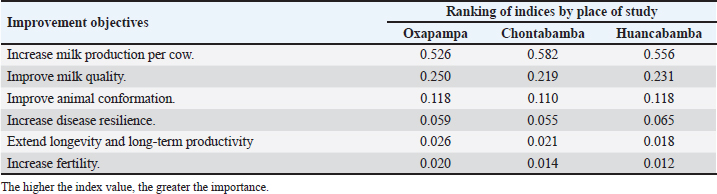
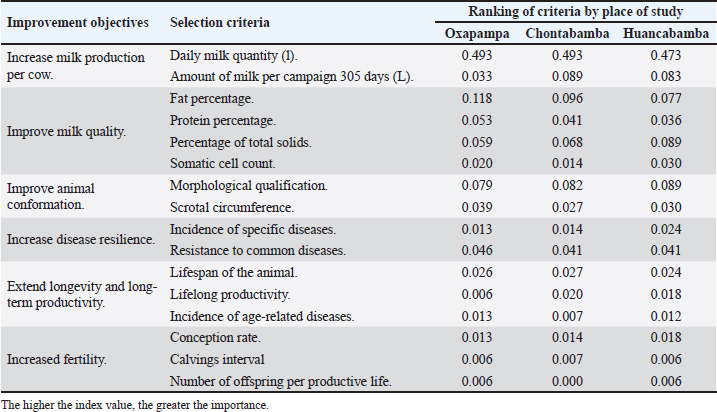
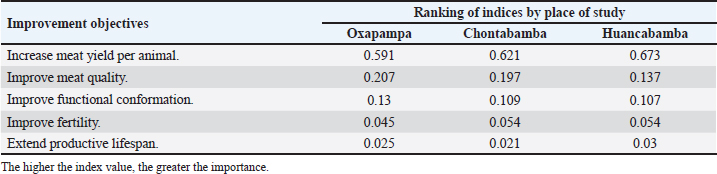
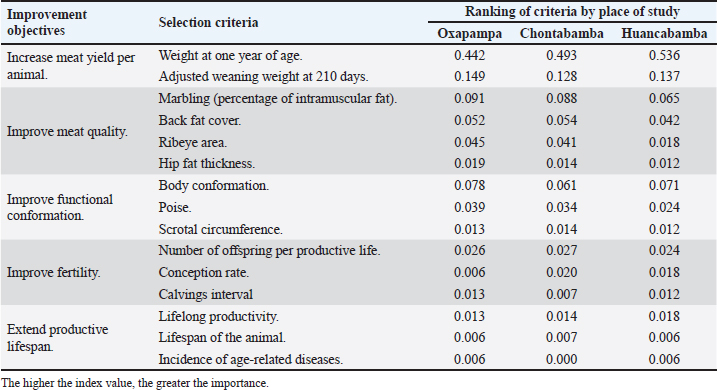
Improvement objectives and selection criteria in dairy cattleTable 4 presents the priority indices assigned to genetic improvement objectives for dairy cattle by district. Across all three districts evaluated, increasing milk production per cow was the highest-ranked objective, with index values of 0.582 in Chontabamba, 0.556 in Huancabamba, and 0.526 in Oxapampa. The second most important objective was to improve milk quality (0.219–0.250), then animal conformation (0.110–0.118). Functional traits (disease resilience, productive longevity, and fertility) had the lowest indices, with values at or below 0.065. Table 5 presents the selection criteria used in the three districts. Daily milk yield received the highest priority indices (0.473–0.493), whereas production accumulated over 305 days was assigned significantly lower values (0.033–0.089). Among milk quality criteria, fat percentage received the highest weight (0.077–0.118), followed by total solids and protein at lower values. The somatic cell count was assigned the lowest indices, all below 0.030. Regarding animal conformation, the morphological score had the highest index, reaching up to 0.089, whereas scrotal circumference indices were below 0.040. Criteria associated with functional traits such as resilience, longevity, and fertility, all present values under 0.050. Improvement objectives and selection criteria in beef cattleTable 6 presents the priority indices for beef cattle improvement objectives across the three districts. The objective of increasing meat yield per animal received the highest indices: 0.673 in Huancabamba, 0.621 in Chontabamba, and 0.591 in Oxapampa. Meat quality was assigned intermediate indices (0.137–0.207), followed by functional conformation (0.107–0.130). Objectives related to fertility and lifespan showed the lowest values, with all indices below 0.055. Table 7 presents the selection criteria used in the three evaluated districts. Weight at one year of age shows the highest indices (0.442–0.536), followed by weaning weight (0.128–0.149). Criteria associated with meat quality, including marbling, dorsal fat, ribeye area, and hip fat, show values below 0.10. Regarding conformation, body structure shows indices between 0.061 and 0.078, while limb structure and scrotal circumference show values below 0.040. Table 3. Average size and structure of cattle herds by category according to study site and production system in the evaluated districts of Oxapampa.
Table 4. Ranking of improvement objective indices in dairy cattle according to study site in Oxapampa.
Table 5. Ranking of selection criteria in dairy cattle according to study location in Oxapampa.
Table 6. Ranking of improvement objective indices in beef cattle according to study site in Oxapampa.
Criteria related to fertility and lifespan present the lowest indices, with values below 0.030. DiscussionGenetic composition of animals in the herdThe genetic differentiation between herds in the ES and SIS in Oxapampa is consistent with patterns seen in family-based and transitional livestock systems across Latin America. In these systems, the introduction of specialized breeds often coexists with structural, managerial, and capital limitations, which constrain the full exploitation of the animal genetic potential (Martínez-González et al., 2017). In contrast, more technologically advanced systems employ reproductive biotechnologies and selection schemes based on estimated genetic merit. This integrated approach fosters greater breed homogeneity and enables sustained genetic and productive improvements. The prevalence of crossbred genotypes in less intensive systems underscores the critical role of strategic crossbreeding in optimizing productivity under tropical conditions. The heterosis (hybrid vigor) achieved by combining adapted and specialized breeds enhances key reproductive, productive, and survival traits, especially under environmental stress (Echeverry Zuluaga et al., 2006). Within this framework, Zebu genetics and their crosses are particularly valuable due to their inherent heat tolerance, parasite resistance, and feed efficiency, traits that are further amplified when crossbred with European breeds (Agudelo Bastidas, 2018). Regional evidence, exemplified by Colombia´s livestock sector, indicates that approximately 90% of beef and 70% of milk production are derived from Zebu cattle and their crosses with specialized breeds. This genetic strategy underpins productivity in diverse and often heterogeneous systems (Osorio-Arce and Segura-Correa, 2011; Agudelo Bastidas, 2018). These mixed genetic schemes enhance system resilience to climatic and market fluctuations while maintaining productive efficiency. Table 7. Ranking of selection criteria in beef cattle according to study site in Oxapampa.
From a genetic improvement perspective, accurately estimating crossbreeding effects is essential. These estimates enable the prediction of crossbred performance and the design of more efficient selection programs, as they account for both additive genetic value and nonadditive components of heterosis and recombination (Esfandyari et al., 2015). Furthermore, incorporating adapted Creole breeds such as the Criollo Limonero adds significant value through enhanced fertility, longevity, and tropical adaptation, thereby strengthening overall production stability (Florio-Luis and Pineda-Graterol, 2018). Reproductive biotechnologies such as artificial insemination, estrus synchronization, in vitro fertilization, and embryo transfer expand the dissemination of superior genetics and accelerate genetic progress. Complementarily, genomics increases the precision of identifying elite animals. Together, these technologies consolidate the implementation of precision livestock farming in tropical production systems (Baruselli et al., 2017; Herrera-Sánchez et al., 2023). However, the sustainability of such programs faces technological and economic barriers, alongside risks of genetic erosion. Addressing these challenges necessitates strengthening technology transfer, reducing the costs of reproductive biotechnologies, and implementing robust genetic conservation policies (Montero-de-la-Cueva, 2023). Ultimately, genetic improvement is reaffirmed as a cumulative and economically efficient process that is pivotal for addressing global challenges, including climate change adaptation, food security, and biodiversity conservation (Osei-Amponsah et al., 2019; Montero-de-la-Cueva, 2023). Herd size and structureThe differences in herd size and structure between the SIS and ES reflect contrasting production strategies shaped by technological capacity, resource availability, and territorial context. SIS operate at a larger scale and incorporate planned reproductive management, such as artificial insemination and systematic calf-rearing, optimizing production cycles and enhancing the efficiency of their animal capital. In contrast, ES maintain simpler structures that rely primarily on natural pastures and exhibit lower overall technological adoption, despite recorded partial advances in areas such as controlled mating or artificial insemination (Ledesma et al., 2002; Sotomayor Obregón et al., 2018). SIS is primarily located in peri-urban areas, where land-use pressure drives pasture intensification through practices such as fertilization, irrigation, electric fencing, and strategic supplementation, often alongside integration with the agro-industrial supply chains (Ledesma et al., 2002; Vásquez Ruiz, 2009). In contrast, ES follows a more traditional logic, shaped by seasonal rainfall patterns and low-fertility soils. The high proportion of adult cows in both systems ensures productive continuity. However, the greater inclusion of replacement females in the SIS reflects planned strategies to reduce calving intervals and accelerate genetic progress, which in turn demands rigorous nutritional and health management from weaning through puberty (Milera, 2006; Núñez et al., 2009). This intensified approach is supported by feed management in SIS, where balanced supplementation and efficient use of adapted forages increase milk productivity. This pattern aligns with regional examples, such as in Mexico, where SIS are responsible for approximately 85% of national milk production, predominantly from units of ≤30 Holstein cows (INEGI, 2018; Loera and Banda, 2019). However, a higher productive potential introduces reproductive challenges: high-genetic-merit cows can exhibit reduced reproductive efficiency in early lactation due to a negative postpartum energy balance. This physiological state increases the risk of metabolic disorders and compromises fertility (Dutour et al., 2010; Nigussie, 2018). Consequently, optimal prepartum nutritional management is critical for supporting the lactation peak and ensuring productive persistence (Piedra Flores et al., 2012). The presence of bulls reflects differentiated reproductive strategies: their low frequency in ES and absence in SIS correspond to the predominant use of natural mating in low-cost systems versus artificial insemination in more technified ones. This technological choice is often constrained by factors such as costs, estrus detection challenges, and limited sanitary infrastructure (Ruane and Zimmermann, 2003; Kariuki et al., 2017). Meanwhile, the stable proportion of calves across systems indicates consistent reproductive performance, where effective weaning and calf-rearing practices serve as fundamental pillars of herd sustainability (Ybalmea, 2015). In general, efficient reproductive management requires timely diagnosis, systematic monitoring, and realistic objectives, such as achieving a first calving at 24–30 months of age and maintaining calving intervals ≤ 365 days to maximize both productivity and genetic progress (INTAGRI, 2018; Contexto Ganadero, 2021). The SIS is characterized by larger herd scale and greater technification, whereas the ES operates with smaller, less technified structures. Given the observed population stability across systems, well-targeted technical assistance and extension policies emerge as key strategies for improving efficiency without compromising long-term sustainability (Huamán et al., 2024). Improvement objectives and selection criteria in dairy cattleHistorically, genetic improvement programs have focused on increasing daily milk yield, achieving significant production gains. However, this narrow focus has generated negative trade-offs, adversely affecting fertility, metabolic health, and longevity (Rearte et al., 2018). Intensification often exacerbates these issues by promoting a negative postpartum energy balance, hormonal imbalance, and a higher incidence of ketosis, fatty liver disease, and systemic inflammation (Meléndez and Bartolomé, 2017; Martens, 2023; Esposito et al., 2024). Consequently, herds under intensified management frequently show a greater prevalence of mastitis and other metabolic disorders (Lagger, 2008). International experience from technified dairy industries indicates that high-genetic-merit cows often exhibit lower reproductive efficiency and a higher disease incidence, which reduces their productive lifespan and increases operational costs (Carvajal et al., 2012; Martínez et al., 2016). In response, modern breeding programs increasingly incorporate functional traits to create a more balanced selection index that considers productivity, health, and long-term sustainability. Furthermore, milk components—specifically fat, protein, and total solids—are gaining industrial importance, while the somatic cell count (SCC) has become a critical indicator for monitoring udder health and ensuring food safety (Stear et al., 2001; Rupp and Boichard, 2003; Echeverri Zuluaga et al., 2010; Leiva Tafur and López Lapa, 2022). However, in less technified systems, effective genetic selection is often constrained by the continued reliance on subjective phenotypic evaluations (Brito et al., 2020). Although linear functional conformation models have proven successful in countries such as New Zealand and the United Kingdom, their adoption in Latin America remains limited due to insufficient infrastructure, technical training, and institutional support (Rivero et al., 2021). Furthermore, strategic traits such as fertility and longevity pose a specific challenge due to their low heritability and late phenotypic expression. Improving selection for these traits requires consistent long-term recording and the use of indirect indicators such as “stayability” (Rogers et al., 2004; Melis et al., 2007). Unfavorable genetic correlations between milk yield and fertility underscore the risks of selection programs focused exclusively on production (Hansen, 2000; Cammack et al., 2009). Consequently, breeding strategies should be reoriented toward a more balanced approach that incorporates key health and fitness indicators—such as SCC, body condition score, and age at first calving—to promote longer-lived, more fertile, and healthier herds, even if this entails accepting lower short-term production gains. Strengthening local capacity for data recording and herd monitoring is a prerequisite for adopting the integrated selection indices successfully implemented in Europe, North America, and Oceania (Casasús Pueyo et al., 2019). Improvement objectives and selection criteria in beef cattleHistorically, beef cattle improvement programs have prioritized yearling weight due to its high heritability and direct impact on short-term profitability (Agudelo Simbaqueba et al., 2022). While this focus enhanced immediate productive efficiency, it often occurred at the expense of critical functional traits—including fertility, longevity, and overall reproductive efficiency—thereby compromising medium- to long-term herd sustainability (Spangler, 2016; Catrett and Rowan, 2024). Unlike the dairy sector, which achieves annual genetic gains exceeding 1.5% through widespread artificial insemination and progeny testing, beef cattle programs have historically underemphasized reproductive traits in their selection indices (Lucy, 2008). Furthermore, carcass quality traits—particularly marbling and backfat thickness—have received inadequate weighting (often <0.10) in these indices, despite their critical importance for accessing differentiated, high-value markets (Agudelo Simbaqueba et al., 2022; Forlino, 2023). The integration of genomic technologies, including DNA testing, now enables the precise identification of genetic variants associated with meat tenderness and marbling. This capability allows for more accurate selection and helps producers diversify their market opportunities (Van Eenennaam et al., 2007; Smith et al., 2009). Commercial value of beef is determined by a combination of performance traits (carcass weight, muscular conformation, longissimus area) and quality attributes (marbling, fat cover, muscular and skeletal maturity), with tenderness consistently rated as the most valued characteristic (Huerta-Leidenz, 2002). However, intense selection pressure focused predominantly on growth can negatively impact intramuscular fat deposition and overall sensory quality, while also creating unfavorable genetic correlations with key reproductive and health traits (Spangler, 2016; Forlino, 2023). To address these limitations, comprehensive economic selection indices such as expected progeny differences (EPDs) and their genomic-enhanced EPDs (GE-EPDs) enable the simultaneous evaluation of growth, carcass quality, reproduction, and longevity. This integrated approach optimizes overall breeding efficiency and profitability (Rowan, 2021; Joseph et al., 2024). Furthermore, incorporating genomic data significantly increases the accuracy of selection, even for traits with low heritability (Catrett and Rowan, 2024). Overall, the findings underscore the necessity for an integrated genetic improvement strategy. This approach must balance productivity, product quality, functional traits, and animal welfare. Its successful implementation requires a foundation of genomic tools, systematic herd monitoring, and the strengthening of local technical capacities. Together, these elements are essential to ensure the medium- and long-term sustainability and genetic resilience of beef cattle systems. ConclusionThe study identified clear distinctions between the ES and SIS cattle production systems in Oxapampa. The ES primarily utilized crossbred genotypes to prioritize environmental adaptability and hardiness. In contrast, the SIS integrated improved, specialized breeds focused on productive efficiency, resulting in larger herd sizes, structured management, and planned reproductive practices. These systemic differences highlight how the level of technification and resource availability fundamentally shape herd structure and overall performance. In dairy cattle, genetic selection has traditionally emphasized milk yield, quality, and conformation. For beef cattle, the primary focus has been on yearling weight. In both sectors, however, functional traits—including fertility, longevity, and reproductive efficiency—have received insufficient emphasis, which has limited overall genetic progress and compromised system sustainability. To address this, we recommend implementing differentiated breeding programs that integrate both productive and functional indicators. The success of such programs depends on robust technical assistance, reliable performance recording systems, and effective agricultural extension services. The study provides an evidence-based foundation for designing genetic improvement policies and programs in Peru, offering critical insights for prioritizing strategic traits and strengthening technical extension services. Among its limitations are the reliance on producers’ recall and the lack of longitudinal data. To build upon these findings, future research should focus on: i) implementing longitudinal herd monitoring, ii) conducting economic evaluation of functional traits, iii) developing locally adapted genetic merit indices, and iv) piloting targeted improvement programs. These efforts are essential for consolidating sustainable and resilient livestock production strategies within Peru’s heterogeneous tropical systems. AcknowledgmentsThe authors thank the cattle producers of the districts of Oxapampa, Chontabamba, and Huancabamba for providing the information used in this study, as well as representatives of public and private institutions in the livestock sector who participated in the workshops conducted. Conflict of interestThe authors declare that they have no conflicts of interest related to this study. FundingThe research was funded with the principal investigator’s own resources, Aníbal Rodríguez Vargas, within the framework of his doctoral thesis at the Universidad Nacional Agraria La Molina, Peru. Publication costs were covered by the other authors. Authors’ contributionsA.R.V. analyzed the data, interpreted the results, and drafted the manuscript. E.M.-R. designed the study, conducted the sampling, systematized the data, and co-wrote the manuscript. J.B.-L. participated in the sampling and revised the manuscript. F.V.G., F.H.O., and E.A.S. carried out the visualization and revision of the manuscript. L.T.-G. and C.B.-C. analyzed the results, wrote the original draft, and revised the manuscript. All authors approved the final version. Data availabilityAll data supporting the findings of this study are available in the manuscript. ReferencesAgri-Food and Fisheries Information Service. 2022. SIACON-NR. Agri-food information system for consultation. Agriculture. Available via https://www.gob.mx/cms/uploads/attachment/file/336105/Bolet_n_SIACON.pdf Agudelo Bastidas, L.E. 2018. Optimizing the pregnancy rate of zebu breeding cattle with the implementation of a restricted suckling plan at the Andalón Investments company (Undergraduate thesis, Lasallista University Corporation). Available via https://repository.unilasallista.edu.co/items/1fdfd65a-7870-4d6d-a326-a3fed223ce8d Agudelo Simbaqueba, K.J., Garnica Quintero, S.N., Gómez Rondón, K.J., Parra Hernández, N.A. and Cala Moreno, N. 2022. Genetic selection and improvement as a determinant of beef quality and productivity [Undergraduate thesis, Universidad Cooperativa de Colombia]. UCC Institutional Repository. Available via https://hdl.handle.net/20.500.12494/47472 Barrantes, C. 2007. Formation and evolution of the sheep breeders’ cooperative core of the Peasant Research and Training Center in the department of Pasco during the period 1996–2000. Engineering thesis. National Agrarian University La Molina. Available via https://hdl.handle.net/20.500.12996/3333 Baruselli, P.S., Ferreira, R.M., Colli, M.H.A., Elliff, F.M., Sá Filho, M.F., Vieira, L. and Freitas, B.G. 2017. Timed artificial insemination: current challenges and recent advances in reproductive efficiency in beef and dairy herds in Brazil. Anim. Reprod. 14(3), 558–571; doi:10.21451/1984-3143-AR999 Bourdon, R.M. 2000. Understanding animal breeding, 2nd ed. Prentice Hall. Available via https://archive.org/details/understandingani0002bour/mode/1up Brito, L.F., Oliveira, H.R., McConn, B.R., Schinckel, A.P., Arrazola, A., Marchant-Forde, J.N. and Johnson, J.S. 2020. Large-scale phenotyping of livestock welfare in commercial production systems: a new frontier in animal breeding. Front. Genet. 11, 793; doi:10.3389/fgene.2020.00793 Burgos-Paz, W., Pérez-Escobar, Y., Castillo Losada, E., Rivera-Sánchez, L. and Falla-Tapias, S. 2025. Evaluating the breeding and production diversity in dual purpose livestock systems in Colombia: opportunities for its sustainability. Agriculture 15(5), 547; doi:10.3390/agriculture15050547 Cammack, K.M., Thomas, M.G. and Enns, R.M. 2009. Reproductive traits and their heritabilities in beef cattle. Prof. Anim. Sci. 25(5), 517–528; doi: 10.15232/S1080-7446(15)30753-1 Carvajal, A., De la Barra, R. and Uribe, H. 2012. Objectives of genetic improvement in dairy cattle (INIA Remehue Newsletter, No. 88). Agricultural Research Institute (INIA). Available via https://d1wqtxts1xzle7.cloudfront.net/39611174/OBJECTIVES_OF_GENIC_IMPROVEMENT_IN_CATTLE20151102-3643-1vj279n-libre.pdf Casasús Pueyo, I., Lobón Ascaso, S. and Bernués Jal, A. 2019. Productive efficiency parameters in suckler cows according to farmers. ResearchGate. Available via https://www.researchgate.net/profile/Isabel-Casasus/publication/340034928_Parametros_de_eficiencia_productiva_en_vacas_nodrizas_segun_los_ganaderos/links/5e73a585299bf|134dafd892e/Parametros-de-eficiencia-productiva-en-vacas-nodrizas-segun-los-ganaderos.pdf Catrett, C.C. and Rowan, T.N. 2024. Genetic selection for cow fertility and longevity [Paper presented at applied reproductive strategies in beef cattle, Athens, GA]. Beef Reproduction Task Force. Available via https://beefrepro.org/wp-content/uploads/2024/08/Rowan_ARSBC-2024.pdf Cochran, W.G. 1977. Técnicas de muestreo, 3ª edición. New York, NY: John Wiley & Sons. Available via https://es.scribd.com/document/706255451/Tecnicas-de-Muestreo-William-G-Cochran-FreeLibros-me Cortés Mora, J.A., Cotes Torres, A. and Cotes Torres, J.M. 2012. Structural characteristics of the dual-purpose livestock production system in the Colombian humid tropics. Colomb. J. Anim. Sci. 25(2), 229–239; doi:10.17533/udea.rccp.v25n2a10. Available via http://www.scielo.org.co/scielo.php?script=sci_arttext&pid=S0120-06902012000200008 Dutour, E.J., Melucci, L.M., Winzer, N.R., Casanovas, D., Andere, C. and Rodríguez, E. 2010. Reproductive performance of Argentine Holstein cow groups based on genetic merit for milk production. Latin Am. Arch. Anim. Prod. 18, 41–47. Available via https://produccion-animal.com.ar/produccion_bovina_de_leche/produccion_bovina_leche/23-comportamiento_reproductivo.pdf Echeverri Zuluaga, J.J., Jaramillo, M.G. and Restrepo Betancur, L.F. 2010. Comparative evaluation of two mastitis diagnostic methodologies in a dairy herd in the department of Antioquia. Rev. Lasallista Investig. 7(1), 49–57. Available via http://www.redalyc.org/articulo.oa?id=69514965007 Echeverry Zuluaga, J., Salazar Restrepo, V.E. and Múnera, D. 2006. Crossbreeding as a strategy to improve the profitability of dairy herds. Lasallian J. Res. 3(2), 48–52. Lasallian University Corporation. Available via https://www.redalyc.org/articulo.oa?id=69530209 Esfandyari, H., Sørensen, A.C. and Bijma, P. 2015. A crossbred reference population can improve the response to genomic selection for crossbred performance. Genet. Sel. Evol. 47, 76; doi:10.1186/s12711-015-0155-z Esposito, G., Fergani, C. and López-Gatius, F. 2024. Dietary effects on energy balance, milk yield and fertility in dairy cows: a review of current findings. The Effect of Crude Protein and Energy on Conception of Dairy Cow: a Review; doi:10.1007/s44338-024-00030-1. Florio-Luis, J. and Pineda-Graterol, M. 2018. Current situation in the preservation of Criollo Limonero bovine in the Bolivarian Republic of Venezuela. Available via https://www.cabidigitallibrary.org/doi/pdf/10.5555/20193386456 Forlino, A. 2023. Genetics and its relationship with meat quality. Wagyu 360°. Available via https://www.wagyu360.com.ar/post/genetics-and-its-relationship-with-meat-quality Galina, C.S. and Geffroy, M. 2023. Dual-purpose cattle raised in tropical conditions: what are their shortcomings in sound productive and reproductive function? Animals 13(13), 2224; doi:10.3390/ani13132224 García, D. 2008. Genetic diversity and priority setting in conservation schemes: an example of application in the fighting bull breed. Doctoral Thesis, Complutense University of Madrid. Available via https://www.ucm.es/data/cont/docs/345-2013-11-11-Diversidad_conservacion_Toro_Lidia_Tesis_D_Garcia.pdf Guangul S.A. 2014. Design of community-based breeding programs for two indigenous goat breeds of Ethiopia. PhD Thesis, University of Natural Resources and Life Sciences, Vienna, Austria, p 100. Available via https://core.ac.uk/download/pdf/132664284.pdf Hansen, L.B. 2000. Consequences of selection for milk yield from a geneticist’s point of view. J. Dairy Sci. 83(5), 1145–1150; doi:10.3168/jds.S0022-0302(00)74980-0 Herrera-Sánchez, D.J., Veliz-Ibarra, K.M. and Jaramillo-Veliz, J.J. 2023. Advances in cattle reproductive management through a literature review. Innova Sci. J. 1(4), 37–47; doi:10.63618/omd/isj/v1/n4/26 Huamán, E., Robles, R., Muñoz, M. and Arevalo, C. 2024. Sustainability analysis of livestock systems in La Peca district, Bagua province, Amazonas region. J. Agric. Res. Sci. Biotechnol. 4(4), 18–29; doi:10.25127/riagrop.20244.1024 Huerta-Leidenz, N. 2002. The Venezuelan experience in the implementation of cattle and carcass classification systems. In Proceedings of the XI Venezuelan Congress on Animal Production and Industry. University of Los Andes, Trujillo, pp: 1–20. Available via http://www.avpa.ula.ve/congresos/cd_xi_congreso/pdf/nelsonhuerta2.PDF INTAGRI Editorial Team. 2018, December. Reproductive parameters of cattle. Intagri SC. Available via https://www.intagri.com/articulos/ganaderia/parametros-reproductivos-del-ganado-bovino. Joseph, K., Sanders, D.R., Nair, J. and Prill-Adams, A.L. 2024. Buyer valuation of Angus bull attributes in Wisconsin. J. Agric. Appl. Econ., 56, 621–634. Available via https://www.cambridge.org/core/services/aop-cambridge-core/content/view/83E070E43316F343E7FD407B3710FE31/S1074070824000282a.pdf/buyer_valuation_of_angus_bull_attributes_in_wisconsin.pdf Kariuki, C.M., Brascamp, E.W., Komen, H., Kahi, A.K. and van Arendonk, J.A.M. 2017. Economic evaluation of progeny-testing and genomic selection schemes for small-sized nuclues dairy cattle breeding programs in developing countries. J. Dairy Sci. 100(3), 2258–2268; doi:10.3168/jds.2016-11816 Lagger, J.R. 2008. Diseases associated with the intensification of the animal health system [PDF]. Produce XXI, 16(196), 45–50; Available via https://www.produccion-animal.com.ar/produccion_bovina_de_leche/produccion_bovina_leche/118-enfermedades.pdf Ledesma, L.M., Gallego, L.A. and Peláez, F.J. 2002. Current situation of beef cattle farming in Colombia and alternatives to boost its competitiveness and sustainability. Colomb. J. Anim. Sci. 15(2), 213–225. Available via https://dialnet.unirioja.es/servlet/articulo?codigo=3242901 Leiva Tafur, D. and López Lapa, R.M. 2022. Heavy metals in dairy cattle production and risks to human health. Cienc. Lat. Multidiscip. Sci. J. 6(1), 3629–3645; doi: 10.37811/cl_rcm.v6i1.1758 Loera, J. and Banda, J. 2019. The State of the dairy industry in mexico: production and marketing. RumiNews LATAM. Available via https://rumiantes.com/situation-dairy-industry-mexico-production-marketing Lucy, M.C. 2008. Sources of infertility and solutions for correcting infertility in postpartum dairy cows. In 36th Uruguayan Buiatrics Conference. University of the Republic, Faculty of Veterinary Medicine, pp: 70–75. Available via https://bibliotecadigital.fvet.edu.uy/bitstream/handle/123456789/100/JB2008_70-75.pdf?sequence=1&isAllowed=y Martens, H. 2023. Increasing milk yield and negative energy balance: a Gordian knot for dairy cows? Animals 13(19), 3097; doi: 10.3390/ani13193097 Martínez, G.M., Suárez, V.H. and Ghezzi, M.D. 2016. Animal welfare in dairy cattle: selection of indicators linked to health and production. RIA. J.. Agric. Res. 42(2), 153–160. Available via https://www.scielo.org.ar/scielo.php?script=sci_arttext&pid=S1669-23142016000200007 Martínez-González, J., Castillo-Rodríguez, S., Villalobos-Cortés, A. and Hernández-Meléndez, J. 2017. Ruminant production systems in Mexico. Agric. Sci. (26), 132–152. Available via http://www.revistacienciaagropecuaria.ac.pa/index.php/ciencia-agropecuaria/article/view/78 Meléndez, P. and Bartolomé, J. 2017. Advances in nutrition and fertility in dairy cattle: a review. Mex. J. Anim. Sci. 8(4), 407–417; doi:10.22319/rmcp.v8i4.4160 Milera, M. 2006. Milk production systems from herbaceous and tree forage resources. Pastos y Forrajes 29(2), 1–27. Indio Hatuey Pasture and Forage Experimental Station. Available via http://www.redalyc.org/articulo.oa?id=269121704001 Ministry of Economy. General Directorate of Basic Industries. 2012. Analysis of the dairy sector in Mexico [PDF]. Ministry of Economy. Available via https://www.economia.gob.mx/files/comunidad_negocios/industria_comercio/informacionSectorial/analisis_sector_lacteo.pdf Montero-de-la-Cueva, J.V. 2023. Contemporary advances in bovine genetic improvement and the challenges and prospects of the zootechnical sector. Multidiscip. Collab. J. 1(3), 14–24; doi:10.70881/mcj/v1/n3/18 National Institute of Statistics and Geography. 2018. 2017 National Agricultural Survey (ENA 2017): understanding Mexico’s Countryside [PDF]. National Institute of Statistics and Geography. Available via https://www.inegi.org.mx/contenidos/programas/ena/2017/doc/ena2017_pres.pdf Nigussie, T. 2018. A review on the role of energy balance on reproduction of dairy cow. J. Dairy Res. Technol. 1(3), 9; doi:10.24966/DRT-9315/100003 Núñez, H.G., Díaz, A.E., Espinosa, G.J., Ortega, R.L., Hernández, A.L., Vera, A.H., Román, P.H., Medina, C.M. and Ruiz, L.F. 2009. Bovine milk production in the intensive system (Technical Book No. 23). INIFAP, CIRGOC. Available via https://redgatro.fmvz.unam.mx/assets/leche_sistemaintensivo.pdf Osei-Amponsah, R., Chauhan, S.S., Leury, B.J., Cheng, L., Cullen, B., Clarke, I.J. and Dunshea, F.R. 2019. Genetic selection for thermotolerance in ruminants. Animal. 9(11), 948, doi:10.3390/ani9110948 Osorio-Arce, M.M. and Segura-Correa, J.C. 2011. Sustainability of cattle production systems in the tropics: genetic improvement. Livest. Res. Rural Dev. 23, 8. Available via https://www.researchgate.net/profile/Jose-Segura-Correa/publication/287304549_Sustainability_of_cattle_production_systems_in_the_tropics_Genetic_improvement/links/56b9f82d08ae3b658a8a3a08/Sustainability-of-cattle-production-systems-in-the-tropics-Genetic-improvement.pdf Piedra Flores, J., Tapia Acosta, E. and López Salvo, N. 2012. Determining the behavior of the lactation curve and milk production of Holstein and Brown Swiss cattle in the Cajamarca Valley, Peru [Bibliographic review], National University of San Marcos. Available via http://studylib.es/doc/5203939/determinacion-del-comportamiento-de-la-curva-de-lactancia-y Rearte, R., LeBlanc, S.J., Corva, S.G., de la Sota, R.L., Lacau-Mengido, I.M. and Giuliodori, M.J. 2018. Effect of milk production on reproductive performance in dairy herds. J. Dairy Sci. 101(8), 7575–7584; doi:10.3168/jds.2017-13796 Rivero, M.J., Lopez-Villalobos, N., Evans, A., Berndt, A., Cartmill, A., Neal, A.L., McLaren, A., Farruggia, A., Mignolet, C., Chadwick, D., Styles, D., McCracken, D., Busch, D., Martin, G.B., Fleming, H., Sheridan, H., Gibbons, J., Merbold, L., Eisler, M., Lambe, N., Rovira, P., Harris, P., Murphy, P., Vercoe, P.E., Williams, P., Machado, R., Takahashi, T., Puech, T., Boland, T., Ayala, W. and Lee, M.R.F. 2021 Key traits for ruminant livestock across diverse production systems in the context of climate change: perspectives from a global platform of research farms. Reprod. Fertil. Dev. 33, 1–19; doi:10.1071/RD20205 Rodríguez, A., Meza, E., Trillo, Z., Núñez, J. and Azania, R. 2023. Diurnal behavior of young bulls grazing on Setaria sphacelata meadows in the high tropics of Oxapampa, Peru. J. Vet. Res. 34(1), e24593; doi: 10.15381/rivep.v34i1.24593 Rodríguez–Vargas, A., Barrón–López, J., Meza–Rojas, E., Mendoza–Ordoñez, G., Tantahuillca–Landeo, F. and Vargas–Gonzales, F. 2025. Comparison of productive parameters of Bos taurus × Bos indicus cows in semi-stable and extensive systems in the Oxapampa tropics, Peru. Sci. J. Fac. Vet. Sci. of the Univ. Zulia (Rev. Cient. FCV-LUZ) 35(1), 8. Available via https://produccioncientificaluz.org/index.php/cientifica/article/view/43283 Rogers, P.L., Gaskins, C.T., Johnson, K.A. and MacNeil, M.D. 2004. Evaluating longevity of composite beef females using survival analysis techniques. J. Anim. Sci. 82(3), 860–866; doi:10.2527/2004.823860 Rowan, T.N. 2021, December. Cattle genomics: whole herd reporting: unlocking opportunities for female selection tools and more accurate EPDs. UT Beef & Forage Center, University of Tennessee Institute of Agriculture. Available via https://utbeef.tennessee.edu/cattle-genomics-whole-herd-reporting-unlocking-opportunities-for-female-selection-tools-and-more-accurate-epds/ Ruane, J. and Zimmermann, M. 2003. Chapter 4: Livestock sector conference. In Agricultural biotechnology for developing countries: results of an electronic forum (FAO: Research and Technology Study No. 8). Food and Agriculture Organization of the United Nations. Available via https://www.fao.org/4/Y2729S/y2729s06.htm Rupp, R. and Boichard, D. 2003. Genetics of resistance to mastitis in dairy cattle. Vet. Res. 34(5), 671–688; doi:10.1051/vetres:2003020 Secretariat of Agriculture and Rural Development. 2022. Dairy production is growing, but faces challenges: one of the main ones is regulations. Available via https://www.gob.mx/agricultura/prensa/lechera-produccion-crece-pero-enfrenta-retos-uno-principal-esta-en-la-normatividad-322012 Servicio Nacional de Meteorología e Hidrología del Perú (SENAMHI). 2019. Atlas climático del Perú (incluye estación Oxapampa con altitud). Available via https://www.senamhi.gob.pe/pdf/anexos-atlas-climatico.pdf?utm_source=chatgpt.com Smith, T., Thomas, M.G., Bidner, T.D., Paschal, J.C. and Franke, D.E. 2009. Single nucleotide polymorphisms in Brahman steers and their association with carcass and tenderness traits. Genet. Mole. Res. 8(1), 39–46. Available via https://europepmc.org/article/MED/19224465 Sotomayor Obregón, E., Válderrama Romero, A.S., Benavente Ramírez, E.R., More López, J.M., Yovera Saldarriaga, J., Paucar Meléndez, I., Cusihuamaán Phocco, R.M., Vélez Chang, Y.J. and Legua Cárdenas, J.A. 2018. Descriptive analysis of the technological change process from extensive to semi-intensive livestock production systems in the Espinar Province. Cusco. Big Bang Faustiniano 7(4), 11–17; doi:10.51431/bbf.v7i4.497 Spangler, M. 2016. Traditional genetic selection for fertility: Indicator traits and potential antagonisms [Presentation]. Applied Reproductive Strategies in Beef Cattle, Des Moines, Iowa, United States. Available via In:https://beefrepro.org/wp-content/uploads/2020/09/18-spangler-229-233.pdf Stear, M.J., Bishop, S.C., Mallard, B.A. and Raadsma, H. 2001. The sustainability, feasibility and desirability of breeding livestock for disease resistance. Res. Vet. Sci. 71(1), 1–7; doi:10.1053/RVSC.2001.0496 sciencedirect.com+9research.ed.ac.uk+9core.ac.uk+9 Van Eenennaam, A.L., Weaber, R.L., Drake, D.J., Penedo, M.C.T., Quaas, R.L., Garrick, D.J. and Pollak, E.J. 2007. DNA-based paternity analysis and genetic evaluation in a large, commercial cattle ranch setting. J. Anim. Sci. 85(12), 3159–3169; doi:10.2527/jas.2007-0284 Vásquez Ruiz, L.E. 2009. Characterization of five cattle ranches in the Yurimaguas–Munichis highway area (Professional proficiency project, National University of the Peruvian Amazon). UNAP Institutional Repository. Available via http://repositorio.unapiquitos.edu.pe/handle/20.500.12737/1749 Ybalmea, R. 2015. Calf feeding and management: a research project at the Institute of Animal Science. Cuban J. Agric. Sci. 49(2), 141–152. Available via http://www.redalyc.org/articulo.oa?id=193039698003 | ||


| How to Cite this Article |
| Pubmed Style Rodríguez-vargas A, Meza-rojas E, Barrón-lopez J, Sessarego EA, Vargas-gonzales F, Hermitaño-osorio F, Tafur-gutiérrez L, Barrantes-campos C. Herd genetic composition and improvement criteria for dual-purpose cattle in production systems in the Peruvian high tropics. Open Vet. J.. 2026; 16(8): 5644-5656. doi:10.5455/OVJ.2026.v16.i8.55 Web Style Rodríguez-vargas A, Meza-rojas E, Barrón-lopez J, Sessarego EA, Vargas-gonzales F, Hermitaño-osorio F, Tafur-gutiérrez L, Barrantes-campos C. Herd genetic composition and improvement criteria for dual-purpose cattle in production systems in the Peruvian high tropics. https://www.openveterinaryjournal.com/?mno=280376 [Access: September 03, 2026]. doi:10.5455/OVJ.2026.v16.i8.55 AMA (American Medical Association) Style Rodríguez-vargas A, Meza-rojas E, Barrón-lopez J, Sessarego EA, Vargas-gonzales F, Hermitaño-osorio F, Tafur-gutiérrez L, Barrantes-campos C. Herd genetic composition and improvement criteria for dual-purpose cattle in production systems in the Peruvian high tropics. Open Vet. J.. 2026; 16(8): 5644-5656. doi:10.5455/OVJ.2026.v16.i8.55 Vancouver/ICMJE Style Rodríguez-vargas A, Meza-rojas E, Barrón-lopez J, Sessarego EA, Vargas-gonzales F, Hermitaño-osorio F, Tafur-gutiérrez L, Barrantes-campos C. Herd genetic composition and improvement criteria for dual-purpose cattle in production systems in the Peruvian high tropics. Open Vet. J.. (2026), [cited September 03, 2026]; 16(8): 5644-5656. doi:10.5455/OVJ.2026.v16.i8.55 Harvard Style Rodríguez-vargas, A., Meza-rojas, . E., Barrón-lopez, . J., Sessarego, . E. A., Vargas-gonzales, . F., Hermitaño-osorio, . F., Tafur-gutiérrez, . L. & Barrantes-campos, . C. (2026) Herd genetic composition and improvement criteria for dual-purpose cattle in production systems in the Peruvian high tropics. Open Vet. J., 16 (8), 5644-5656. doi:10.5455/OVJ.2026.v16.i8.55 Turabian Style Rodríguez-vargas, Aníbal, Elmer Meza-rojas, José Barrón-lopez, Emmanuel Alexander Sessarego, Francisco Vargas-gonzales, Fiorela Hermitaño-osorio, Lucinda Tafur-gutiérrez, and Cecilio Barrantes-campos. 2026. Herd genetic composition and improvement criteria for dual-purpose cattle in production systems in the Peruvian high tropics. Open Veterinary Journal, 16 (8), 5644-5656. doi:10.5455/OVJ.2026.v16.i8.55 Chicago Style Rodríguez-vargas, Aníbal, Elmer Meza-rojas, José Barrón-lopez, Emmanuel Alexander Sessarego, Francisco Vargas-gonzales, Fiorela Hermitaño-osorio, Lucinda Tafur-gutiérrez, and Cecilio Barrantes-campos. "Herd genetic composition and improvement criteria for dual-purpose cattle in production systems in the Peruvian high tropics." Open Veterinary Journal 16 (2026), 5644-5656. doi:10.5455/OVJ.2026.v16.i8.55 MLA (The Modern Language Association) Style Rodríguez-vargas, Aníbal, Elmer Meza-rojas, José Barrón-lopez, Emmanuel Alexander Sessarego, Francisco Vargas-gonzales, Fiorela Hermitaño-osorio, Lucinda Tafur-gutiérrez, and Cecilio Barrantes-campos. "Herd genetic composition and improvement criteria for dual-purpose cattle in production systems in the Peruvian high tropics." Open Veterinary Journal 16.8 (2026), 5644-5656. Print. doi:10.5455/OVJ.2026.v16.i8.55 APA (American Psychological Association) Style Rodríguez-vargas, A., Meza-rojas, . E., Barrón-lopez, . J., Sessarego, . E. A., Vargas-gonzales, . F., Hermitaño-osorio, . F., Tafur-gutiérrez, . L. & Barrantes-campos, . C. (2026) Herd genetic composition and improvement criteria for dual-purpose cattle in production systems in the Peruvian high tropics. Open Veterinary Journal, 16 (8), 5644-5656. doi:10.5455/OVJ.2026.v16.i8.55 |


