Submitted: 13/08/2025 Revised: 25/03/2026 Accepted: 05/04/2026 Published: 31/05/2026
Effects of a Tithonia diversifolia and oil palm frond baglog-based diet on growth performance, rumen fermentation, and nutrient digestibility in thin-tailed sheep
Yurma Metri1*, Muhammad Amri1, Budi Santosa1, Firshty Febrianti1, Evi Susanti2,
Debby Ratno Kustanto3, and Ahmad Ali Zulfiqar Majid3
1Faculty of Science, Social Science and Education, Universitas Prima Nusantara Bukittinggi, West Sumatera, Indonesia
2Faculty of Midwifery, Universitas Prima Nusantara Bukittinggi, West Sumatera, Indonesia
3Faculty of Nursing and Public Health, and Education, Universitas Prima Nusantara Bukittinggi, West Sumatera, Indonesia
© 2025 Open Veterinary Journal
This is an Open Access article distributed under the terms of the Creative Commons Attribution-Non Commercial-No Derivatives License (http://creativecommons.org/licenses/by-nc-nd/4.0/), which permits non-commercial re-use, distribution, and reproduction in any medium, provided the original work is properly cited, and is not altered, transformed, or built upon in any way.
ABSTRACT
Background: Tithonia diversifolia is a high-protein forage plant, and fermented oil palm frond baglog, a mushroom cultivation by-product, offers a sustainable fiber source for ruminant feeding. The combination of these ingredients may improve nutrient balance, rumen fermentation, and growth performance in thin-tailed sheep.
Aim: This study evaluated the effects of diets combining Tithonia diversifolia and fermented oil palm frond baglog on microbial protein synthesis, rumen fermentation characteristics, nutrient digestibility, and growth performance of thin-tailed sheep.
Methods: Sixteen male thin-tailed sheep (10–12 months old; 15–20 kg) were allocated in a completely randomized design with four dietary treatments and four replicates each: A=40% concentrate + 60% Tithonia + 0% baglog; B=40% concentrate + 40% Tithonia + 20% baglog; C=40% concentrate + 30% Tithonia + 30% baglog; D=40% concentrate + 20% Tithonia + 40% baglog. The measured parameters included purine derivatives (allantoin, uric acid, xanthine, and hypoxanthine), microbial nitrogen supply, rumen pH, NH3-N, volatile fatty acids (VFA), nutrient digestibility (dry matter, organic matter, crude fat, and total digestible nutrients), feed efficiency, and average daily gain (ADG).
Results: No significant differences in microbial protein synthesis parameters were observed among treatments. The D diet (20% Tithonia, 40% baglog) yielded the highest values for total purine derivatives (23.88 mM/day), allantoin (20.31 mM/day), microbial N supply (26.37 mM/day), dry matter digestibility (87.13%), organic matter digestibility (93.77%), crude fat digestibility (98.31%), feed efficiency (0.139%), and ADG (81.25 g/day). Rumen pH ranged from 7.09–7.22, NH3-N from 42.36–43.50 mg/100 ml, and VFA from 79.89 to 92.78 mM.
Conclusion: A diet containing 20% Tithonia diversifolia and 40% fermented oil palm frond baglog optimizes nutrient digestibility, microbial nitrogen supply, and growth performance in thin-tailed sheep without affecting rumen fermentation balance. This combination represents a sustainable feeding strategy for improving small ruminant productivity.
Keywords: Baglog, Microbial protein synthesis, Thin-tailed sheep, Tithonia.
Introduction
This is particularly true for thin-tailed sheep (TTS), which are important compared to fat-tailed sheep due to their versatility and high meat production potential. One of the biggest challenges in optimizing the productivity of grower-finishers is the seasonal bi-acute deficiency in high-quality feed, hampering their growth performance and overall production efficiency (Ribeiro et al., 2016; Cadena-Villegas et al., 2020; Rivera, 2022; Pérez-Márquez et al., 2023a,b).
Feeding of forage crops combined with agro-industrial by-products may present a sustainable and cost-effective feeding alternative to alleviate feed shortage, thereby reducing feeding costs. Tithonia diversifolia (Mexican sunflower) is rich in crude protein (160–280 g/kg DM) and has potential as a high biomass producer that can increase rumen microbial synthesis and degradability (Ribeiro et al., 2016; Rianita et al., 2019; Cadena-Villegas et al., 2020; Rivera, 2022; Pérez-Márquez et al., 2023a,b).
The baglog of oil palm fronds (a by-product of mushroom cultivation using Pleurotus ostreatus) is an important fibrous feed resource. Create Sequential Group Raw fronds are poorly digestible; however, fermentation using white-rot fungi has the potential to improve their quality and degradability in rumen (Jamarun et al., 2018; Rianita et al., 2019; Cadena-Villegas et al., 2020; Febrina et al., 2021).
Thus, a combination of T. diversifolia and fermented oil palm frond baglog could contribute to a balanced diet using the high-quality protein in T. diversifolia and improved fiber utilization from fermented baglog, which will increase rumen fermentation, microbial protein synthesis, and animal performance. Nevertheless, the information on this mixture combination being used in TTS, particularly linked to microbial protein synthesis, rumen fermentation, nutrient digestibility, and ruminant performance, is still lacking (Jamarun et al., 2018; Novirman Jamarun et al., 2018; Rianita et al., 2019; Cadena-Villegas et al., 2020; Pérez-Márquez et al., 2023a,b).
Therefore, the current study aimed to compare the effects of dietary combinations of Tithonia diversifolia with fermented oil palm frond baglog inoculated with Pleurotus ostreatus on rumen microbial protein synthesis, rumen fluid characteristics, nutrient digestibility, and growth performance in thin-tailed sheep. The results support the rationale of sustainable small ruminant production feeding strategies based on locally available resources.
Materials and Methods
Fermented oil palm frond baglog and Tithonia diversifolia supplementation
The experimental diet included 0.7% (DM basis) T. diversifolia and fermented oil palm frond baglog prepared using P. ostreatus with a 3-month fermentation period (Metri et al., 2018). Oil palm fronds were collected, washed to remove adhering soil, chopped (approximately 2–3 cm), and sun-dried to reduce moisture. The chopped fronds were then mixed with a small amount of rice bran (as an easily fermentable carbohydrate source) and mineral premix, moistened to approximately 60%–65% moisture, and packed into polyethylene bags. The substrate was sterilized/pasteurized, cooled, inoculated with P. ostreatus spawn (≈3%–5% w/w of fresh substrate), and incubated under aerobic conditions at room temperature (≈27°C–30°C) for 3 months until it was fully colonized and physically softened. The resulting fermented substrate (baglog) was air-dried and ground before diet formulation. T. diversifolia was supplied as dried leaf meal; young leaves (and tender shoots, if included) were harvested, washed, shade-dried to constant weight, and ground to pass a 1-mm screen before mixing into the concentrate portion at 0.7% of total diet DM.
Animals and experimental diets
Sixteen clinically healthy male thin-tailed sheep (10–12 months old) with an initial body weight of 15–20 kg were used in this study. Diets consisted of fermented baglog as the basal roughage source plus concentrate ingredients (rice bran, tofu dregs, and coconut cake) (Table 2). The concentration proportion was fixed at 40% of diet DM across treatments (Mahboobi et al., 2014; Phesatcha, 2021).
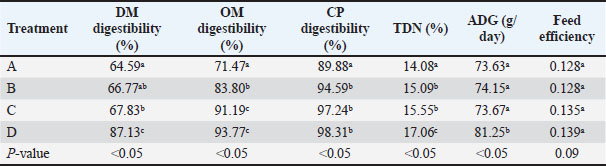
Table 2. Nutrient digestibility and performance parameters under different treatments.
Dietary nutrient specification (TDN and crude protein levels)
All diets were formulated to meet the nutrient requirements of growing sheep (15–20 kg BW) according to standard feeding guidelines (e.g., NRC), targeting approximately 12%–14% crude protein (CP/PK) and 60%–65% TDN on a DM basis to support moderate growth. Chemical composition (DM, CP, EE, ash) and fiber fractions (NDF and ADF) were determined using standard procedures, and TDN was calculated using established equations based on the measured nutrient composition. The feed ingredients and experimental diets were analyzed before the feeding trial to ensure consistency with the developed nutrient levels.
Instruments and facilities
Sheep were held in separate pens with standard amenities. Measurement of dry matter intake was measured with an Ohaus scale, 100 kg capacity. The baglog substrates were incubated and fermented on kumbung—a traditional ventilated structure with the racks designed for mushroom cultivation. Laboratory analyses of proximate composition (Van Soest fiber analysis) and measurement of microbial protein synthesis efficiency through purine derivatives were used to quantify protein retention in studies by Mahboobi et al. (2013) and Lund et al. (2007).
Experimental design
The experiment was arranged in a completely randomized design (CRD) with four dietary treatments and four replicates (n=4 sheep/treatment) (Baee and others, 2023; Suriyapha, 2025). The concentrate proportion was fixed at 40% of diet DM, while the forage portion (60% of diet DM) consisted of different proportions of T. diversifolia leaf meal and fermented oil palm frond baglog. The dietary treatments were as follows:
A=40% concentrate + 60% Tithonia + 0% baglog
B=40% concentrate + 40% Tithonia + 20% baglog
C=40% concentrate + 30% Tithonia + 30% baglog
D=40% concentrate + 20% Tithonia + 40% baglog
Sheep were adapted to the experimental diets for 14 days, followed by a 60-day feeding/measurement period (total 74 days). Diets were offered twice daily (08:00 and 16:00) with clean drinking water and mineral blocks. Feed allowance was adjusted daily to allow approximately 10% refusals, and daily dry matter intake (DMI) was calculated from feed offered minus refusals.
Observed parameters
The parameters measured are as follows:
Microbial protein synthesis was assessed by (determining purine derivatives, allantoin, uric acid, xanthine, hypoxanthine, and total purine derivatives in the urine. Microbial protein synthesis (Supply N Microbes, Effisiensi Sintesis Protein Mikroba), and rumen fluid characteristics (pH, NH3N, VFA) (Mahboobi et al., 2013).
Rumen fluid was collected from each sheep using an oral stomach tube connected to a manual/vacuum pump (esophageal tubing technique). The first 20–30 ml of aspirated fluid was discarded to minimize saliva contamination. Approximately 50–100-ml rumen fluid was collected, immediately measured for pH using a calibrated portable pH meter, and filtered through four layers of cheesecloth. Subsamples were preserved for subsequent analyses: for NH3-N determination, 1 mL of 1 N H2SO4 was added to 9 mL rumen fluid; For VFA analysis, rumen fluid was mixed with 25% metaphosphoric acid (e.g., 1:5 v/v) and stored at −20°C until analysis. Rumen sampling was performed before morning feeding (0 h) and 3–4 hours post-feeding (state the exact time used in this study).
These procedures were conducted following the standard methods described by Yunilas and Y (2023) and Suriyapha (2025).
Nutrient digestibility (e.g., DM, OM, EE, and TDN) was evaluated during the digestibility trial period using feed and fecal sampling, following standard proximate and fiber analysis procedures (Mahboobi et al., 2013). The digestibility measurements were conducted over 7 days after the adaptation period. During this period, each sheep’s daily feed offered, and refusals were recorded. Samples of each dietary treatment (total mixed ration) were collected daily and pooled at the end of the collection period. Refusals were collected each morning before feeding; a representative subsample was collected daily and pooled per animal. All feed and refusal samples were dried to constant weight at 60°C, ground to pass a 1-mm screen, and stored in airtight containers until analysis. Feces were collected from each sheep using one of the following approaches:
Total fecal collection. Each sheep was fitted with a fecal collection bag/harness. Total excreted feces were collected and weighed every 24 hours throughout the collection period. After thorough mixing of daily fecal output, approximately 10% samples were subsampled and stored at −20°C. At the end of the collection period, daily subsamples were composited per sheep, dried at 60°C, ground (1 mm), and analyzed.
Grab sampling using an internal marker. Spot fecal samples were collected from the rectum twice daily (e.g., 08:00 and 16:00) during the collection period. Samples were pooled per sheep, dried, ground (1 mm), and analyzed. Digestibility was estimated using an internal marker (e.g., acid-insoluble ash) or an external marker (e.g., chromic oxide), and the marker concentration in feed and feces was determined accordingly.
Feed, refusals, and feces were analyzed for dry matter (DM), crude protein (CP), ether extract (EE), ash, and organic matter (OM) using AOAC methods. Neutral detergent fiber (NDF) and acid detergent fiber (ADF) were determined using the Van Soest procedure. The apparent digestibility coefficients were calculated as follows:
Digestibility (%)=[(Nutrient intake − Nutrient in feces)/Nutrient intake] × 100.
(TDN) were calculated/estimated from the analyzed composition using the equation/model adopted in this study (specify the equation and reference).
Animal performance data (ADG and feed efficiency) were determined by daily weight changes and calculated based on daily bodyweight gain/feed intake records.
Ethical approval
The present study was conducted in accordance with the ethical standards for the use of animals in research. The experimental protocol, including animal handling, feeding, and sample collection procedures, was reviewed and approved by the Ethics Committee of the Research and Community Service Institute (Lembaga Penelitian dan Pengabdian Masyarakat – LPPM), Universitas Prima Nusantara Bukittinggi, Indonesia. Ethical Approval Number: 017/KE.LPPM/UPNB/III/2024 Date of Approval: March 18, 2024. All procedures were performed in compliance with national animal welfare regulations and the guidelines for the care and use of agricultural animals in research.
Results
Microbial protein synthesis
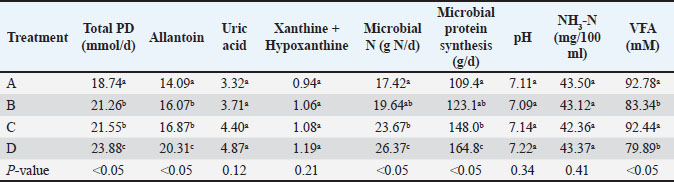
Table 1: total purine derivatives, allantoin, uric acid, and xanthine-hypoxanthine concentrations in thin-tailed sheep among treatments. Treatment D (20% Tithonia + 40% baglog) produced the highest concentrations of total purine derivatives (23.88 mmol/d) and allantoin (20.31 mmol/d), but uric acid and xanthine-hypoxanthine concentrations did not differ significantly among treatments.
Table 1. Dietary treatments effects on purine derivative excretion, microbial protein synthesis, rumen pH, NH3-N, and VFA in thin-tailed sheep.
Microbial nitrogen supply and efficiency
Microbial N supply (MNS) and microbial protein synthesis efficiency are shown in Table 1. The maximum MNS was recorded in treatment D (26.37 mmol/day), and the minimum was calculated in treatment A (19.41 mmol/day). Microbial protein synthesis efficiency showed the same trend, increasing from 0.94 in treatment A to 1.19 in treatment D.
Rumen fermentation characteristics
The rumen fermentation characteristics are presented in Table 2. The rumen pH values remained relatively stable across treatments, ranging from 7.09 to 7.22. NH3-N concentrations ranged between 42.36 and 43.50 mg/100 ml, while VFA levels decreased from 92.78 mmol in treatment A to 79.89 mmol in treatment.
Nutrient digestibility
Table 2 shows the digestibility of dry matter, organic matter, crude fat and TDN is presented in Table 2. Results of the findings showed that the digestibility of dry matter (87.13 %), organic matter (93.77 %), crude fat (98.31 %), and TDN (17.06%) were higher than any treatment in treatment D.
Growth performance
Table 2 shows the growth performance results are presented in Table 2. The feed efficient increased significantly with higher baglog substitution up to treatment D, where the baglog was fully substituted in the growing surface (0.139). The average daily gain (ADG) among treatments was 73.63 g/day in treatment A and 81.25 g/day in treatment D.
Discussion
The present study demonstrated that diets incorporating fermented oil palm frond baglog and Tithonia diversifolia leaf meal can effectively support rumen fermentation, nutrient digestibility, and growth performance of thin-tailed sheep. Treatment D (20% T. diversifolia + 40% fermented baglog) produced the most favorable responses across key parameters, demonstrating a synergistic interaction between protein-rich forage and biologically treated fibrous residues.
Rumen fermentation parameters, including pH and NH3-N concentration, remained within the optimal physiological range for microbial activity, indicating that rumen homeostasis was not disturbed by partial replacement of forage with fermented baglog. The rumen pH values were consistent with the optimal range reported for cellulolytic microbial growth (Russell and Wilson, 1996). Adequate NH3-N availability reflects sufficient rumen degradable protein (RDP) supplied by T. diversifolia, which likely synchronized with fermentable fiber from fermented baglog to support efficient microbial synthesis. These results agree with previous findings that balanced protein–energy synchronization enhances rumen fermentation efficiency (Ma et al., 2014).
The higher microbial nitrogen supply observed in Treatment D indicates improved microbial protein synthesis, probably due to the complementary effects of rapidly degradable protein from T. diversifolia and structurally modified fiber from fungal-treated baglog. Pérez-Márquez et al. (2023a,b) similarly reported enhanced rumen efficiency with the inclusion of T. diversifolia in sheep diets, supporting the concept that microbial growth and nitrogen utilization can be optimized by combining high-quality protein sources with biologically treated crop residues.
Improved nutrient digestibility, particularly fiber digestibility, in diets containing higher proportions of fermented baglog can be attributed to lignin degradation during fungal fermentation with P. ostreatus, which increases cellulose accessibility for cellulolytic microorganisms (Astudillo-Neira and R, 2023). These findings corroborate earlier reports by Hamchara et al. (2018)and Lay et al., who observed improved nitrogen utilization and digestibility in goats fed urea- and fungi-treated oil palm fronds. In contrast, untreated crop residues are known to reduce digestibility due to high lignin content, emphasizing the importance of biological processing before dietary inclusion.
The higher average daily gain (ADG) observed in Treatment D reflects the combined effects of enhanced rumen fermentation, increased microbial protein synthesis, and improved nutrient digestibility. Increased microbial protein flow to the small intestine likely contributed to a greater supply of metabolizable proteins for tissue growth. The absence of adverse effects on rumen pH and NH3-N concentration indicates that growth improvement was achieved without compromising rumen stability, supporting the suitability of this feeding strategy for thin-tailed sheep growth.
From a practical perspective, the utilization of fermented oil palm frond baglog provides a dual benefit by mitigating seasonal feed shortages and promoting the recycling of agricultural waste. The incorporation of locally available by-products can reduce reliance on commercial concentrates and lower feeding costs for smallholder farmers, thereby contributing to circular agricultural systems.
However, this study was conducted with a limited sample size (n=16) and under controlled conditions, which may not fully represent on-farm variability. In addition, the relatively short experimental period precluded the evaluation of long-term effects on reproductive performance, carcass characteristics, and animal health. The absence of molecular or microbiome analyses also limits the understanding of microbial population shifts underlying the observed responses.
Therefore, future studies should include larger-scale field trials to validate these findings under practical farming conditions. Further research should be conducted to evaluate reproductive performance, immune status, meat quality, and economic feasibility. The application of molecular approaches to characterize rumen microbial dynamics would provide deeper insights into the mechanisms responsible for improved nutrient use in Tithonia–baglog-based diets.
Conclusion
The study concluded that the combination of Tithonia diversifolia and fermented oil palm frond baglog had the potential to be offered as an alternative feed resource for thin-tailed sheep. The ideal combination diet was 20% TD and 40% baglog, which improved microbial protein synthesis, maintained desirable rumen fermentation characteristics, and synergistically increased nutrient digestibility, leading to better growth performance and feed efficiency.
Acknowledgments
The authors would like to express their sincere gratitude to the Universitas Prima Nusantara Bukittinggi for providing facilities and technical assistance during the research. Special thanks are extended to the Animal Nutrition Laboratory staff and all field assistants who contributed to sample collection, laboratory analyses, and animal care. The authors also acknowledge the constructive feedback from colleagues and reviewers that helped improve the quality of this manuscript.
Funding
This research did not receive any specific grant from public, commercial, or not-for-profit funding agencies.
Authors’ contributions
Yurma Metri (Corresponding Author): Conceptualization, methodology design, supervision, data analysis, and manuscript writing. Muhammad Amri: Experimental design, data collection, and laboratory analysis. Budi Santosa: Statistical analysis, interpretation of results, and manuscript review. Firshty Febrianti: Fieldwork, animal management, and sample preparation. Evi Susanti: Data curation, literature review, and preparation of figures and tables. Debby Ratno Kustanto: English editing Ahmad Ali Zulfiqar Majid: Critical revision of the manuscript, English editing, and final approval of the version to be published.
Conflict of interest
The authors declare that there is no conflict of interest regarding the publication of this paper. The research was conducted independently, and no financial or personal relationships influenced the outcomes of this study.
Data availability
All data were provided in the manuscript.
Reference
Astudillo-Neira., R. and et al. 2023. Corn stover and palm fronds fermented with Pleurotus ostreatus: rumen in vitro incubations. J. Agricult. Sci.
Baee, H. and et al. 2023. Growth performance, ruminal fermentation characteristics . Lambs in a completely randomized design. Livestock. Sci.
Cadena-Villegas, S., Melo, L., Cortés-Pérez, D., Jiménez, C., Barrera-Saldaña, H. and Andrade-Medrano, S., 2020. Therefore, Tithonia diversifolia is a forage plant of good quality for lambs which does not affect the productive performance. Acta Scientiae Veterinariae [journal details not provided]. (Pengayaan: gunakan DOI jika tersedia.)
Febrina, D., Febriyanti, R., Zumarni, Z., Juliantoni, J., Yendraliza, Y., Elfawati, E., Mirdhayati, I., Mochtisar, Y. and Rabani, R. 2021. The effect of addition of fermented oil palm fronds extract on rumen fermentation and blood metabolites of Kacang goat. J. Anim. Health Prod. 9(1), 58–64; doi:10.17582/journal.jahp/2021/9.1.58.64
Hamchara, P., Chanjula, P., Cherdthong, A. and Wanapat, M. 2018. Digestibility, ruminal fermentation, and nitrogen balance of fungal-treated oil palm fronds in goats. Asian-Australasian. J. Anim. Sci. 31(10), 1619–1628; doi:10.5713/ajas.17.0926
Jamarun, N., Zain, M.A. and Pazla, R. 2018. Populations of rumen microbes and the in vitro digestibility of fermented oil palm fronds in combination with Tithonia (Tithonia diversifolia) and elephant grass (Pennisetum purpureum). Pak. J. Nutr. 17, 39–45; doi:10.3923/pjn.2018.39.45
Lund, P., Weisbjerg, M.R. and Hvelplund, T. 2007. Digestible NDF is selectively retained in the rumen of dairy cows compared to indigestible NDF. Anim. Feed. Sci. Technol. 134(1), 1–17; doi:10.1016/j.anifeedsci.2006.05.016
Ma, T., Tu, Y., Zhang, N.F., Deng, K.D. and Diao, Q.Y. 2014. Effects of the ratio of non-fiber carbohydrates to rumen degradable protein on ruminal fermentation and microbial protein synthesis. Asian-Australasian J. Anim. Sci. 27(10), 1416–1425; doi:10.5713/ajas.2014.14101
Metri, Y., and Warly, L.. 2018. Biodegradation of Lignin by White Rot Fungi (Pleurotus ostreatus) to Decrease the Fibre Components in the Palm Midrib. Pak. J. Nutr. 17, 71–75; doi:10.3923/pjn.2018.71.75
Pérez-Márquez, S., Ovani, V.S., Lima, P.D.M.T., Lana, A.M.Q., Louvandini, H., Abdalla, A.L. and Maurício, R.M. 2023. Tithonia diversifolia improves in vitro rumen microbial synthesis of sheep diets without changes in total gas and methane production. Agronomy 13(11), 2768; doi:10.3390/agronomy13112768
Pérez-Márquez, S., Silva-Omani, V.O., Lima, P.M.T., Lana., Louvandini, H., Abdalla, A.L. and Maurício, R.M. 2023. Tithonia diversifolia improves in vitro rumen microbial synthesis of sheep diets. Agronomy 13(11), 2768; doi:10.3390/agronomy13112768
Phesatcha., B. and et al. 2021. Feed Intake and Nutrient Digestibility, Rumen Fermentation. Anim. Sci. J.
Rahman, M.M., Lourenço, M., Hassim, H.A., Baars, J.J.P., Sonnenberg, A.S.M., Cone, J.W., De Boever, J. and Fievez, V. 2011. Improving ruminal degradability of oil palm fronds using white-rot fungi. Anim. Feed. Sci. Technol. 169(1–2), 60–68; doi:10.1016/j.anifeedsci.2011.08.017
Rianita, R., Metri, Y., Evitayani, E. and Warly, L. 2019. Substitusi Tithonia diversifolia dengan Baglog Pelepah Sawit yang Difermentasi dengan Pleurotus ostreatus terhadap Kecernaan dan Ketersediaan Mineral Makro pada Kambing Peranakan Etawa. Jurnal. Peternakan. Indonesia. .
Ribeiro, R.S., Terry, S.A., Sacramento, J.P., Silveira, S.R.E., Bento, C.B.P., Da Silva, E.F., Mantovani, H.C., Gama, M.A.S.D., Pereira, L.G.R., Tomich, T.R., Maurício, R.M. and Chaves, A.V. 2016. Tithonia diversifolia as a supplementary feed for dairy cows. PLos One. 11(12), e0165751; doi:10.1371/journal.pone.0165751
Rivera, J.E. 2022. Effect of Tithonia diversifolia intake on in vivo methane emissions and animal production. Translational. Anim. Sci. 6(4), 139.
Russell, J.B. and Wilson, D.B. 1996. Why are ruminal cellulolytic bacteria unable to digest cellulose at low pH?. J. Dairy Sci. 79(8), 1503–1509; doi:10.3168/jds.S0022-0302(96)76510-4
Suriyapha., C. and et al. 2025. In vitro fermentation characteristics, microbial changes and . using a completely randomized design. Scientific Rep. , 95748; doi:10.1038/s41598-025-95748-7
Yunilas., Y. and et al. 2023. The balance of rumen degradable protein and readily available carbohydrate in sheep rations and its effect on microbial protein synthesis in vitro. J. Anim. Sci. Technol. , doi:10.1186/s40168-024-02020-7